Synthia AI
Synthia AI is an advanced AI-powered platform that generates synthetic consumer responses with 90% human reliability. It enables …
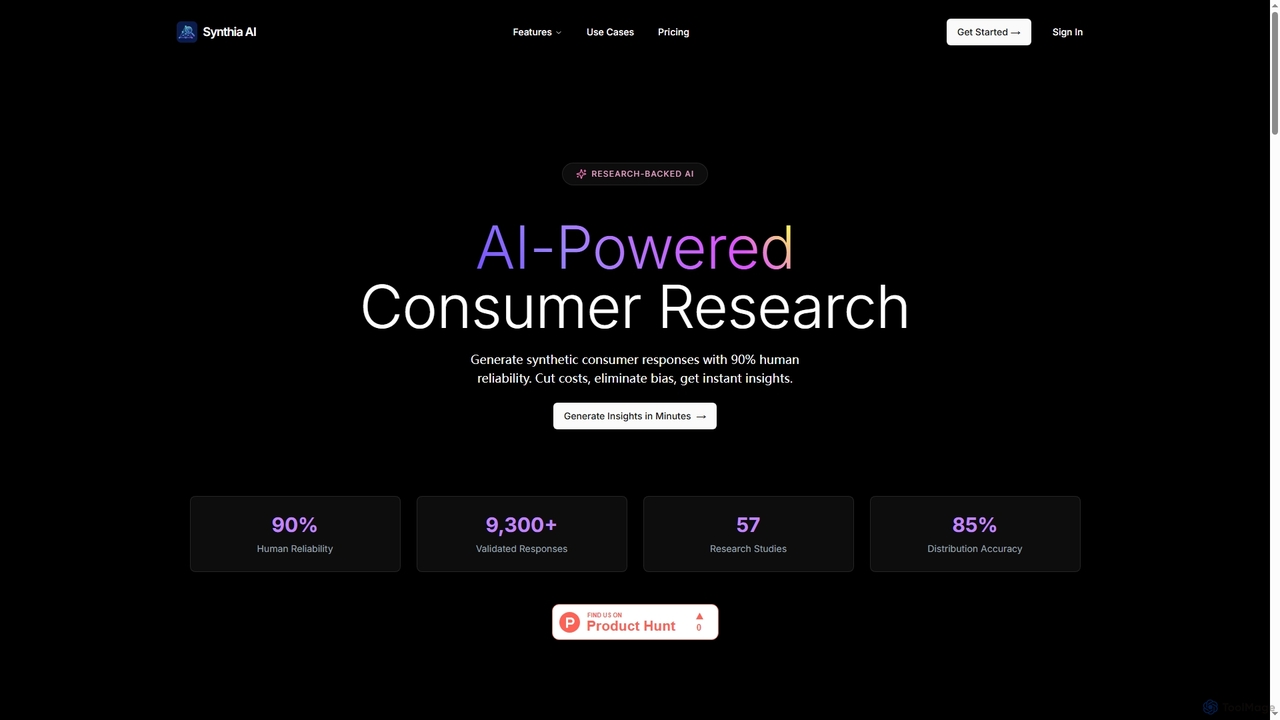
Synthia AI is an advanced AI-powered platform that generates synthetic consumer responses with 90% human reliability. It enables businesses to conduct rapid, bias-free market research, gain instant insights, and make data-driven decisions for product development, marketing, and pricing strategies, significantly cutting costs and time.
About Pricing Strategy
Pricing Strategy tools are AI-powered solutions designed to optimize product and service pricing for maximum revenue and market competitiveness. These platforms leverage advanced data analytics, machine learning algorithms, and market intelligence to analyze various factors impacting pricing decisions. They help businesses set dynamic prices, forecast demand, and understand customer willingness to pay, ultimately driving profitability and market share within the broader sales ecosystem.
Core Features
- Dynamic Pricing: Automatically adjusts prices based on real-time market conditions, demand, and competitor actions.
- Competitor Analysis: Monitors competitor pricing strategies and product offerings to inform optimal pricing.
- Demand Forecasting: Predicts future sales volumes and customer behavior to optimize pricing and inventory.
- Customer Segmentation: Identifies different customer groups and their price sensitivities to tailor offers.
- Price Experimentation: Facilitates A/B testing of different pricing models and strategies to find the most effective ones.
Applicable Scenarios
These tools are essential for e-commerce businesses managing large product catalogs, SaaS companies optimizing subscription tiers, and retailers seeking to maximize margins. They are also valuable for B2B enterprises needing to set competitive and value-based pricing for complex services or products, ensuring pricing aligns with market dynamics and customer perceived value.
How to Choose
When selecting a pricing strategy tool, consider its data integration capabilities with existing CRM/ERP systems, the sophistication of its AI algorithms for accuracy, and the level of customization it offers for specific business models. Evaluate its reporting and analytics features for actionable insights, and ensure it supports your desired pricing models, such as subscription, dynamic, or value-based pricing.

Pricing StrategyUse Cases
Optimizing E-commerce Product Pricing in Real-time
An e-commerce manager uses an AI pricing strategy tool to automatically adjust prices for thousands of products based on real-time market demand, competitor pricing, and inventory levels. This ensures competitive pricing, maximizes sales during peak times, and clears excess stock efficiently, leading to a significant increase in daily revenue and profit margins without manual intervention.
Designing Optimal SaaS Subscription Tiers
A SaaS product manager employs an AI pricing tool to analyze user engagement data, feature adoption rates, and competitor offerings. The tool identifies optimal pricing points and feature bundles for different subscription tiers (e.g., Basic, Pro, Enterprise), helping to reduce churn, attract new users, and increase average revenue per user (ARPU) by aligning value with price.
Value-Based Pricing for B2B Services
A B2B sales team utilizes an AI pricing platform to determine the optimal value-based pricing for complex enterprise software solutions. By analyzing client-specific data, perceived value, competitive benchmarks, and feature usage, the tool helps sales representatives craft customized proposals that reflect the true ROI for each client, leading to higher win rates and increased contract values.
Forecasting Demand and Optimizing Promotional Pricing
A retail marketing team leverages an AI pricing tool to forecast demand for seasonal products and optimize promotional pricing strategies. The tool analyzes historical sales data, external factors like holidays and weather, and customer behavior to recommend discount levels and timing, ensuring promotions drive maximum sales volume without excessively eroding profit margins.
Personalized Pricing for Customer Segments
A subscription service company uses an AI pricing strategy tool to implement personalized pricing for different customer segments. By analyzing demographic data, past purchase history, and engagement levels, the tool offers tailored discounts or premium features to specific user groups, increasing conversion rates for new sign-ups and improving retention for existing high-value customers.
Competitive Pricing for New Product Launches
A product development team uses an AI pricing tool to determine the optimal launch price for a new product. The tool analyzes market data, competitor pricing for similar products, potential customer demand, and production costs to suggest a price point that maximizes initial adoption and market penetration while ensuring profitability. This minimizes the risk of underpricing or overpricing a new offering.