Synthia AI
Synthia AI is an advanced AI-powered platform that generates synthetic consumer responses with 90% human reliability. It enables …
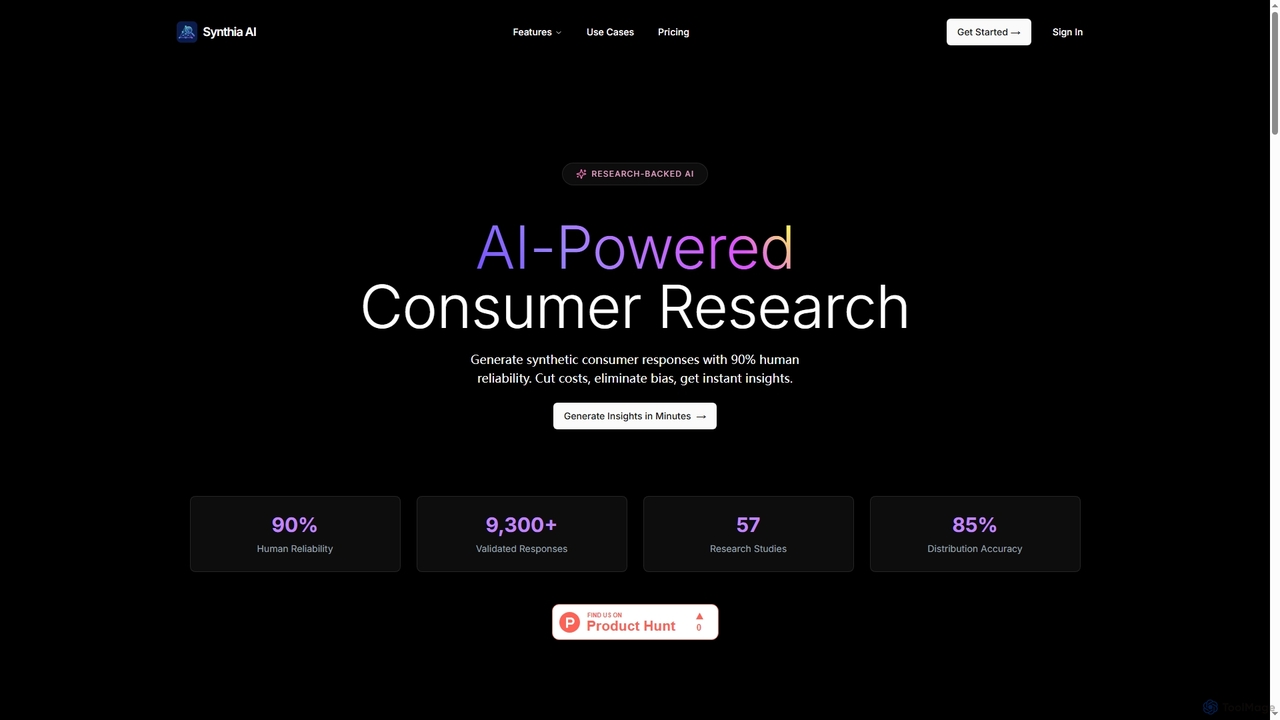
Synthia AI is an advanced AI-powered platform that generates synthetic consumer responses with 90% human reliability. It enables businesses to conduct rapid, bias-free market research, gain instant insights, and make data-driven decisions for product development, marketing, and pricing strategies, significantly cutting costs and time.
About Consumer Research
Consumer Research AI tools are specialized platforms that leverage artificial intelligence to collect, analyze, and interpret vast amounts of consumer data, providing deep insights into market trends and customer behavior. These tools utilize natural language processing, machine learning, and predictive analytics to uncover preferences, needs, and sentiment from diverse sources like social media, reviews, and surveys. By automating data analysis and pattern recognition, they empower businesses within the broader marketing domain to make data-driven decisions, optimize product development, and personalize engagement strategies.
Core Features
- Sentiment Analysis: Automatically identifies and quantifies the emotional tone and opinions expressed in consumer feedback.
- Behavioral Pattern Recognition: Detects recurring patterns and anomalies in consumer actions and interactions across various touchpoints.
- Predictive Analytics: Forecasts future consumer trends, purchasing behaviors, and market shifts based on historical data.
- Demographic & Psychographic Profiling: Creates detailed profiles of target audiences, including their interests, values, and lifestyle.
- Competitive Intelligence: Monitors competitor strategies and consumer perceptions to identify market opportunities and threats.
Use Cases
Businesses across various sectors, from retail to technology, utilize Consumer Research AI to gain a competitive edge. Marketing teams employ these tools to understand campaign effectiveness and audience reception, while product development teams use them to identify unmet customer needs and validate new features. Strategic planners leverage the insights to forecast market demand and refine business models.
How to Choose
When selecting Consumer Research AI tools, consider the breadth of data sources it can integrate (e.g., social media, CRM, survey platforms), the accuracy and depth of its analytical capabilities (e.g., sentiment granularity, predictive model sophistication), its ease of use and visualization features for non-technical users, and its scalability to handle growing data volumes. Evaluate also the level of customization for specific industry needs and compliance with data privacy regulations.

Consumer ResearchUse Cases
Analyzing Social Media Sentiment for Product Launches
A product manager launching a new gadget uses Consumer Research AI to monitor real-time conversations on social media platforms. The AI analyzes mentions, comments, and reviews to gauge public sentiment, identify common pain points, and understand initial reactions, allowing for rapid adjustments to marketing messages or product features post-launch.
Identifying Emerging Market Trends for New Product Development
A market analyst for a fashion brand employs AI tools to scan online forums, fashion blogs, and e-commerce review sections for discussions about new styles, materials, and consumer preferences. The AI identifies nascent trends and unmet demands, guiding the design team in developing future collections that resonate with the target audience.
Optimizing Customer Experience by Analyzing Feedback
A customer service director integrates Consumer Research AI with their ticketing system and review platforms. The AI processes thousands of customer feedback entries, categorizing common issues, identifying recurring complaints, and highlighting areas for service improvement, leading to a more streamlined and satisfying customer journey.
Personalizing Marketing Campaigns Based on Behavioral Data
An e-commerce marketer uses AI to analyze customer purchase history, browsing behavior, and interaction patterns on their website. The tool segments customers into distinct groups and predicts their future interests, enabling the marketer to create highly personalized email campaigns and product recommendations that significantly increase conversion rates.
Conducting Competitive Analysis and Benchmarking
A business strategist utilizes Consumer Research AI to track competitor product reviews, pricing strategies, and marketing campaigns across various channels. The AI provides a comprehensive overview of competitor strengths and weaknesses, helping the company benchmark its performance and identify strategic opportunities to differentiate its offerings.
Understanding Brand Perception and Reputation Management
A brand manager deploys Consumer Research AI to continuously monitor online mentions, news articles, and public forums for their brand. The AI tracks sentiment, identifies key influencers, and alerts the team to potential PR crises or shifts in public perception, allowing for proactive reputation management and targeted communication strategies.