Storiara
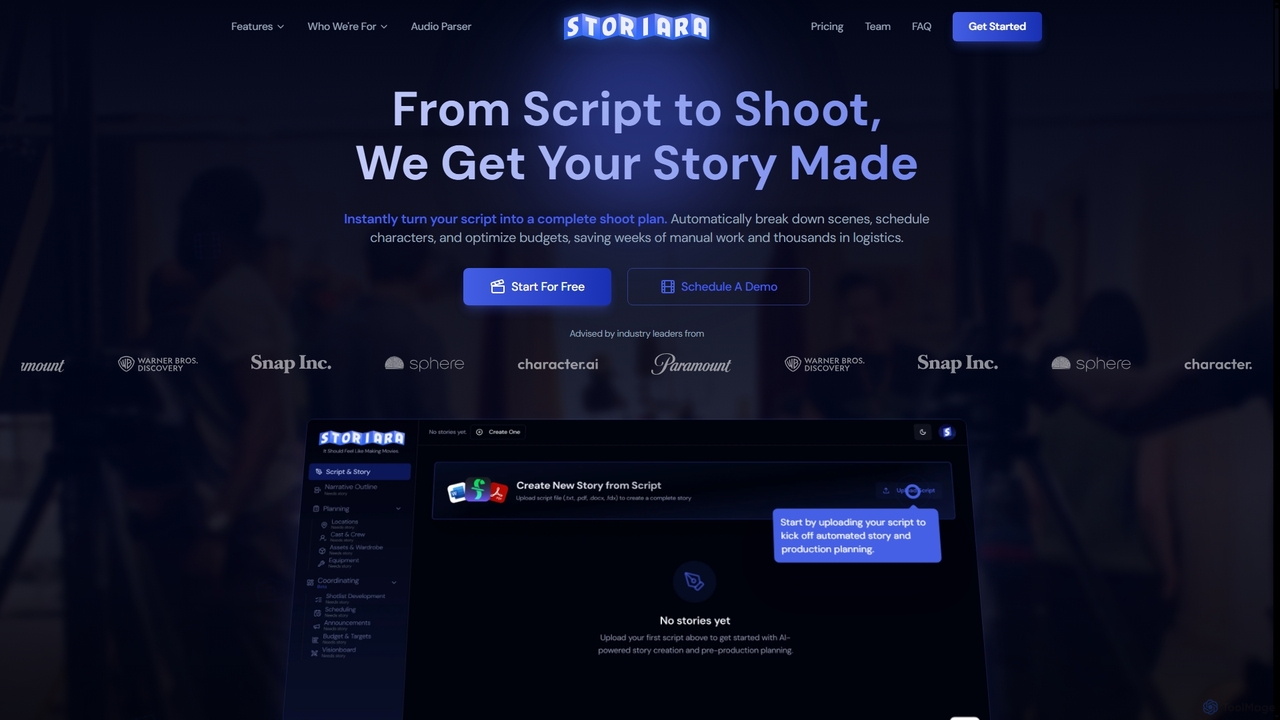
Storiara is an AI-powered production platform that transforms scripts into complete shoot plans, automating pre-production tasks like scheduling, …
Storiara is an AI-powered production platform that transforms scripts into complete shoot plans, automating pre-production tasks like scheduling, budgeting, storyboarding, and call sheet generation. It helps filmmakers save weeks of manual work and thousands in logistics, getting stories made faster and more efficiently.
About Scriptwriting
Scriptwriting tools are AI-powered platforms designed to assist writers in generating, refining, and organizing creative narratives for various media. These tools leverage natural language processing and machine learning to understand story structures, character arcs, and dialogue nuances. They significantly streamline the writing process, helping users overcome writer's block, develop compelling plots, and produce high-quality scripts more efficiently. From initial concept generation to final draft polishing, AI scriptwriting aids in crafting engaging stories across different formats.
Core Features
- Story Outline Generation: Automatically creates structured plot outlines, scene breakdowns, and narrative arcs based on user input.
- Character Development: Assists in crafting detailed character profiles, backstories, motivations, and dialogue styles.
- Dialogue Generation: Produces natural-sounding and contextually appropriate dialogue for characters and scenes.
- Genre-Specific Templates: Offers pre-built templates and style guides tailored for various genres like drama, comedy, sci-fi, or fantasy.
- Revision and Editing Suggestions: Provides AI-driven feedback on pacing, consistency, tone, and grammatical correctness.
Applicable Scenarios
Filmmakers, television producers, game developers, playwrights, and content creators utilize AI scriptwriting tools to accelerate their creative workflows. They are invaluable for independent writers seeking to quickly prototype story ideas, production teams needing to generate multiple script variations, or marketing agencies developing video ad scripts. These tools help maintain creative momentum and ensure structural integrity across large projects.
How to Choose
When selecting an AI scriptwriting tool, consider its genre versatility and ability to adapt to different narrative styles. Evaluate the depth of its character and plot development features, as well as the quality of its dialogue generation. Look for robust collaboration features if working with a team, and assess its integration capabilities with other writing or production software. Finally, compare pricing models and user interface intuitiveness to find a tool that aligns with your creative process and budget.
ScriptwritingUse Cases
Generating Multiple Story Concepts for Film Pitches
Filmmakers and screenwriters often need to present various story ideas to producers. AI scriptwriting tools allow them to input a core premise and quickly generate multiple unique plot concepts, character outlines, and potential narrative directions. This accelerates the brainstorming phase, providing a diverse portfolio of ideas to pitch, saving weeks of manual ideation and ensuring a broader creative exploration.
Developing Detailed Character Backstories for Novels
Novelists and fiction writers can use these tools to enrich their characters. By providing basic traits, AI can expand on character backstories, motivations, and psychological profiles, suggesting key life events or relationships. This deepens character complexity, making them more believable and relatable, and helps writers maintain consistency throughout a lengthy manuscript without extensive manual research.
Crafting Engaging Dialogue for Video Game NPCs
Game developers require vast amounts of dialogue for non-player characters (NPCs) that fit specific personalities and game lore. AI scriptwriting tools can generate contextually appropriate and character-specific dialogue lines, ensuring consistency in tone and voice across hundreds of interactions. This significantly reduces the manual effort of writing unique lines for each NPC, enhancing immersion and narrative depth in games.
Adapting a Novel into a Screenplay Format
Authors or production companies looking to adapt existing literary works into screenplays face the challenge of transforming prose into visual scenes and dialogue. AI tools can assist by breaking down chapters into scenes, suggesting visual descriptions, and converting narrative exposition into character actions and spoken lines. This streamlines the adaptation process, maintaining the original story's essence while fitting cinematic conventions.
Creating Short-Form Video Ad Scripts for Marketing
Marketing teams frequently need compelling, concise scripts for social media ads or promotional videos. AI scriptwriting tools can generate various script versions tailored to specific product features, target audiences, and desired call-to-actions. This enables rapid iteration and A/B testing of ad copy, optimizing engagement and conversion rates without extensive creative team resources.
Overcoming Writer's Block with Plot Twist Suggestions
Writers often encounter creative roadblocks when developing complex plots. AI scriptwriting tools can analyze the existing narrative and suggest unexpected plot twists, character dilemmas, or new subplots to reinvigorate the story. This provides fresh perspectives and innovative solutions, helping writers push past creative stagnation and develop more dynamic and unpredictable narratives.