Quillow
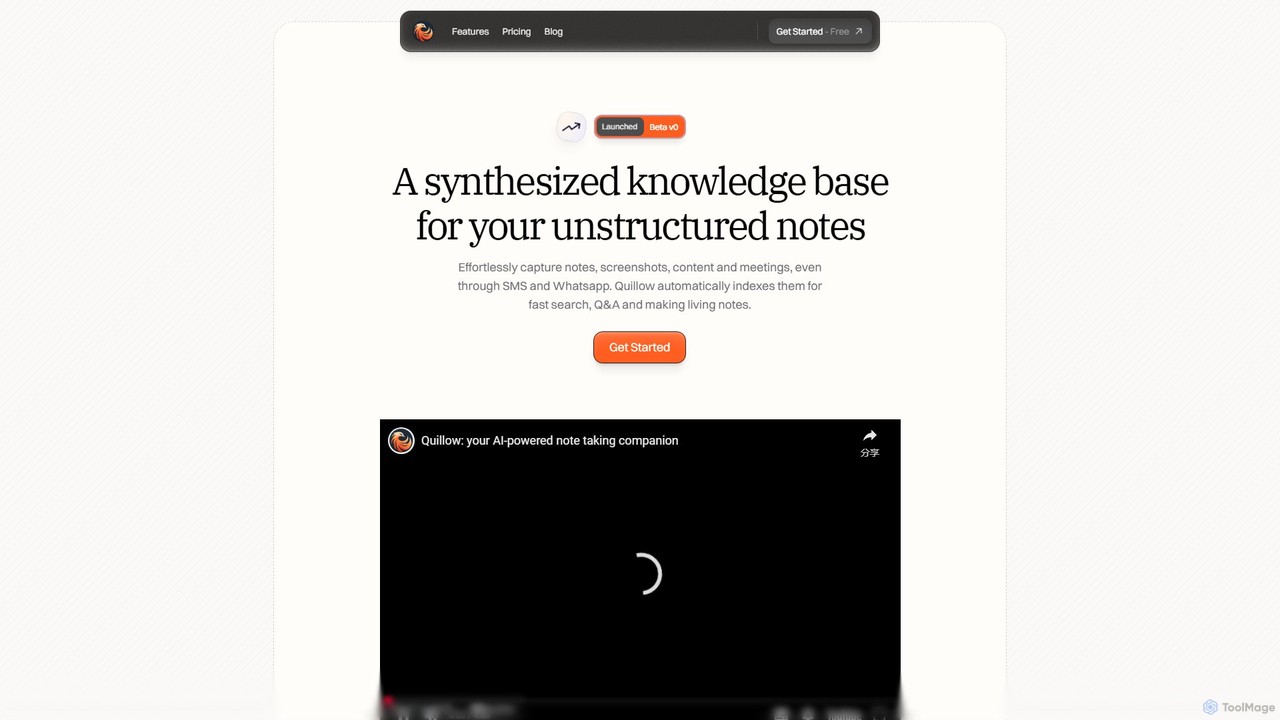
Quillow is an AI-powered note-taking app that functions as your second brain. It effortlessly captures unstructured notes, screenshots, …
Quillow is an AI-powered note-taking app that functions as your second brain. It effortlessly captures unstructured notes, screenshots, and content from various sources, including SMS and WhatsApp, and automatically organizes them into a searchable, queryable knowledge base. Ask questions to your notes and let AI synthesize the answers.
About Semantic
Semantic search tools are a class of AI-powered engines designed to understand the intent and contextual meaning behind a user's query, not just the keywords used. They leverage Natural Language Processing (NLP) and machine learning models to analyze concepts, synonyms, and relationships between words. This approach allows them to deliver highly relevant and accurate results, even for complex or ambiguously phrased questions. By moving beyond simple keyword matching, semantic search provides a more intuitive and human-like search experience within applications, websites, and enterprise databases.
Core Features
- Intent Recognition: Deciphers the user's underlying goal or question, rather than just matching text strings.
- Contextual Analysis: Considers surrounding information, user history, and session data to refine search accuracy.
- Natural Language Understanding (NLU): Processes and comprehends queries phrased in conversational, human language.
- Knowledge Graph Integration: Connects entities and concepts to provide richer, more interconnected answers and discoveries.
- Vector Search Capability: Represents data as numerical vectors to find conceptually similar items, enabling search across different data types.
Use Cases
Semantic search is widely adopted in e-commerce to enhance product discovery, allowing customers to find items using natural descriptions. It is also crucial for enterprise knowledge management systems, helping employees quickly locate relevant documents and expertise within a large organization. Digital libraries and research platforms use it to surface conceptually related academic papers and articles.
How to Choose
When selecting a semantic search tool, evaluate its ability to be customized for your specific industry or domain vocabulary. Consider its scalability to handle your data volume and query load. Assess the quality of its APIs and documentation for seamless integration into your existing platforms. Finally, review its support for multiple languages if your user base is global.
SemanticUse Cases
Enhancing E-commerce Product Discovery
An e-commerce manager implements a semantic search tool to improve the on-site shopping experience. When a customer searches for "something warm to wear for a winter wedding," a traditional keyword search would likely fail. The semantic tool, however, understands the concepts of "warm," "winter," and "wedding attire." It returns relevant results like velvet dresses, wool coats, and elegant shawls, even if these exact phrases aren't in the product descriptions. This leads to higher conversion rates and improved customer satisfaction.
Intelligent Corporate Knowledge Base Search
An employee at a global consulting firm needs to find a case study on "sustainability initiatives in the automotive sector." Instead of trying multiple keyword combinations, they can ask the internal knowledge base, "Show me projects about green solutions for car manufacturers." The semantic search engine understands the query's intent, identifies synonyms like "green solutions" for "sustainability," and retrieves relevant project reports, presentations, and expert contacts, saving hours of manual searching.
Accelerating Legal and Scientific Research
A paralegal is researching precedents for a complex patent case involving machine learning algorithms. A simple keyword search for the specific algorithm name might miss crucial documents. By using a semantic search platform, they can search for the *concept* of "predictive modeling for financial data." The system uncovers relevant case law, academic papers, and expert witness testimonies that discuss functionally similar technologies but use different terminology, ensuring a more thorough and defensible research process.
Powering Personalized Content Recommendations
A digital media platform uses semantic analysis to power its recommendation engine. It analyzes the thematic content of articles, podcasts, and videos a user consumes. If a user frequently reads articles about "stoic philosophy" and "mindfulness," the system understands the underlying interest in personal development and self-improvement. It then recommends a podcast on "cognitive behavioral therapy," a conceptually related topic the user might enjoy, increasing engagement and session duration.
Building Smarter Customer Support Chatbots
A SaaS company upgrades its customer support chatbot with a semantic search backend. Previously, the bot could only answer simple, keyword-based questions from its FAQ list. Now, when a customer types, "I paid my bill but my account is still locked," the semantic system understands the core issue is an "account access problem after payment." It can then retrieve the specific troubleshooting guide, check the payment status via an API, and create a high-priority support ticket automatically.
Semantic Code Search for Developers
A software development team integrates a semantic search tool into their extensive codebase repository. A new developer needs to find a function that "parses a CSV file and validates email addresses." Instead of guessing file names or function names, they can type this description directly into the search bar. The tool analyzes the code's logic and comments to find the most relevant functions, even if they are named `process_data()` or `ingest_contacts()`, significantly speeding up onboarding and development cycles.