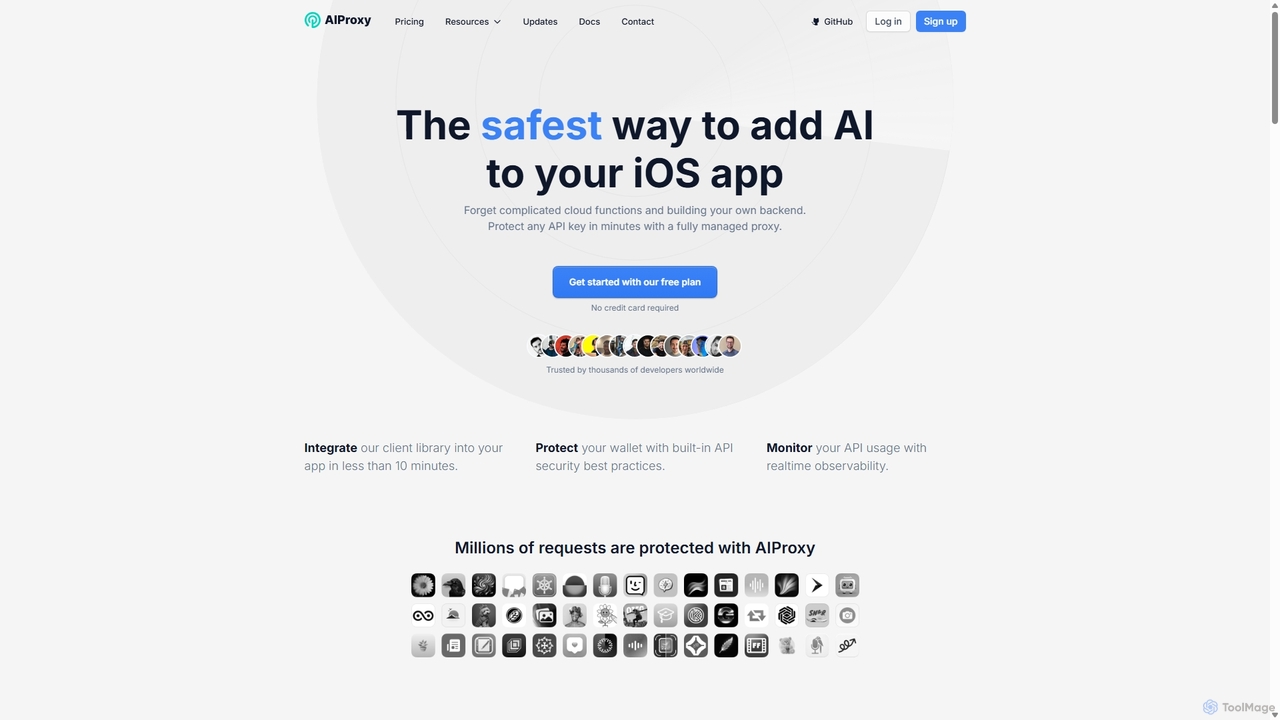
AIProxy
AIProxy is a secure API proxy for developers, designed to protect AI API keys in mobile and desktop …
AIProxy is a secure API proxy for developers, designed to protect AI API keys in mobile and desktop applications. It offers robust security features like split-key encryption, rate limiting, and real-time monitoring, allowing developers to ship AI-powered apps without exposing sensitive credentials. Integration is streamlined with a Swift client library, supporting over 15 AI providers.
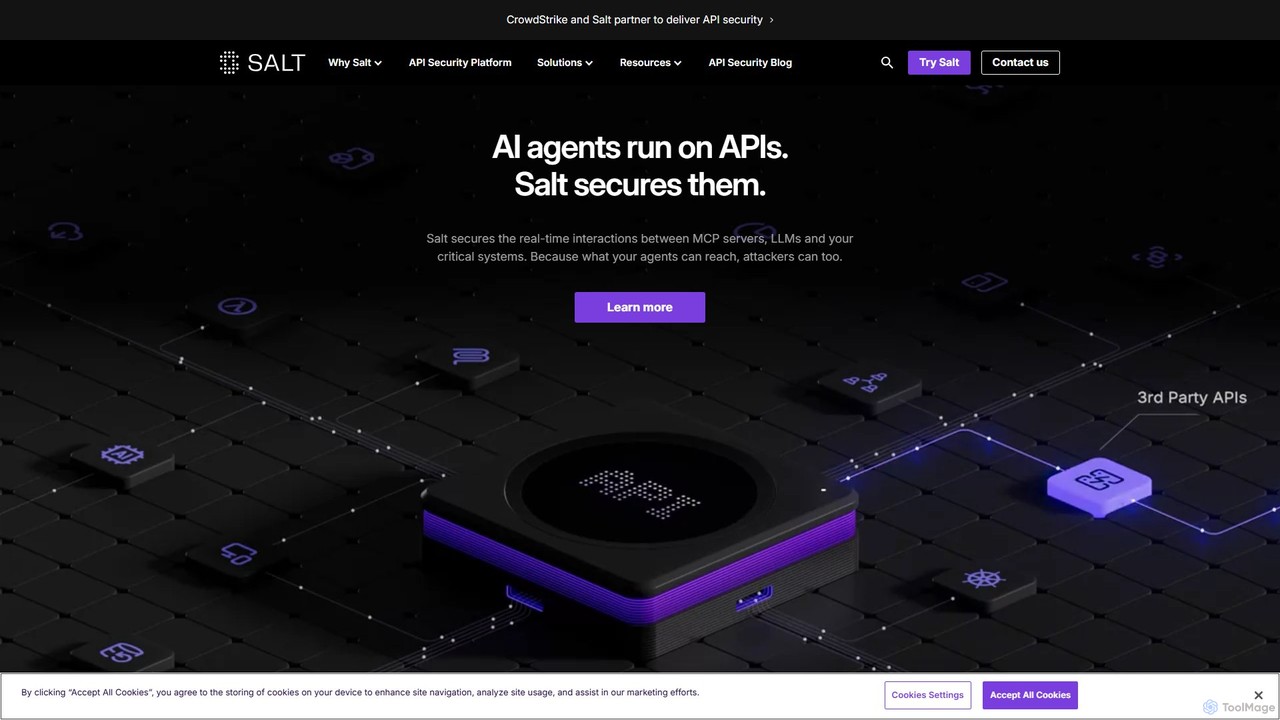
Salt Security
Salt Security is a pioneering AI-powered API security platform that provides comprehensive protection throughout the entire API lifecycle. …
Salt Security is a pioneering AI-powered API security platform that provides comprehensive protection throughout the entire API lifecycle. It uses a patented, AI-driven engine to automatically discover all APIs, prevent sophisticated attacks in real-time, and ensure continuous compliance. The platform offers deep visibility, proactive threat detection, and automated governance to secure critical data and services against modern threats, including the OWASP API Top 10.
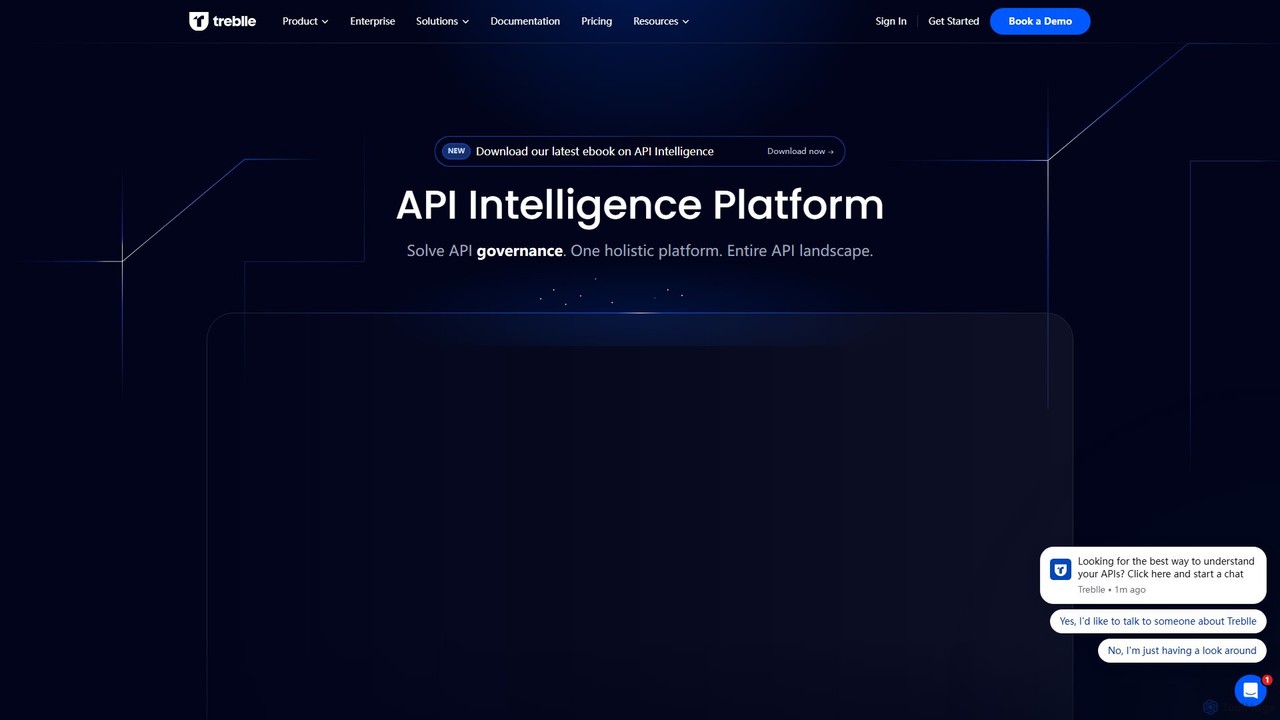
Treblle
Treblle is an all-in-one API intelligence and management platform designed to help developers and businesses understand, monitor, and …
Treblle is an all-in-one API intelligence and management platform designed to help developers and businesses understand, monitor, and secure their APIs throughout the entire lifecycle. It provides real-time observability, automated documentation, advanced security analysis, and AI-powered insights to streamline API development, improve performance, and ensure robust governance.
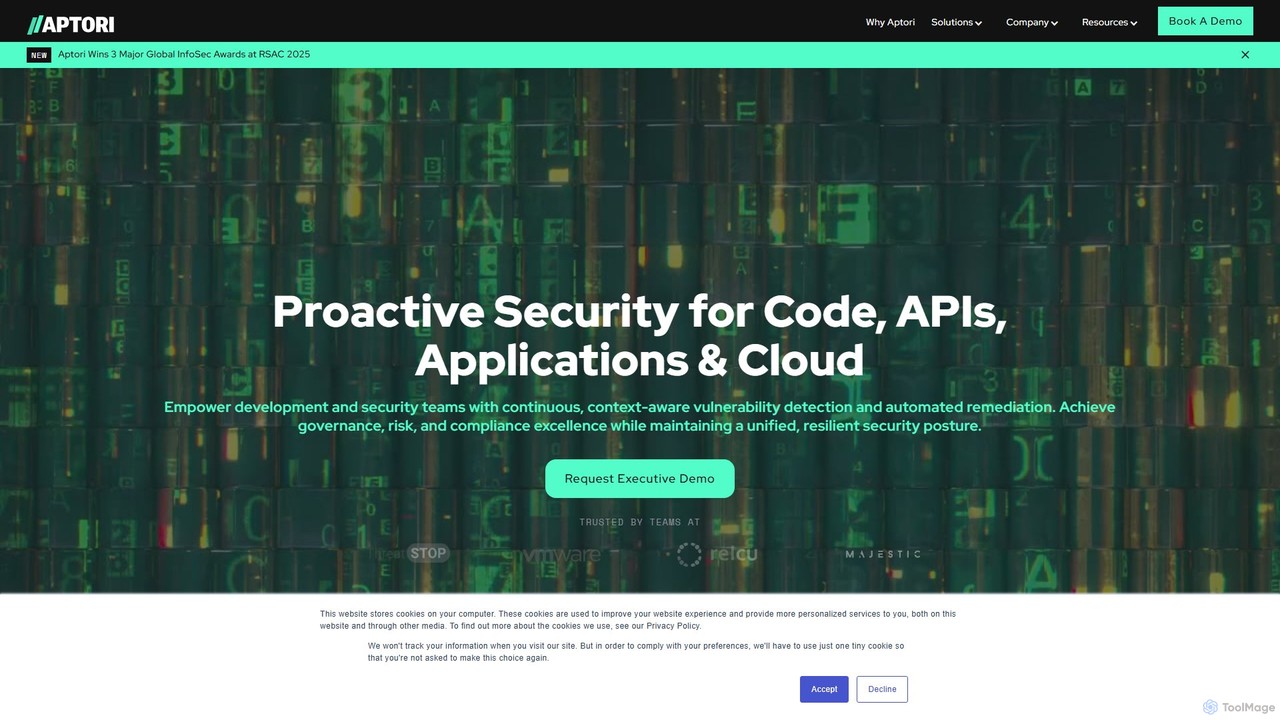
Aptori
Aptori is an AI-powered application security platform that acts as an autonomous AI Security Engineer. It proactively detects, …
Aptori is an AI-powered application security platform that acts as an autonomous AI Security Engineer. It proactively detects, triages, and fixes vulnerabilities across your code, APIs, applications, and cloud infrastructure. By embedding security into the software development lifecycle, Aptori helps teams accelerate releases, ensure compliance, and maintain a resilient security posture.
About Api Security
API Security tools are specialized solutions designed to protect Application Programming Interfaces (APIs) from various cyber threats and vulnerabilities. These tools implement robust authentication, authorization, encryption, and threat detection mechanisms to safeguard data exchange and prevent unauthorized access or abuse. By securing APIs, organizations ensure the integrity, confidentiality, and availability of their digital services, which are critical components of modern software architectures and the broader 'Security' landscape.
Core Features
- API Authentication & Authorization: Verifies user and application identities, controlling access to specific API endpoints and resources.
- Threat Detection & Prevention: Identifies and blocks malicious activities like injection attacks, DDoS, and API abuse in real-time.
- Data Encryption & Masking: Secures sensitive data during transit and at rest, often with tokenization or data masking.
- Vulnerability Scanning & Testing: Proactively discovers security flaws and misconfigurations in APIs before deployment.
- API Gateway Integration: Enforces security policies and traffic management at the API entry point.
Use Cases
API Security tools are essential for any organization exposing APIs, from startups to large enterprises. They are particularly vital for financial institutions protecting sensitive transaction data, healthcare providers securing patient records via FHIR APIs, and e-commerce platforms preventing fraudulent activities and data breaches through their payment and customer APIs.
How to Choose
When selecting an API Security solution, consider its integration capabilities with existing API gateways and development pipelines, the breadth of threat detection features, compliance certifications (e.g., GDPR, PCI DSS), and scalability to handle varying API traffic loads. Evaluate ease of deployment, management, and the level of automation offered for vulnerability scanning and policy enforcement.
Api SecurityUse Cases
Protecting Financial Transaction APIs
Financial institutions leverage API Security tools to safeguard sensitive transaction APIs from fraud and data breaches. By implementing strong authentication (e.g., OAuth 2.0, mTLS), real-time threat detection, and data encryption, banks ensure that customer financial data remains confidential and transactions are authorized, mitigating risks associated with open banking initiatives and third-party integrations.
Securing Microservices in Cloud Environments
Developers and DevOps teams use API Security solutions to protect the numerous APIs connecting microservices in cloud-native applications. These tools provide granular access control, detect anomalous behavior between services, and enforce security policies at the API level, ensuring secure communication and preventing lateral movement of attackers within distributed architectures.
Preventing Data Exfiltration from E-commerce APIs
E-commerce platforms utilize API Security to prevent unauthorized access and data exfiltration from APIs handling customer data, product catalogs, and payment information. Solutions monitor API traffic for suspicious patterns, block malicious requests, and enforce strict authorization policies, protecting customer privacy and maintaining PCI DSS compliance.
Automating API Vulnerability Scanning in CI/CD
Security teams integrate API Security tools into their CI/CD pipelines to automate the discovery of vulnerabilities in APIs during development. This allows developers to identify and remediate security flaws early in the software development lifecycle, reducing the cost of fixes and ensuring that only secure APIs are deployed to production environments.
Ensuring Regulatory Compliance for Healthcare APIs
Healthcare organizations deploy API Security to ensure their APIs, which often handle Protected Health Information (PHI), comply with regulations like HIPAA. These tools enforce strict access controls, audit API usage, and provide data masking capabilities, safeguarding patient data privacy and avoiding hefty regulatory fines.
Mitigating API Abuse and DDoS Attacks
Organizations facing high API traffic use API Security platforms to detect and mitigate API abuse, including credential stuffing, brute-force attacks, and distributed denial-of-service (DDoS) attacks. These tools employ rate limiting, bot detection, and behavioral analytics to identify and block malicious traffic, ensuring API availability and performance for legitimate users.