Aivory
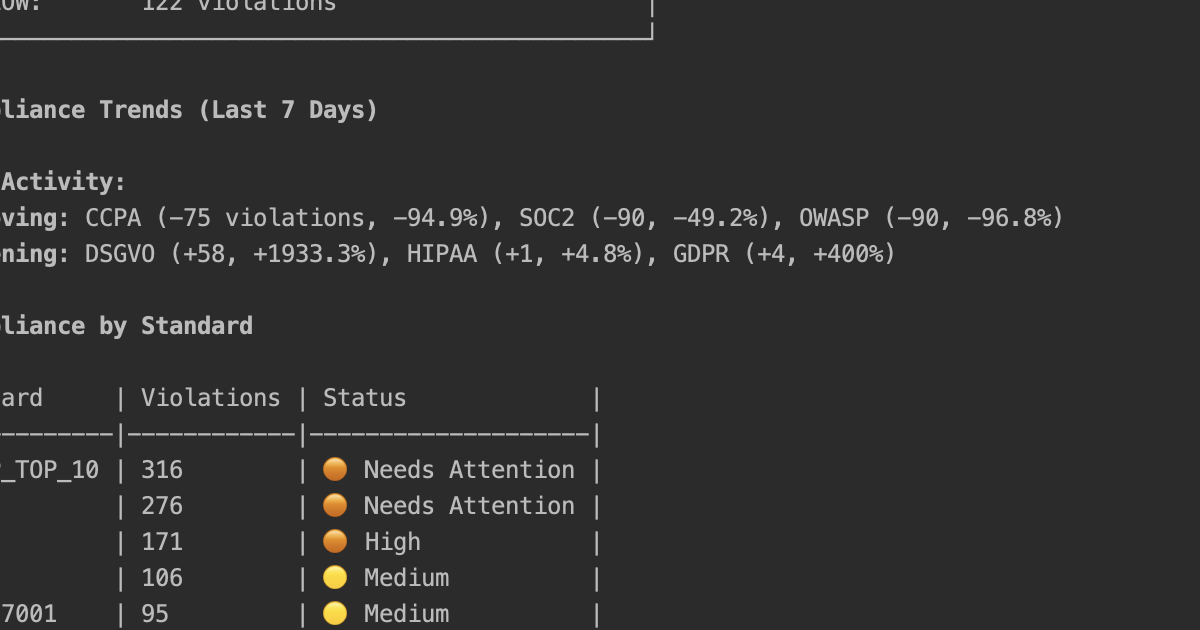
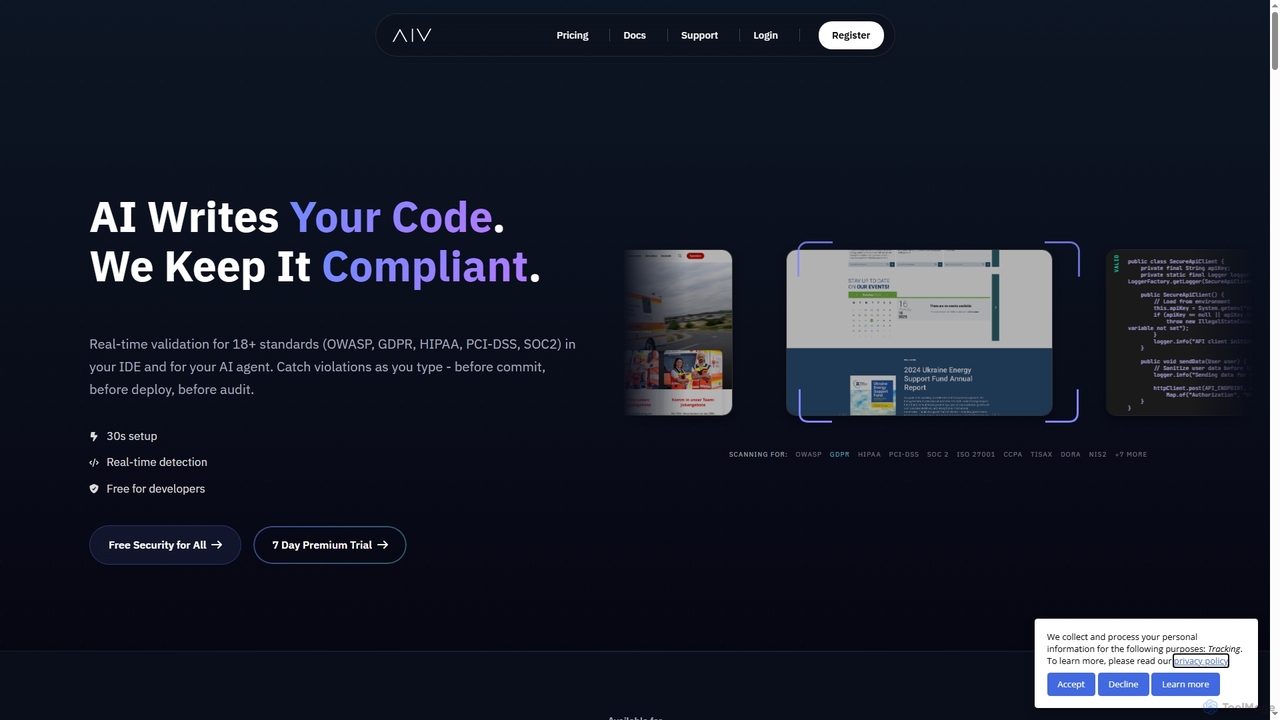
Aivory is a real-time compliance and security validation tool for developers. It integrates into IDEs like VS Code …
Aivory is a real-time compliance and security validation tool for developers. It integrates into IDEs like VS Code and JetBrains to scan AI-generated and human-written code as you type, catching violations against 18+ standards (GDPR, HIPAA, OWASP) before they are committed, saving significant time and cost.
About Compliance
AI Compliance tools are solutions designed to automate the monitoring, enforcement, and reporting of adherence to regulatory standards and internal policies. These tools leverage machine learning and natural language processing (NLP) to analyze vast amounts of data, such as communications, code, and system logs, against specific rule sets. They help organizations proactively identify non-compliance risks, reduce the burden of manual audits, and maintain a continuous state of regulatory readiness. This specialized category within AI Security focuses specifically on rule-based adherence rather than general threat detection.
Core Features
- Automated Policy Monitoring: Continuously scans data, communications, and systems to detect violations of predefined rules (e.g., GDPR, HIPAA, FINRA).
- Risk Identification & Scoring: Uses AI to identify potential compliance gaps, prioritize them based on severity, and suggest remediation steps.
- Audit Trail & Reporting: Automatically generates detailed, immutable logs and reports required for internal reviews and external regulatory audits.
- Data Governance & Classification: Identifies and classifies sensitive data across the organization to ensure proper handling and access controls are enforced.
- Regulatory Change Management: Tracks updates to global regulations and automatically suggests adjustments to internal policies and controls.
Use Cases
AI Compliance tools are crucial for organizations in highly regulated industries like finance, healthcare, and technology. They are used by compliance officers, data protection officers (DPOs), legal teams, and IT security managers to automate tasks such as monitoring employee communications for market abuse, ensuring patient data privacy in healthcare systems, and verifying that software development practices meet SOC 2 or ISO 27001 standards.
How to Choose
When selecting an AI Compliance tool, consider the specific regulations your organization must adhere to and ensure the tool has pre-built modules for them. Evaluate its integration capabilities with your existing systems (e.g., cloud platforms, email servers, code repositories). Assess the sophistication of its AI models for accuracy and false positive rates. Finally, examine the quality and customizability of its reporting features to ensure they meet the demands of your auditors.
ComplianceUse Cases
Automating GDPR/CCPA Data Audits
A Data Protection Officer (DPO) at a multinational e-commerce company uses an AI Compliance tool to automate quarterly data protection audits. The tool connects to various data sources, including customer databases, cloud storage, and marketing platforms. It uses NLP to scan for and classify Personally Identifiable Information (PII), mapping data flows and identifying instances of non-compliant data storage or processing. This process, which previously took weeks of manual effort, is now completed in hours, providing a continuous, real-time view of the company's GDPR and CCPA compliance posture and generating audit-ready reports on demand.
Monitoring Financial Communications for Compliance
A compliance team at an investment bank deploys an AI tool to monitor electronic communications (emails, chat messages) for potential violations of FINRA and SEC regulations. The AI model is trained to detect specific keywords, phrases, and communication patterns related to insider trading, market manipulation, or inappropriate investment advice. When a potential violation is flagged, it is automatically routed to a compliance officer for review with full context. This automates the review of millions of messages, significantly reducing the risk of regulatory fines and protecting the firm's reputation.
Ensuring HIPAA Compliance in Healthcare Systems
A hospital's IT security team uses an AI compliance platform to ensure adherence to HIPAA regulations. The tool continuously monitors access logs for Electronic Health Record (EHR) systems, using anomaly detection to flag suspicious activities, such as an employee accessing patient records unrelated to their job function. It also scans outgoing communications to prevent the unauthorized transmission of Protected Health Information (PHI). This proactive monitoring helps prevent data breaches, ensures patient privacy, and provides the hospital with a clear, auditable record of its HIPAA compliance efforts.
AI Model Governance and Risk Assessment
An MLOps team at a tech company uses a specialized AI compliance tool for model governance. Before deploying a new machine learning model, the tool assesses it against internal ethics policies and emerging regulations like the EU AI Act. It automatically tests for biases (e.g., racial or gender bias in a hiring algorithm), evaluates model explainability, and documents the entire validation process. This ensures that the AI systems being developed are fair, transparent, and compliant, reducing legal and reputational risks associated with deploying biased or opaque AI.
Automating SDLC Security Compliance Checks
A DevOps team integrates an AI compliance tool into their CI/CD pipeline to automate security compliance for standards like SOC 2 and ISO 27001. The tool scans code repositories for vulnerabilities, misconfigurations in infrastructure-as-code (IaC) templates, and adherence to secure coding practices. It provides real-time feedback to developers within their workflow, preventing non-compliant code from reaching production. This 'shift-left' approach to compliance embeds security into the development lifecycle, making audits smoother and reducing the cost of fixing issues late in the process.
Enforcing Content Moderation Policies at Scale
A social media platform's trust and safety team uses an AI compliance tool to enforce its community guidelines. The tool analyzes user-generated content (text, images, videos) in real-time to detect and flag violations such as hate speech, misinformation, or graphic content. By automating the initial filtering process, it allows human moderators to focus on nuanced cases and appeals. This ensures consistent policy application across millions of pieces of content, improves the user experience, and helps the platform meet its regulatory obligations regarding content safety.