Security Best in category 1 results Data Security AI Tool

Popular AI tools in the Data Security field of Security include Metomic, etc., helping you quickly improve efficiency.

Metomic

Metomic

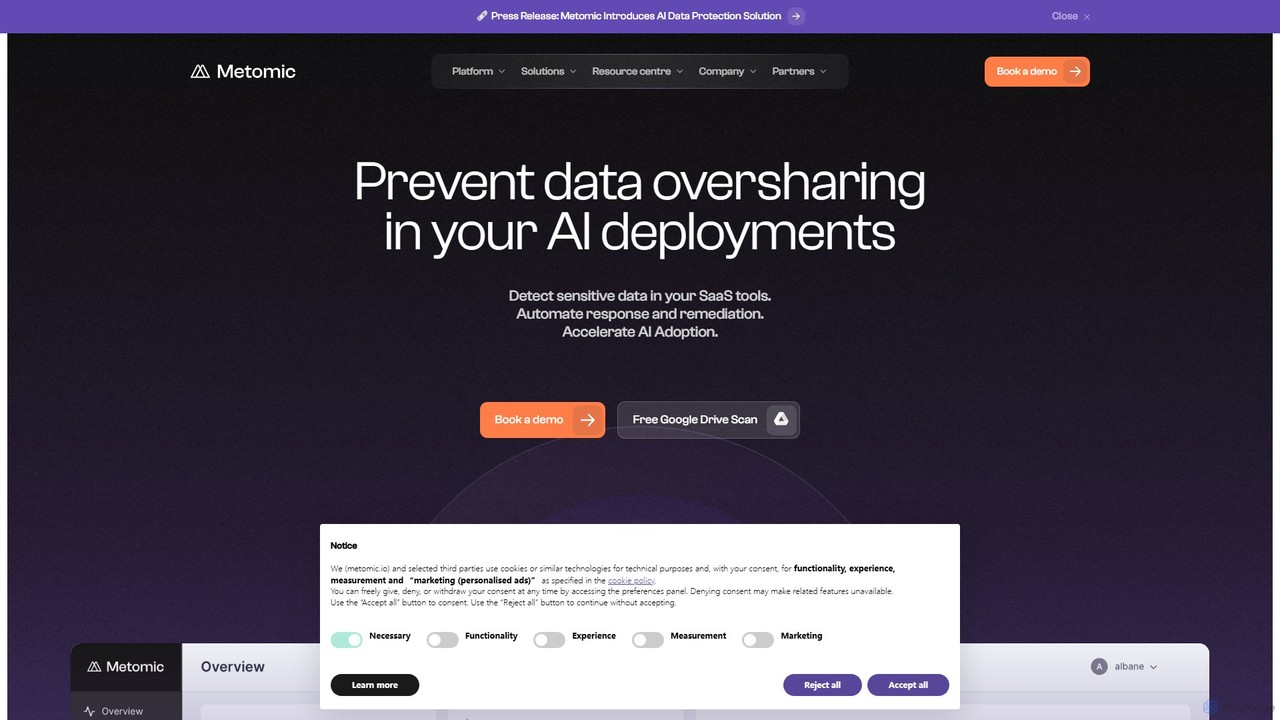
Metomic is an AI-powered data security platform for SaaS, GenAI, and cloud environments. It automatically detects and protects …

37.4K

About Data Security

AI Data Security tools are a specialized category of solutions that use machine learning to automatically discover, classify, and protect sensitive data. These platforms analyze vast datasets to identify potential risks, detect anomalous access patterns, and prevent data breaches before they occur. Their primary value lies in automating complex security tasks, ensuring regulatory compliance (like GDPR and CCPA), and providing deep visibility into how data is used across an organization. This proactive, data-centric approach offers a significant advantage over traditional, perimeter-based security methods.

Core Features

  • Automated Data Classification: Uses NLP and pattern recognition to automatically identify and tag sensitive information such as PII, financial data, and intellectual property.
  • User and Entity Behavior Analytics (UEBA): Establishes baseline behaviors for users and systems, flagging deviations that could indicate an insider threat or compromised account.
  • AI-Powered Threat Detection: Identifies sophisticated threats, malware, and unauthorized data exfiltration attempts that evade rule-based security systems.
  • Dynamic Access Control: Recommends or automatically adjusts user permissions based on real-time risk assessments and context.
  • Compliance Automation & Reporting: Continuously monitors data handling against regulations and generates audit-ready reports to simplify compliance efforts.

Use Cases

These tools are critical for organizations in data-sensitive industries like finance, healthcare, and technology. They are used by security teams to secure cloud environments (AWS, Azure, GCP), protect on-premise databases, and monitor data within SaaS applications. Common applications include preventing insider threats, managing data security posture, and automating responses to security incidents.

How to Choose

When selecting an AI Data Security tool, consider its integration capabilities with your existing data sources and security stack. Evaluate the accuracy of its AI models to minimize false positives. Assess its scalability to handle your data volume and its ability to support specific compliance frameworks relevant to your industry. Finally, consider the user interface's clarity and the quality of its automated reporting features.

Data SecurityUse Cases

1

Automate Regulatory Compliance for GDPR and CCPA

A compliance officer at a multinational e-commerce company uses an AI Data Security tool to manage data privacy obligations. The platform continuously scans all data stores, from cloud databases to marketing applications, automatically identifying and classifying personally identifiable information (PII). It generates a real-time data map showing where sensitive customer data resides and who has access. This automates the process of creating Data Subject Access Requests (DSAR) reports and provides auditable proof of compliance, reducing manual effort by over 70%.

2

Prevent Insider Threats in a Financial Institution

A security operations center (SOC) analyst at a bank deploys a User and Entity Behavior Analytics (UEBA) module within their data security platform. The AI establishes a baseline of normal data access patterns for each employee. When a wealth manager suddenly starts accessing and downloading client files outside of their portfolio and at unusual hours, the system flags this anomalous behavior in real-time. The analyst receives an alert, allowing them to investigate and intervene before a potential data leak occurs.

3

Secure Electronic Health Records (EHR) in Healthcare

A hospital's IT department integrates an AI Data Security tool to protect sensitive patient data and ensure HIPAA compliance. The tool monitors all access to the EHR system. It can differentiate between a doctor accessing records for a patient under their care and a pharmacist trying to view the records of a celebrity patient out of curiosity. The system automatically blocks the unauthorized access attempt and logs the incident for review, safeguarding patient privacy without disrupting clinical workflows.

4

Protect Intellectual Property in a Tech Company

An R&D team at a software company uses an AI-powered Data Loss Prevention (DLP) tool to protect its source code and product roadmaps. The tool understands the context of the data, not just keywords. It can identify when a developer attempts to upload a critical code snippet to a personal GitHub repository or send a confidential design document via a personal email account. The action is automatically blocked, and a notification is sent to the security manager, preventing the theft of valuable intellectual property.

5

Manage Cloud Data Security Posture (DSPM)

A cloud security architect at a SaaS startup uses an AI tool to gain visibility into their complex multi-cloud environment. The platform discovers all data assets across AWS S3, Azure Blob Storage, and Google Cloud Storage. It identifies sensitive data that is misconfigured and publicly exposed, such as buckets containing API keys or customer information. The tool provides prioritized remediation steps, helping the small security team efficiently reduce their cloud attack surface and prevent data breaches caused by misconfigurations.

6

Detect and Remediate Ransomware Data Exfiltration

During a ransomware attack, time is critical. An AI Data Security tool can detect the early stages of an attack by identifying the rapid, anomalous encryption of files. More importantly, it monitors for data exfiltration, a common precursor to the ransom demand. The AI detects the unusual bulk transfer of data to an unknown external destination and can automatically trigger a response, such as isolating the affected endpoint from the network to stop the data theft before it completes, minimizing the attack's impact.

Data SecurityFrequently Asked Questions