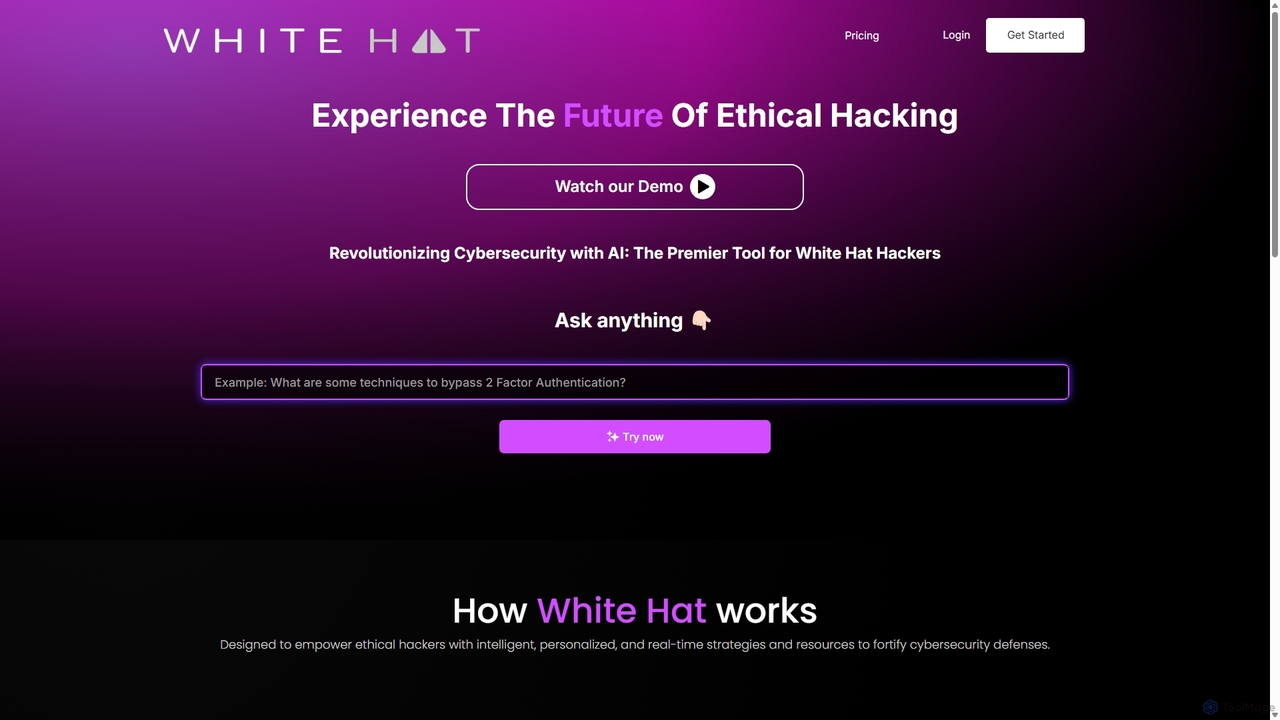
Chatwhitehat
Chatwhitehat is an AI-powered assistant designed for ethical hackers and cybersecurity professionals. It revolutionizes security workflows by providing …
Chatwhitehat is an AI-powered assistant designed for ethical hackers and cybersecurity professionals. It revolutionizes security workflows by providing intelligent, real-time strategies for both offensive (Red Team) and defensive (Blue Team) operations. Leverage its vast knowledge base to master skills, build robust security plans, and get personalized solutions for any cybersecurity challenge, from vulnerability analysis to incident response.
About Ethical Hacking
Ethical Hacking tools are AI-powered solutions designed to simulate cyberattacks on systems, networks, and applications to identify vulnerabilities before malicious actors can exploit them. These tools leverage advanced algorithms and threat intelligence to mimic real-world attack techniques, providing organizations with a proactive defense mechanism. By systematically testing security weaknesses, ethical hacking tools help strengthen an organization's security posture, ensure compliance with industry standards, and protect sensitive data from breaches.
Core Features
- Vulnerability Scanning: Automatically identifies security weaknesses and misconfigurations in systems, networks, and applications.
- Penetration Testing Simulation: Mimics real-world attack scenarios to evaluate the effectiveness of existing security controls and uncover exploitable flaws.
- Web Application Security Testing: Detects common web vulnerabilities such as SQL injection, XSS, and broken authentication.
- Network Security Assessment: Analyzes network infrastructure for open ports, weak protocols, and other potential entry points.
- Social Engineering Assessment: Simulates phishing or other human-centric attacks to test employee awareness and resilience.
Applicable Scenarios
Cybersecurity teams regularly employ ethical hacking tools to conduct comprehensive security audits and ensure continuous compliance. IT managers use them for pre-deployment testing of new systems and applications to catch vulnerabilities early. Additionally, organizations leverage these tools for incident response preparedness, simulating breaches to refine their detection and response strategies.
How to Choose
When selecting ethical hacking tools, consider the scope of your security needs, whether it's web applications, network infrastructure, or cloud environments. Evaluate the tool's automation capabilities, the depth of its vulnerability detection, and its reporting features for actionable insights. Also, assess its integration with existing security frameworks and the level of technical expertise required for operation.
Ethical HackingUse Cases
Conducting Regular Web Application Penetration Tests
A cybersecurity analyst uses ethical hacking tools to perform automated and manual penetration tests on the company's customer-facing web applications. By simulating attacks like SQL injection and cross-site scripting, the analyst identifies critical vulnerabilities, allowing developers to patch them before they can be exploited by malicious hackers, thereby preventing data breaches and maintaining customer trust.
Assessing Network Infrastructure Security
An IT security team deploys ethical hacking tools to scan their internal and external network infrastructure for open ports, misconfigured firewalls, and outdated services. The tools generate detailed reports highlighting potential entry points for attackers, enabling the team to harden network defenses, apply necessary patches, and reduce the overall attack surface, ensuring robust network security.
Evaluating Employee Phishing Awareness
A security awareness manager utilizes ethical hacking tools to simulate targeted phishing campaigns against employees. These tools track user interactions, such as clicking malicious links or submitting credentials. The results help the manager identify employees susceptible to social engineering attacks and tailor specific training programs to improve their cybersecurity awareness and resilience against real-world threats.
Ensuring Compliance with Industry Regulations
A compliance officer in a financial institution uses ethical hacking platforms to regularly audit systems and processes against standards like PCI DSS or GDPR. The tools provide documented evidence of security controls and vulnerability remediation efforts, demonstrating due diligence during audits and helping the institution avoid hefty fines and reputational damage associated with non-compliance.
Pre-Deployment Security Testing for New Software
A software development team integrates ethical hacking tools into their CI/CD pipeline to automatically scan new code and applications for security flaws before deployment. This proactive approach helps identify and fix vulnerabilities early in the development lifecycle, significantly reducing the cost of remediation and preventing the release of insecure software into production environments.
Simulating Advanced Persistent Threats (APTs)
An advanced security operations center (SOC) team employs sophisticated ethical hacking tools to simulate complex, multi-stage APT attacks. These simulations test the effectiveness of their intrusion detection systems, SIEM platforms, and incident response procedures. By understanding how their defenses perform against advanced threats, the team can refine their strategies and improve their ability to detect and respond to real APTs.