goteleport
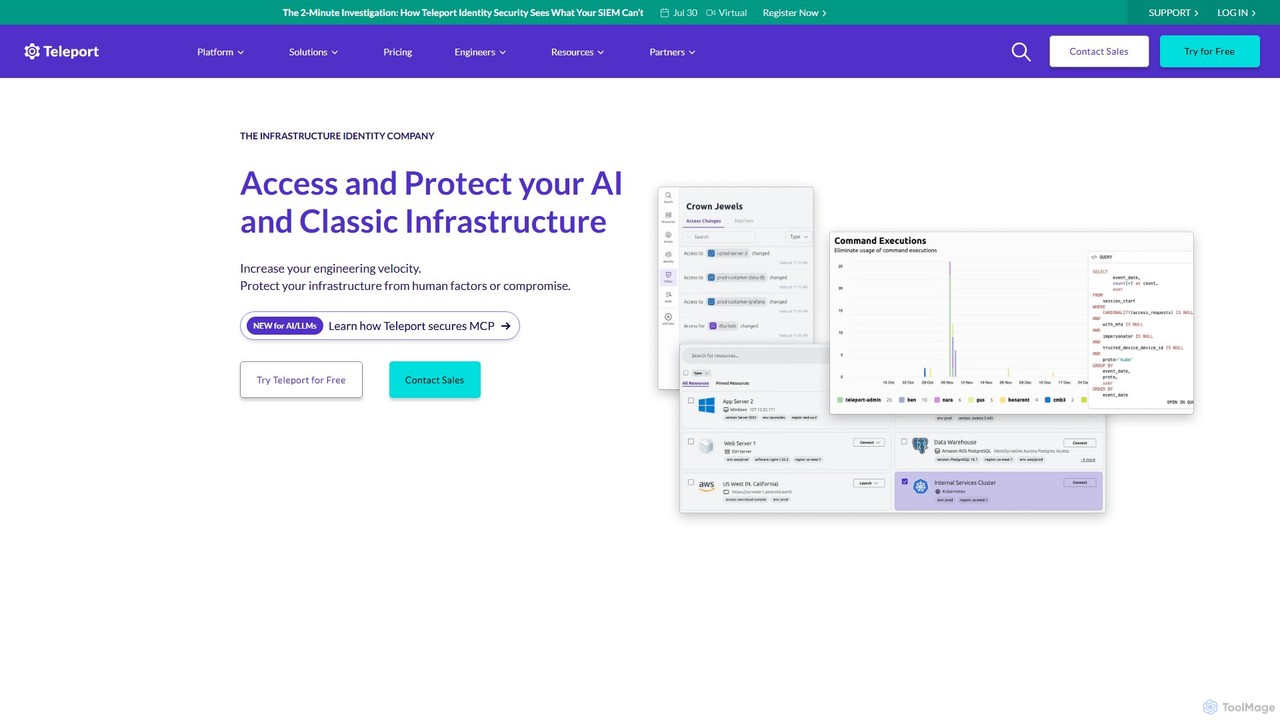
goteleport is an identity-native infrastructure access platform that provides secure, zero-trust access to servers, applications, and data. It …
goteleport is an identity-native infrastructure access platform that provides secure, zero-trust access to servers, applications, and data. It unifies identity, access, and policy for humans, machines, and AI agents, eliminating credentials and reducing the attack surface while improving engineering productivity.
About Identity And Access Management
Identity and Access Management (IAM) tools are a specialized category of security solutions designed to ensure that the right individuals have the appropriate access to technology resources. These systems operate on the principle of least privilege, using policies and rules to manage user identities and control their access rights across various applications and networks. By centralizing authentication and authorization, IAM tools significantly reduce the risk of unauthorized access and data breaches. They are fundamental for maintaining a secure and compliant IT environment, especially in complex, multi-cloud infrastructures.
Core Features
- Single Sign-On (SSO): Allows users to log in with a single set of credentials to access multiple applications and services.
- Multi-Factor Authentication (MFA): Adds a layer of security by requiring two or more verification methods to grant access.
- User Provisioning & Deprovisioning: Automates the creation, modification, and deletion of user accounts and their access rights across systems.
- Access Control Policies: Enables administrators to define granular permissions based on user roles, attributes, and context (e.g., location, device).
- Identity Lifecycle Management: Manages the entire lifecycle of a digital identity, from onboarding to offboarding.
Use Cases
IAM tools are essential for organizations of all sizes. In corporate environments, they streamline employee onboarding and offboarding processes. For businesses using cloud services like AWS or Azure, they provide centralized control over access to critical infrastructure. They are also used in customer-facing applications (CIAM) to manage user registration, login, and consent, enhancing both security and user experience.
How to Choose
When selecting an IAM tool, consider its integration capabilities (support for SAML, OAuth, OpenID Connect), scalability to handle your user base, and the strength of its security features, such as available MFA methods. Also, evaluate its compliance and reporting features to ensure it meets industry regulations (like GDPR or HIPAA) and assess the ease of administration for your IT team.

Identity And Access ManagementUse Cases
Automate Secure Employee Onboarding
An IT administrator for a growing tech company uses an IAM platform to streamline new hire onboarding. Instead of manually creating accounts in a dozen different applications, the admin defines a 'Software Developer' role in the IAM system. When a new developer joins, their identity is created once, and the system automatically provisions access to essential tools like GitHub, Jira, Slack, and the company's cloud environment based on the pre-defined role. This reduces setup time from hours to minutes, minimizes human error, and ensures new hires have exactly the access they need from day one, adhering to the principle of least privilege.
Implement Zero Trust Security Framework
A security team at a financial institution implements a Zero Trust model using their IAM solution. They configure policies that require Multi-Factor Authentication (MFA) for every login attempt, regardless of whether the user is inside or outside the corporate network. The IAM tool continuously assesses contextual signals like device health, user location, and time of day to grant or deny access to sensitive financial applications. This approach ensures that every access request is verified, significantly strengthening the security posture against sophisticated threats like credential theft and lateral movement within the network.
Centralize Access for Hybrid Cloud Environments
A manufacturing company operates with a mix of on-premise legacy systems and modern cloud applications on AWS and Azure. Their IT team uses an IAM solution to create a unified access portal. Employees now use Single Sign-On (SSO) to access all their required applications, whether they are hosted in the cloud or in the local data center. The IAM platform acts as a central control plane, allowing administrators to manage permissions, enforce security policies, and monitor access logs for all resources from a single dashboard, simplifying management and improving visibility across their entire hybrid IT landscape.
Enhance Customer Experience with CIAM
An e-commerce platform integrates a Customer Identity and Access Management (CIAM) solution to improve user experience and security. The CIAM tool enables seamless customer registration through social logins (e.g., Google, Facebook) and provides self-service options for password resets and profile management. It also securely stores customer data and manages consent for marketing communications, helping the business comply with privacy regulations like GDPR. By offering a frictionless and secure login process, the platform increases customer retention and builds trust, while offloading identity management tasks from their core development team.
Secure and Automate Employee Offboarding
When an employee resigns from a healthcare organization, the HR manager updates their status in the HR system. This action triggers an automated workflow in the IAM platform. The IAM tool immediately revokes the employee's access to all systems, including email, patient record databases, and internal applications. This instant deprovisioning process eliminates the risk of unauthorized access by former employees, which is critical for maintaining data security and complying with HIPAA regulations. The entire process is logged for auditing purposes, providing a clear record that all access rights were terminated promptly.
Enforce Compliance and Simplify Auditing
A compliance officer at a publicly traded company uses the IAM system to prepare for a SOX audit. The platform provides a centralized audit trail, logging every access request, authentication attempt, and permission change across all connected applications. The officer can easily generate reports showing who has access to critical financial systems and a history of their access activities. This simplifies the process of demonstrating compliance to auditors, reduces the manual effort required to gather evidence, and provides continuous visibility into access controls, helping to proactively identify and mitigate potential compliance risks.