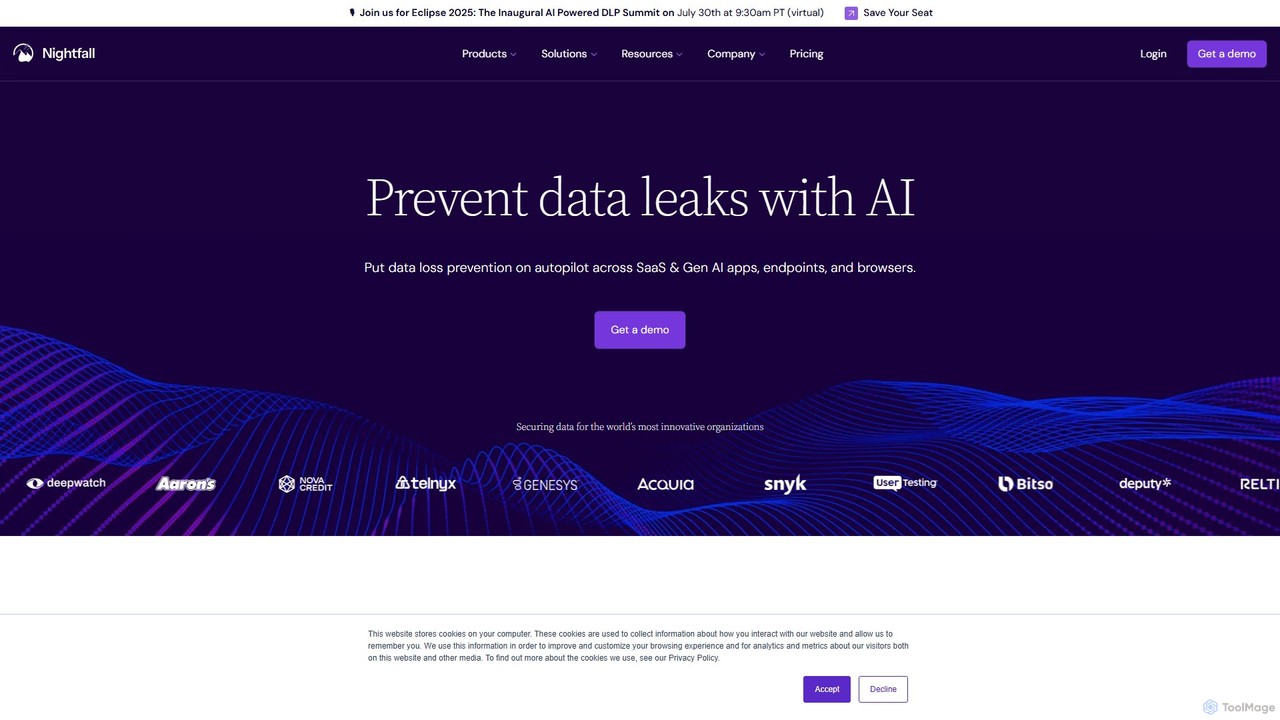
Insider Risk Management tools are AI-powered solutions designed to detect, prevent, and mitigate threats originating from within an organization. These platforms leverage advanced analytics and machine learning to monitor user behavior, data access, and system interactions, identifying suspicious activities that could indicate malicious intent or unintentional data exposure. Their primary value lies in safeguarding sensitive data, intellectual property, and critical systems from internal vulnerabilities, thereby reducing potential financial loss and reputational damage.
Core Features
- User Behavior Analytics (UBA): Monitors and analyzes employee activities across systems and data to detect anomalous patterns indicative of risk.
- Data Loss Prevention (DLP) Integration: Works with DLP systems to identify and prevent unauthorized exfiltration or misuse of sensitive information.
- Access Monitoring & Control: Tracks access to critical resources and data, ensuring adherence to least privilege principles and flagging unusual access attempts.
- Anomaly Detection: Utilizes machine learning to establish baseline behaviors and alert security teams to deviations that suggest potential insider threats.
- Policy Enforcement & Remediation: Automates responses to policy violations, from alerts and warnings to blocking actions and initiating incident response workflows.
Use Cases
Organizations use these tools to protect intellectual property from departing employees, prevent accidental data breaches from misconfigured sharing settings, and identify potential sabotage attempts by disgruntled staff. These solutions are crucial for maintaining compliance and securing sensitive assets against internal vulnerabilities.
How to Choose
When selecting an Insider Risk Management solution, consider its integration capabilities with existing security infrastructure (DLP, SIEM), the granularity of its monitoring and analytics, and its ability to differentiate between malicious and unintentional actions. Evaluate the platform's scalability, ease of deployment, and the clarity of its reporting and alert mechanisms to ensure it aligns with your organizational size and security team's operational needs.