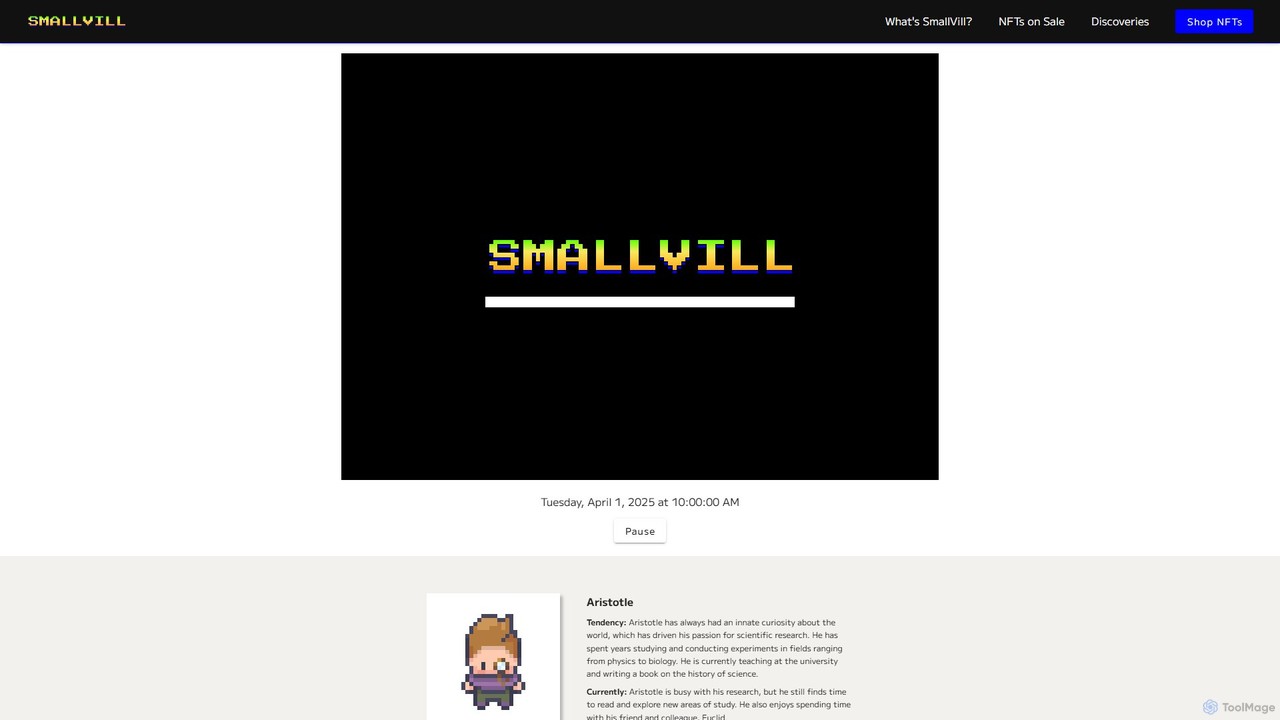
Generative Agents are a class of AI-powered tools that create autonomous entities capable of perceiving, reasoning, and interacting within dynamic environments, often exhibiting complex, emergent behaviors. These agents leverage advanced AI models, such as large language models, to simulate human-like thought processes, memory, and social interactions, making them a sophisticated component within the broader field of simulation. Their primary value lies in generating realistic and unpredictable behaviors, enabling the exploration of complex systems and human-agent interactions.
Core Features
- Autonomous Decision-Making: Agents can independently evaluate situations and make choices based on their goals, memories, and environmental perceptions.
- Memory and Reflection: Capable of storing past experiences, reflecting on them, and updating their internal states and behaviors over time.
- Natural Language Interaction: Many agents can process and generate human-like language, facilitating communication with users or other agents.
- Environmental Perception: Ability to interpret and react to changes in their simulated environment, adapting their actions accordingly.
- Emergent Behavior: Individual agent interactions can lead to complex, unscripted collective behaviors that are difficult to pre-program.
Use Cases
Generative Agents are invaluable in fields requiring realistic behavioral modeling. Game developers use them to create highly interactive and believable non-player characters (NPCs) with dynamic personalities and evolving relationships. Researchers in social sciences deploy them to simulate complex societal dynamics, test hypotheses about human interaction, and model the spread of information or trends. Urban planners can utilize these agents to simulate pedestrian flow, traffic patterns, and resource consumption, gaining insights into city design and policy impacts.
How to Choose
When selecting a Generative Agent platform, consider the complexity of behaviors you need to simulate; some tools excel at simple interactions, while others support intricate social dynamics. Evaluate the scalability and performance, especially for large-scale simulations involving many agents. Assess the ease of defining agent personalities, goals, and environmental rules, as well as the platform's integration capabilities with existing simulation or development environments. Finally, consider the ethical implications and control mechanisms for managing agent autonomy and potential biases.