Entertainment Best in category 1 results Virtual World AI Tool

Popular AI tools in the Virtual World field of Entertainment include SmallVill, etc., helping you quickly improve efficiency.

SmallVill

SmallVill

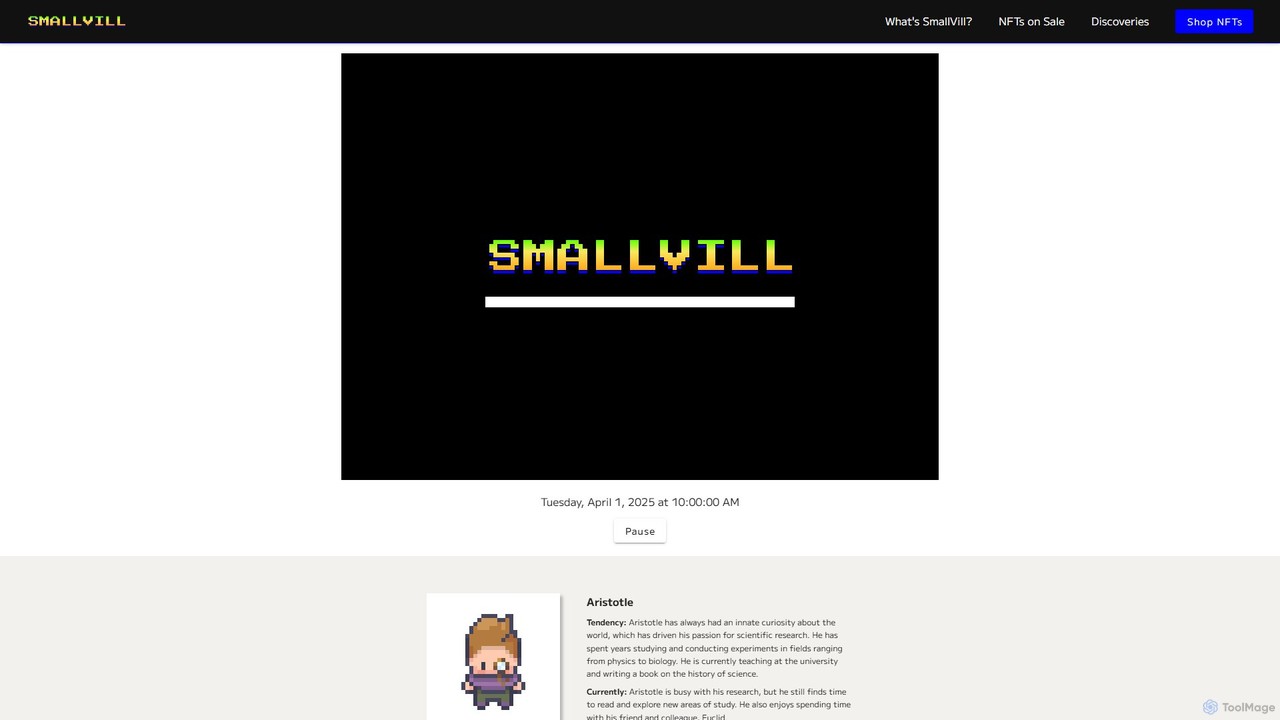
SmallVill is a groundbreaking virtual environment simulating the lives and interactions of dozens of AI agents. Inspired by …

3.1K

About Virtual World

AI Virtual World tools are platforms for creating, populating, and managing immersive digital environments using artificial intelligence. These tools leverage generative AI to dynamically create realistic characters (NPCs), expansive landscapes, and evolving narratives. Their primary value lies in building interactive and unpredictable worlds for gaming, simulation, and the metaverse, significantly reducing manual content creation. This AI-driven approach enables worlds that feel alive, responding intelligently to user actions.

Core Features

  • AI-Powered NPC Generation: Creates non-player characters with unique personalities, behaviors, and conversational abilities.
  • Procedural Environment Creation: Automatically generates vast and varied landscapes, cities, or interiors based on defined rules and styles.
  • Dynamic Narrative Systems: Develops evolving storylines and quests that adapt in real-time to player choices and actions.
  • Real-time Asset Generation: Allows users to create 3D objects, textures, and other assets within the virtual world using text or voice prompts.
  • Behavioral Simulation: Models complex social dynamics, crowd movements, and ecosystem interactions to create a believable world.

Use Cases

These tools are primarily used by game developers to build rich, open-world experiences with less manual effort. In the enterprise sector, they are applied to create sophisticated training simulations for industries like aviation, healthcare, and defense. Metaverse platforms also use them to populate their digital spaces with engaging AI agents and dynamic content, fostering community and interaction.

How to Choose

When selecting an AI Virtual World tool, consider the scalability of the platform for handling large, persistent worlds. Evaluate the depth of AI customization for NPC behavior and narrative generation. Check for integration capabilities with standard game engines like Unreal or Unity. Finally, assess the tool's focus—whether it's geared more towards game development, enterprise simulation, or social metaverse applications.

Virtual WorldUse Cases

1

Develop Dynamic Open-World Games

Game developers use AI Virtual World tools to populate vast open-world environments. Instead of manually scripting thousands of non-player characters (NPCs), they can use AI to generate entire populations with unique appearances, personalities, and daily routines. For example, an AI can create a bustling city where each citizen has a name, a job, and relationships, all of which dynamically react to the player's actions. This approach saves thousands of development hours and results in a more immersive and believable game world that feels truly alive.

2

Create Realistic Corporate Training Simulations

An L&D manager at a large logistics company needs to train new drivers on handling unexpected road hazards. Using an AI Virtual World tool, they create a simulation of a busy highway. The AI controls other vehicles, pedestrians, and weather conditions, creating unpredictable scenarios like sudden braking or jaywalking. Trainees can practice their responses in a safe, controlled environment. The AI can adapt the difficulty in real-time based on the driver's performance, providing a personalized and highly effective training experience that is difficult to replicate in traditional training.

3

Build Engaging Metaverse Social Hubs

A company launching a new metaverse platform wants to ensure their central social hub is engaging for new users. They use an AI Virtual World tool to create AI-powered guides and companions. These AI agents can welcome newcomers, answer questions about the platform's features, and even initiate mini-games or social activities. Unlike static info-bots, these AI characters have distinct personalities and can hold natural conversations, making the initial user experience more welcoming and less intimidating. This leads to higher user retention and fosters a more vibrant community from day one.

4

Visualize Urban Planning and Architecture

An architectural firm is designing a new residential complex. They use an AI Virtual World tool to create a dynamic 3D model. Instead of a static rendering, their model is populated with AI residents who simulate daily life: walking to the park, driving to work, and interacting in common areas. This allows the planners to analyze pedestrian flow, identify potential noise issues, and test the usability of public spaces before a single brick is laid. The client can virtually walk through a living, breathing version of the project, providing much more valuable feedback than static blueprints could.

5

Generate Procedural Content for Film & Animation

An animation studio working on a fantasy series needs to create numerous background scenes set in a vast, magical forest. Using an AI Virtual World tool, they can procedurally generate the entire forest ecosystem. They define rules for tree types, plant distribution, and terrain features, and the AI generates miles of unique, non-repeating forest environments. This saves artists from manually modeling every tree and rock. Furthermore, the AI can simulate weather effects like wind moving through the trees or fog settling in valleys, adding a layer of realism and dynamism to the final shots, all while drastically reducing production time.

6

Create Digital Twins for Industrial Optimization

An operations manager at a manufacturing plant wants to test new production line layouts without disrupting current operations. They use an AI Virtual World tool to create a 'digital twin'—a precise virtual replica of their factory. This digital twin is populated with AI workers and machines that simulate the entire production process. The manager can then test different layouts, shift schedules, or machine maintenance plans in the simulation. The AI analyzes the results, predicting throughput, identifying bottlenecks, and calculating potential cost savings, allowing the company to optimize its real-world operations with zero risk.

Virtual WorldFrequently Asked Questions