
ToolMage
Sign in

Best 1 Blockchain Based Social AI tools for Social & Community

Popular Blockchain Based Social AI tools in Social & Community include Utopic.ai, helping you work more efficiently.

Utopic.ai
Free

Utopic.ai

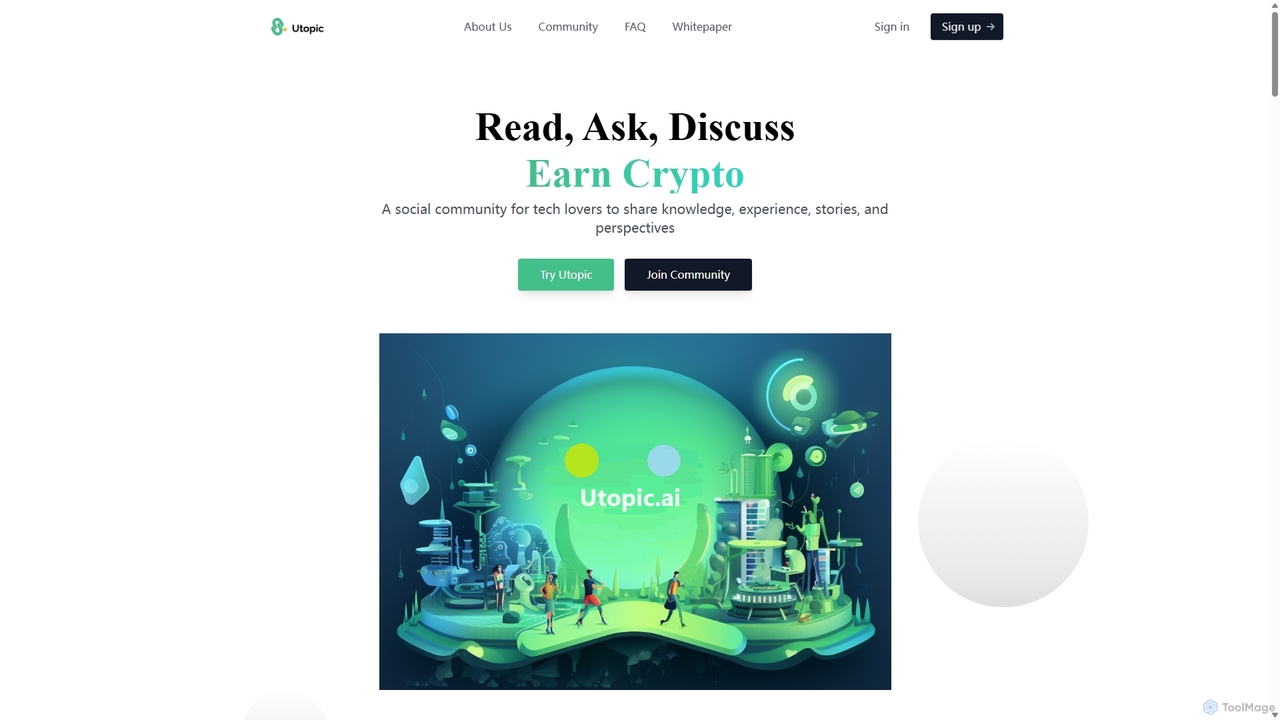
Utopic.ai is a Web3 social community platform where tech enthusiasts can earn cryptocurrency by creating and engaging with content. Users can read, write, ask questions, and discuss topics like Web3, AI, and science to earn UTOP tokens. The platform features an AIGC-powered editor, NFT integration for content ownership, and a decentralized reward system, fostering a knowledge-sharing ecosystem where contributions are tokenized and valued.

Knowledge Sharing
Visits 5.7KFavorites 172Likes 172

About Blockchain Based Social

Blockchain Based Social tools are a new generation of social networks built on decentralized technologies. These platforms use blockchain to give users true ownership of their data, content, and identity, moving away from the centralized control of traditional social media. They enable features like censorship resistance, transparent governance, and direct, built-in monetization for creators through cryptocurrencies. This creates a more equitable and user-centric environment for online communities.

Core Features

  • Decentralized Identity (DID): Manage your own digital identity without relying on a central authority, allowing for portability across platforms.
  • Content as Assets (NFTs): Posts, images, and other content can be minted as non-fungible tokens (NFTs), granting verifiable ownership to the creator.
  • Token-Gated Access: Create or join exclusive communities where membership is verified by ownership of specific tokens or NFTs.
  • Integrated Crypto Economy: Directly reward creators with cryptocurrency tips, or earn tokens for your engagement and contributions to the network.
  • Censorship Resistance: Content is stored on a distributed network, making it significantly harder for any single entity to arbitrarily delete posts or ban users.

Use Cases

These platforms are ideal for Web3 native communities, DAOs (Decentralized Autonomous Organizations), and digital creators who want to build direct relationships with their audience. They are also valuable for users concerned with data privacy, censorship, and seeking alternative monetization models beyond advertising.

How to Choose

When selecting a platform, consider the underlying blockchain's transaction fees and speed. Evaluate the platform's tokenomics and monetization model. Assess the user interface's ease of use, the size and engagement of its existing community, and the degree of true decentralization it offers.

Blockchain Based Social use cases

1

Launch a DAO Governance Forum

A Decentralized Autonomous Organization (DAO) needs a transparent and tamper-proof platform for member discussions and voting. Using a blockchain-based social tool, the DAO can create a token-gated space accessible only to its governance token holders. Members can submit proposals, debate topics, and vote on-chain. All interactions are recorded on the blockchain, ensuring a permanent and auditable record of the DAO's decision-making process, fostering trust and active participation.

2

Direct Monetization for Digital Artists

Digital artists often lose a significant portion of their revenue to fees on traditional platforms. On a blockchain social network, an artist can post their latest creation and mint it directly as an NFT. Followers can purchase the NFT, send crypto tips, or pay to unlock exclusive content. This model removes intermediaries, allowing the artist to retain a much larger share of the value they create and build a direct financial relationship with their supporters.

3

Create an Exclusive NFT-Gated Fan Club

A musician or influencer wants to build a deeper connection with their most dedicated fans. They can issue a collection of NFTs and use a blockchain social platform to create a private group accessible only to NFT holders. In this exclusive space, they can share behind-the-scenes content, offer early access to tickets or merchandise, and host private Q&A sessions. This creates a verifiable and tradable membership system that rewards loyal community members.

4

Publish Censorship-Resistant Journalism

Investigative journalists and activists in restrictive environments need a way to publish information without fear of it being taken down. By posting their articles on a decentralized social platform, the content is stored across a network of nodes, not on a single company's server. This makes it extremely difficult for any single government or corporation to censor or delete the information, ensuring freedom of speech and access to critical knowledge.

5

Build a Portable Web3 Professional Identity

A software developer wants to create a professional profile that isn't locked to a single platform like LinkedIn. On a blockchain-based social network, their profile, connections, and on-chain contributions (e.g., to open-source projects) form a verifiable and portable digital identity (DID). They can use this identity to log into other Web3 applications, prove their credentials without relying on a central authority, and truly own their professional reputation.

6

Engage in SocialFi to Earn Rewards

Users looking to be rewarded for their social media activity can join a SocialFi (Social Finance) platform. By creating popular content, curating high-quality posts, or simply engaging with the community, users earn the platform's native cryptocurrency tokens. This transforms the user from a product being sold to advertisers into an active participant who shares in the economic value generated by the network, aligning the incentives of the platform and its users.

Blockchain Based Social FAQ

What are Blockchain Based Social platforms?

Blockchain Based Social platforms are social networks built on decentralized technology like blockchain. Their primary goal is to return data ownership and control to users. Key features include decentralized identities, on-chain content ownership (often as NFTs), censorship resistance, and integrated cryptocurrency-based monetization models. They offer an alternative to traditional social media, which is controlled by central corporations.

How do they differ from traditional social media like Facebook?

The main difference lies in control and ownership. On traditional platforms, the company owns the servers, controls the data, and can censor content or ban users. On blockchain-based platforms:

  • Data Ownership: You own your data and social graph, not the platform.
  • Decentralization: There is no single point of control or failure.
  • Monetization: Value flows directly between creators and consumers via crypto, not through an ad-based model.
  • Censorship: Content is much harder to remove due to its distributed nature.

How do I choose the right Blockchain Based Social platform?

Consider these factors when choosing a platform:

  • Underlying Blockchain: Check for low transaction fees and high speed (e.g., Solana, Polygon vs. Ethereum mainnet).
  • User Experience (UX): Some platforms are complex. Find one that is intuitive for your level of technical skill.
  • Community: Look for an active and engaged community that aligns with your interests.
  • Tokenomics: Understand how the platform's native token works and how value is distributed.
  • Level of Decentralization: Investigate how decentralized the platform truly is in its governance and infrastructure.

What does 'user data ownership' actually mean on these platforms?

User data ownership means your digital identity, content, and social connections are controlled by your cryptographic wallet, not by the platform's database. You can theoretically take this data and use it on another compatible application. Your content, often minted as an NFT, is a digital asset you truly own and can sell or transfer. The platform acts more as a protocol or a lens to view on-chain data, rather than a silo that traps it.

Are these platforms difficult for beginners to use?

The learning curve can be steeper than for traditional social media. Users typically need a cryptocurrency wallet (like MetaMask) to sign up and interact. Concepts like gas fees, signing transactions, and managing private keys can be new to many. However, many newer platforms are focusing heavily on improving the user experience (UX) to abstract away the complexity, offering social logins and simpler interfaces to make onboarding easier for a mainstream audience.