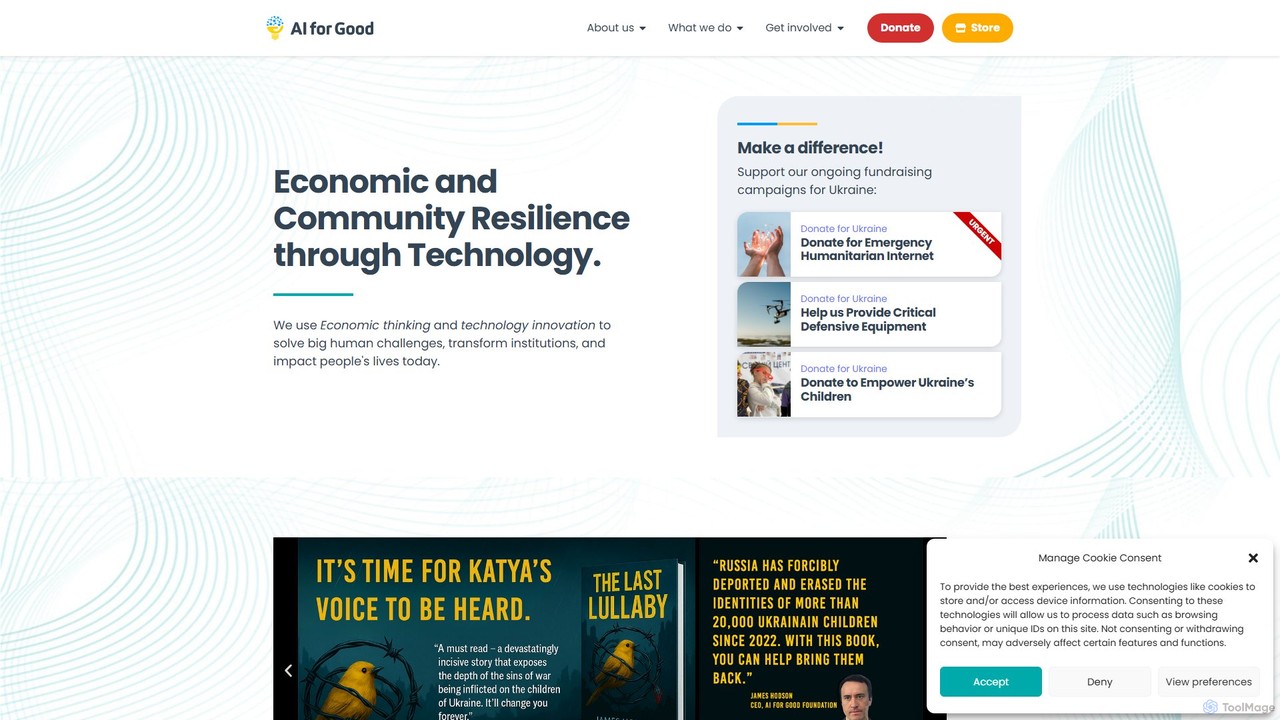
AI for Good Foundation
AI for Good Foundation is a global non-profit organization that harnesses the power of artificial intelligence and data …
AI for Good Foundation is a global non-profit organization that harnesses the power of artificial intelligence and data science to address pressing humanitarian issues and advance the UN's Sustainable Development Goals. It develops technology, provides open data, and fosters a network of experts to create tangible social impact.
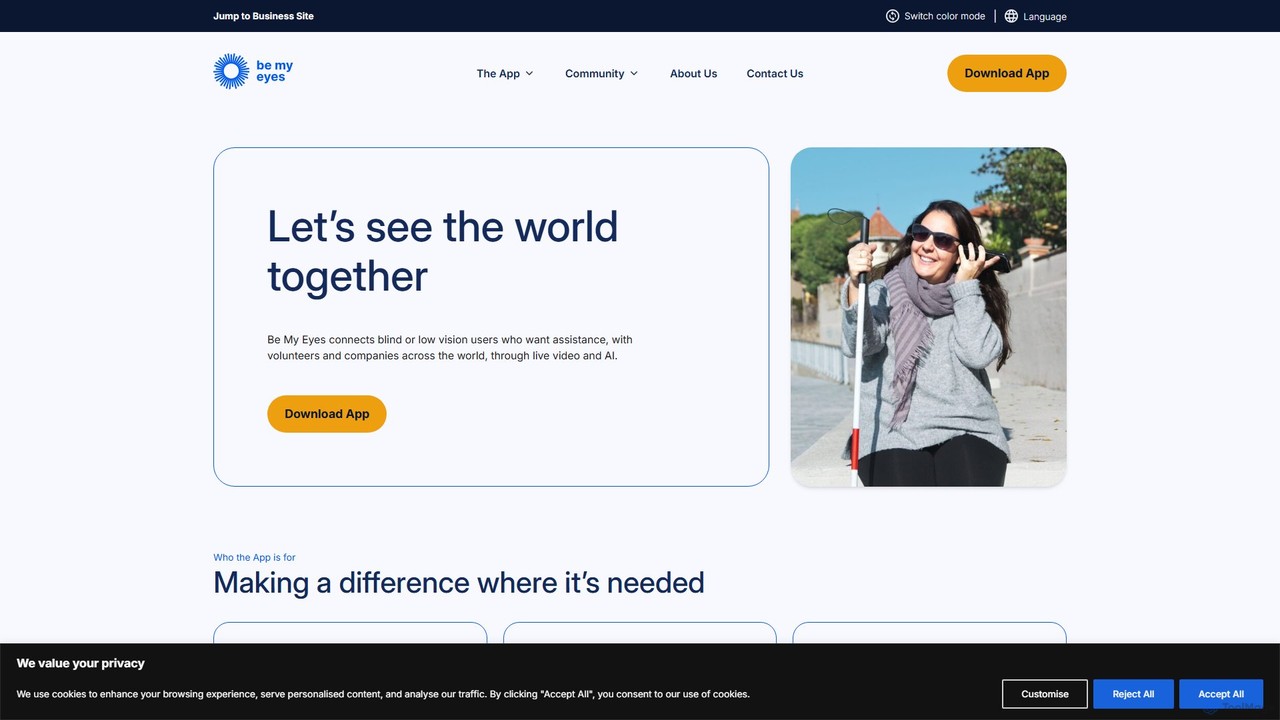
Be My Eyes
Be My Eyes is a free mobile app that connects blind and low-vision individuals with sighted volunteers and …
Be My Eyes is a free mobile app that connects blind and low-vision individuals with sighted volunteers and advanced AI for visual assistance. Through live video calls or AI-powered image descriptions, users get help with tasks like reading labels, navigating new places, and identifying objects, fostering greater independence.
About Social Impact
Social Impact AI tools are a class of artificial intelligence applications designed to address pressing social, humanitarian, and environmental challenges. These tools leverage machine learning, data analysis, and predictive modeling to analyze complex societal data, identify patterns, and support decision-making in non-profit, governmental, and public sectors. They are applied in diverse areas such as public health monitoring, climate change modeling, disaster response coordination, and promoting educational equity. Unlike purely commercial AI, their primary goal is to generate positive societal outcomes, often with a focus on fairness, accountability, and transparency.
Core Features
- Predictive Analytics for Social Good: Analyzes historical data to forecast social trends, disease outbreaks, or resource needs.
- Data-Driven Policy Support: Processes large datasets to provide evidence-based insights for public policy and resource allocation.
- Crisis Response & Management: Uses satellite imagery and real-time data to coordinate disaster relief and humanitarian aid.
- Environmental Monitoring: Analyzes environmental data to track deforestation, pollution, and the effects of climate change.
- Accessibility & Inclusivity Tech: Develops applications that assist individuals with disabilities or bridge educational gaps.
Applicable Scenarios
These tools are primarily used by non-governmental organizations (NGOs), public health agencies, environmental conservation groups, and humanitarian aid organizations. For instance, an epidemiologist might use a tool to predict the spread of a virus, while a disaster response team could use AI to map the most damaged areas after a hurricane to optimize aid distribution.
How to Choose
When selecting a Social Impact AI tool, prioritize mission alignment to ensure the technology's goals match your organization's values. Scrutinize data privacy and security protocols, especially when handling sensitive population data. Evaluate the model for ethical bias and fairness to avoid harming vulnerable groups. Finally, consider the tool's scalability and accessibility, particularly for deployment in low-resource environments.
Social ImpactUse Cases
Public Health Outbreak Prediction
Public health officials and epidemiologists use Social Impact AI to monitor and predict the spread of infectious diseases. By analyzing anonymized clinical data, climate patterns, and population movement information, these tools can generate early warnings for high-risk areas. This allows for the proactive deployment of resources, targeted vaccination campaigns, and public health advisories, ultimately helping to contain outbreaks and save lives before they escalate.
Optimizing Humanitarian Aid Distribution
In the aftermath of a natural disaster, disaster response coordinators and NGO logistics managers use AI to efficiently deliver aid. The tools analyze satellite imagery to assess damage, map accessible routes, and use population data to predict where aid is most needed. This data-driven approach ensures that food, water, and medical supplies are distributed equitably and reach the most affected populations faster, overcoming logistical challenges in chaotic environments.
Monitoring Deforestation and Wildlife Poaching
Environmental scientists and conservation groups leverage AI to protect endangered ecosystems. AI algorithms process vast amounts of satellite imagery and drone footage to detect changes in forest cover in near real-time, flagging potential illegal logging activities. Additionally, these systems can analyze ranger patrol data and environmental factors to predict poaching hotspots, enabling conservation teams to deploy anti-poaching units more effectively and protect vulnerable species.
Enhancing Educational Equity with Personalized Learning
Non-profit educational organizations use AI to provide quality resources to students in underserved communities. AI-powered platforms can adapt learning content to each student's individual pace and style, identifying knowledge gaps and providing targeted exercises. This creates a personalized learning path that helps bridge the educational divide by offering tailored support that might not be available through traditional classroom settings, ultimately improving learning outcomes for all students.
Assisting in Crisis Text Line Support
Mental health support organizations that operate crisis text lines use AI to manage high volumes of incoming messages. An AI system can triage messages by analyzing text for severity and urgency, based on keywords and sentiment. This allows the system to flag high-risk cases for immediate human intervention, ensuring that individuals in the most critical need are connected with a human counselor faster. It improves the efficiency and effectiveness of the support service, enabling them to help more people in distress.
Improving Agricultural Yields for Food Security
In regions facing food insecurity, agricultural cooperatives and extension workers use AI to help smallholder farmers improve crop management. AI tools analyze weather forecasts, soil sensor data, and satellite imagery to provide precise recommendations on planting times, irrigation schedules, and fertilizer application. This practice, known as precision agriculture, helps increase crop yields, reduce water and resource waste, and ultimately enhance food security for local communities.