ToolMage
Sign in

Best 1 Cloud Management AI tools for Software

Popular Cloud Management AI tools in Software include Broadcom, helping you work more efficiently.

Broadcom
Paid

Broadcom

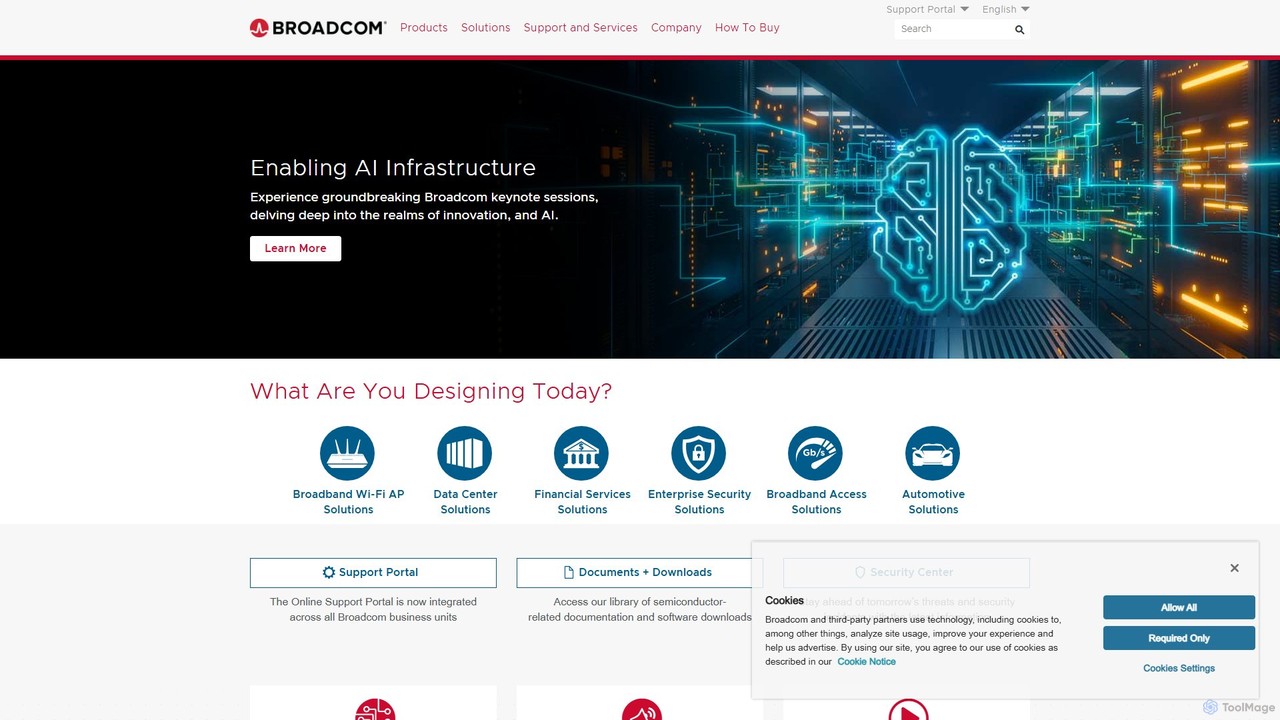
Broadcom is a global technology leader providing a comprehensive portfolio of semiconductor and infrastructure software solutions. Its products are foundational for building, scaling, and securing the world's most advanced AI data centers and enterprise private AI clouds.

Semiconductors
Visits 4.8MFavorites 117Likes 134

About Cloud Management

AI Cloud Management tools are platforms that leverage artificial intelligence and machine learning to automate and optimize cloud infrastructure. These tools analyze vast amounts of data from cloud environments to provide predictive insights, automate resource allocation, and enhance security. Their primary value lies in transforming reactive cloud operations into a proactive, self-optimizing system, significantly reducing costs and manual effort. By identifying patterns and anomalies, they help organizations maintain peak performance and compliance across complex multi-cloud setups.

Core Features

  • AI-Powered Cost Optimization: Analyzes usage patterns to recommend instance rightsizing, identify idle resources, and predict future spending.
  • Automated Performance Management: Proactively detects performance bottlenecks and automatically scales resources based on predictive demand models.
  • Intelligent Security & Compliance: Uses anomaly detection to identify security threats and continuously monitors for compliance policy violations.
  • Predictive Capacity Planning: Forecasts future resource requirements to prevent overprovisioning and ensure service availability.

Use Cases

These tools are essential for DevOps engineers, FinOps specialists, and IT administrators managing large-scale or multi-cloud environments (AWS, Azure, GCP). They are particularly valuable in dynamic sectors like e-commerce for handling traffic spikes, and in regulated industries like finance for maintaining continuous compliance.

How to Choose

When selecting an AI Cloud Management tool, consider its compatibility with your cloud providers, the depth of its automation capabilities (recommendations vs. actions), and its integration with your existing CI/CD and monitoring stack. Also, evaluate the sophistication of its predictive models for cost and performance, as this is the core differentiator.

Cloud Management use cases

1

Automated Cloud Cost Control for Startups

A fast-growing tech startup's DevOps team struggles with unpredictable cloud bills from AWS. They use an AI Cloud Management tool to continuously scan their environment. The tool's AI identifies dozens of unattached EBS volumes and idle EC2 instances left running by developers after testing. It automatically generates and applies policies to shut down non-production instances outside of business hours, reducing their monthly cloud spend by over 25% without impacting development velocity.

2

Proactive Performance Tuning for E-commerce

An e-commerce platform anticipates a major traffic surge during a holiday sale. Instead of manually over-provisioning servers, their SRE team relies on an AI Cloud Management tool. The tool's predictive analytics model, trained on past traffic data, forecasts the exact scaling needs hour-by-hour. It automatically scales up their Kubernetes pods and database read replicas just before the peak hits and scales them down as the sale winds down, ensuring 100% uptime while minimizing costs from over-provisioning.

3

Continuous Compliance Monitoring in Finance

A financial services company must adhere to strict PCI DSS compliance standards across its multi-cloud (AWS and Azure) environment. Their compliance team uses an AI Cloud Management tool to automate this process. The tool continuously scans all cloud resources against a predefined PCI DSS policy set. It automatically flags any misconfiguration, such as an unencrypted S3 bucket or a publicly exposed database port, and creates a high-priority ticket in Jira for the responsible team, providing a complete audit trail for regulators.

4

FinOps-Driven Resource Rightsizing

A FinOps analyst at a large enterprise is tasked with reducing a $2 million monthly cloud bill. Using an AI Cloud Management tool, they get a dashboard with AI-driven rightsizing recommendations. The tool analyzed weeks of CPU and memory utilization data and suggests downsizing over 200 over-provisioned virtual machines and databases. The analyst reviews and approves these recommendations in the tool, which then uses infrastructure-as-code to automatically apply the changes, resulting in an immediate and recurring saving of $150,000 per month.

5

Intelligent Anomaly Detection in Cloud Logs

A Security Operations Center (SOC) team is overwhelmed by the volume of logs generated by their cloud applications. They deploy an AI Cloud Management tool with log analysis capabilities. The AI establishes a baseline of normal activity. One night, it detects a series of unusual API calls originating from an unfamiliar IP address, attempting to access sensitive data. It immediately flags this as a high-severity anomaly, sends an alert to the on-call security engineer via Slack, and provides context, allowing the team to quickly investigate and mitigate a potential data breach.

6

Capacity Planning for a Growing SaaS Application

A SaaS company is rapidly acquiring new customers, and their platform team needs to ensure they have enough infrastructure capacity without overspending. They use an AI Cloud Management tool for capacity planning. The tool analyzes historical growth trends and resource utilization metrics. It generates a forecast predicting they will exceed their current database capacity in three months. Based on this, the team proactively schedules a database upgrade, avoiding a last-minute crisis and ensuring a smooth experience for their growing user base.

Cloud Management FAQ

What is an AI Cloud Management tool?

An AI Cloud Management tool is a software platform that uses artificial intelligence and machine learning to automate the optimization, monitoring, and security of cloud environments. Unlike traditional tools that simply report data, these platforms analyze complex patterns to predict future needs, identify cost-saving opportunities, detect security anomalies, and automate corrective actions. Their main goal is to reduce manual effort, lower cloud spending, and improve the performance and reliability of cloud infrastructure.

How to choose the right AI Cloud Management platform?

Choosing the right platform involves evaluating several key factors:

  • Cloud Support: Ensure it supports all the cloud providers you use (e.g., AWS, Azure, GCP, multi-cloud).
  • Feature Depth: Assess the sophistication of its core features, such as cost optimization algorithms, predictive scaling accuracy, and security threat detection models.
  • Automation Level: Determine if it only provides recommendations or if it can safely execute automated actions (e.g., rightsizing instances, terminating resources).
  • Integration: Check for integrations with your existing tools, including CI/CD pipelines, monitoring systems (like Datadog), and communication platforms (like Slack or Jira).
  • Ease of Use: Consider the user interface and the level of expertise required to operate the tool effectively.
What's the difference between AI Cloud Management and native cloud monitoring tools?

The key difference is being proactive versus reactive. Native tools like AWS CloudWatch or Azure Monitor are excellent for collecting metrics and setting basic, rule-based alerts (e.g., alert when CPU is >80%). They tell you what is happening now. AI Cloud Management tools go further by using machine learning to analyze this data, predict what will happen, and recommend or automate actions. They can identify complex cost-saving opportunities, predict traffic surges for scaling, and detect subtle security threats that rule-based alerts would miss.

What are the main benefits of using AI for cloud management?

The primary benefits include:

  • Significant Cost Savings: By automatically identifying idle resources, recommending rightsizing, and optimizing reserved instance purchases, these tools can substantially reduce cloud bills.
  • Improved Reliability and Performance: Predictive scaling and proactive bottleneck detection ensure applications remain responsive and available, even during unexpected traffic spikes.
  • Enhanced Security Posture: AI-driven anomaly detection can identify sophisticated threats and misconfigurations faster than manual analysis or rule-based systems.
  • Increased Operational Efficiency: Automating routine tasks like cost reporting, compliance checks, and performance tuning frees up valuable time for DevOps and SRE teams to focus on innovation.
Who typically uses AI Cloud Management tools?

These tools are used by a range of technical and financial roles within an organization. Key users include:

  • DevOps Engineers and SREs: For automating performance management, ensuring reliability, and integrating cloud operations into CI/CD pipelines.
  • FinOps Professionals: For gaining visibility into cloud spending, optimizing costs, and managing budgets.
  • IT and Cloud Administrators: For managing security posture, ensuring compliance, and overseeing the health of the entire cloud infrastructure.
  • Cloud Architects: For capacity planning and making data-driven decisions about infrastructure design.