
Software Best in category 1 results Business Tools AI Tool

Popular AI tools in the Business Tools field of Software include Worksync AI, etc., helping you quickly improve efficiency.

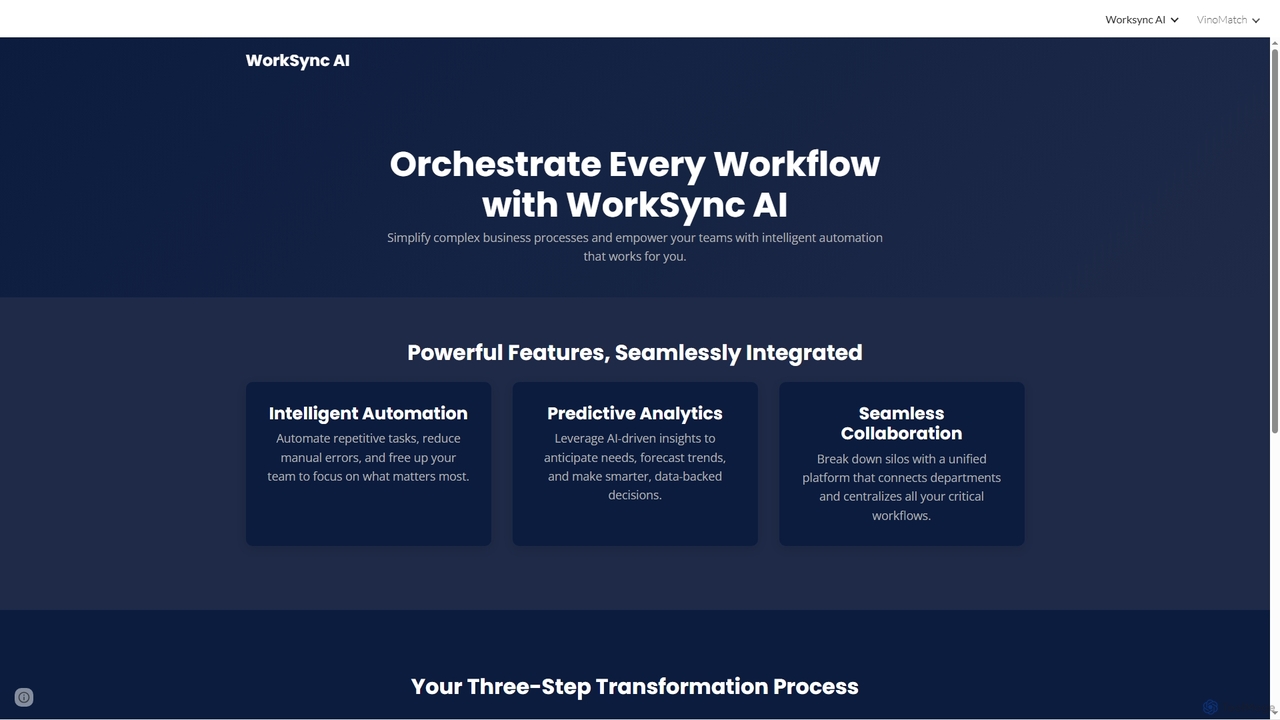
Worksync AI

Worksync AI

Worksync AI is an online platform designed to leverage artificial intelligence for enhancing work processes. While specific functionalities …

2.4K

About Business Tools

AI Business Tools are a class of software applications that leverage artificial intelligence to optimize and automate various business operations. These tools utilize machine learning, natural language processing (NLP), and predictive analytics to transform raw data into actionable insights. They are designed to enhance decision-making, improve efficiency, and drive growth by automating repetitive tasks and uncovering hidden patterns in data. Unlike traditional software, AI business tools can adapt and learn over time, providing increasingly accurate forecasts and recommendations.

Core Features

  • Predictive Analytics: Utilizes historical data and machine learning algorithms to forecast future trends, sales, and customer behavior.
  • Intelligent Process Automation (IPA): Automates complex workflows beyond simple tasks, such as invoice processing, customer support routing, and report generation.
  • Data-driven Insights: Analyzes large datasets to identify key performance indicators (KPIs), market opportunities, and operational inefficiencies.
  • Natural Language Processing (NLP): Enables tools to understand, interpret, and respond to human language for applications like sentiment analysis and chatbots.

Use Cases

AI Business Tools are widely adopted across various sectors. In e-commerce, they power personalized product recommendations and dynamic pricing. Financial services use them for fraud detection and algorithmic trading. Marketing departments leverage these tools for customer segmentation and campaign optimization, while HR teams use them for talent acquisition and employee sentiment analysis.

How to Choose

When selecting an AI business tool, first clearly define the specific problem you need to solve. Evaluate its integration capabilities with your existing systems like CRM or ERP. Assess the tool's scalability to ensure it can grow with your business. Finally, consider the level of technical expertise required for implementation and maintenance, as well as the provider's data security and compliance standards.

Business ToolsUse Cases

1

Automate Customer Support with AI Chatbots

A customer support manager for an e-commerce brand implements an AI chatbot to handle common inquiries. The chatbot is trained on historical support tickets and product FAQs to answer questions about order status, return policies, and product specifications 24/7. This frees up human agents to focus on complex, high-value customer issues. The implementation results in a 40% reduction in response time for initial queries and improves customer satisfaction scores by 15% within the first quarter.

2

Generate Accurate Sales Forecasts

A sales director uses an AI-powered business intelligence tool to improve forecasting accuracy. The tool connects to the company's CRM and financial data, analyzing historical sales cycles, seasonality, and individual rep performance. It generates a dynamic forecast that updates in real-time as new deals are won or lost. This provides a more reliable prediction of quarterly revenue, allowing for better resource allocation and strategic planning. The new process increases forecast accuracy from 75% to over 90%.

3

Analyze Market Sentiment from Social Media

A marketing analyst needs to understand public perception of a new product launch. They use an AI business tool with NLP capabilities to monitor and analyze mentions across social media platforms, news articles, and review sites. The tool automatically categorizes sentiment as positive, negative, or neutral and identifies key themes and talking points. This provides the marketing team with immediate, actionable feedback, allowing them to adjust their messaging and address customer concerns proactively, rather than waiting for survey results.

4

Streamline Invoice and Receipt Processing

An accounts payable department is overwhelmed with manual data entry from hundreds of monthly invoices. They adopt an AI tool for intelligent document processing. Staff can now simply scan or upload invoices in various formats (PDF, JPG). The AI uses optical character recognition (OCR) and machine learning to accurately extract key information like vendor name, invoice number, date, and line items. The extracted data is then automatically populated into the accounting software, reducing manual entry time by over 80% and minimizing costly human errors.

5

Optimize Supply Chain and Inventory Management

A retail operations manager uses an AI platform to optimize their supply chain. The tool analyzes historical sales data, weather patterns, and upcoming promotional events to predict demand for specific products with high accuracy. Based on these predictions, it automatically suggests optimal inventory levels for each store and warehouse, preventing both stockouts and overstock situations. This leads to a 20% reduction in carrying costs and a 10% increase in sales due to better product availability.

6

Personalize Marketing Campaigns at Scale

A digital marketing team wants to move beyond generic email blasts. They use an AI-powered marketing automation platform that analyzes customer data, including purchase history, browsing behavior, and demographics. The AI segments the audience into micro-groups and dynamically generates personalized email content, product recommendations, and offers for each segment. This hyper-personalization approach increases email open rates by 30% and click-through rates by 50%, leading to a significant uplift in conversion rates and customer loyalty.

Business ToolsFrequently Asked Questions