Prexplainer
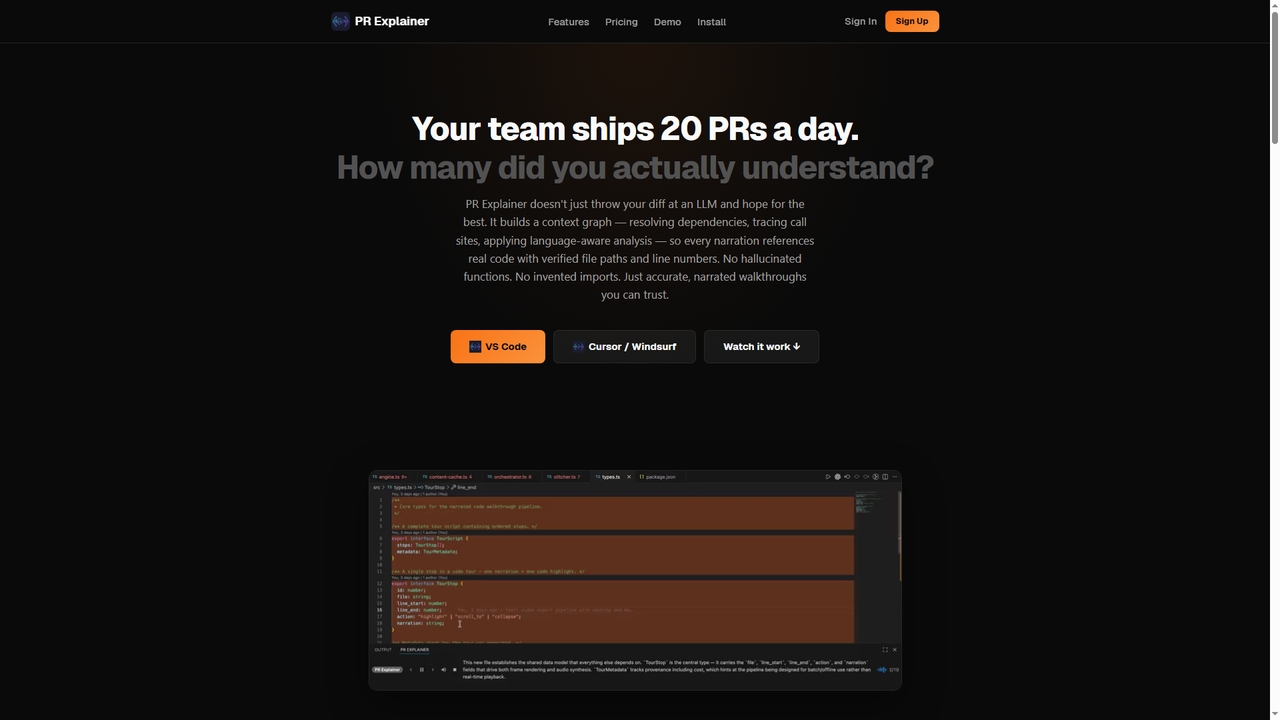
Prexplainer is an AI-powered developer tool that automatically generates narrated code walkthroughs for pull requests (PRs). It transforms …
Prexplainer is an AI-powered developer tool that automatically generates narrated code walkthroughs for pull requests (PRs). It transforms code diffs into engaging audio-visual tours with synchronized highlighting, helping teams understand changes faster without context switching.
About Software
Software refers to AI-powered applications and platforms designed to automate complex tasks, analyze vast datasets, and provide intelligent insights across various domains. These tools leverage advanced machine learning algorithms, natural language processing, and computer vision to enhance human capabilities and streamline operations. From optimizing business processes to fostering creative endeavors, AI software delivers innovative solutions that adapt and learn over time, driving efficiency and informed decision-making.
Core Features
- Intelligent Automation: Automates repetitive tasks and complex workflows, reducing manual effort and errors.
- Data Analysis & Prediction: Processes large volumes of data to identify patterns, generate insights, and forecast future trends.
- Natural Language Processing (NLP): Enables understanding, interpretation, and generation of human language for communication and content creation.
- Computer Vision: Allows systems to interpret and understand visual information from images and videos.
- Adaptive Learning: Continuously improves performance and accuracy through exposure to new data and user interactions.
Applicable Scenarios
AI software is widely adopted across industries. Marketing teams use it for personalized campaign optimization and customer segmentation. Healthcare professionals leverage it for diagnostic support and drug discovery. Financial institutions apply it for fraud detection and algorithmic trading. Manufacturing benefits from predictive maintenance and quality control, while creative industries utilize it for content generation and design assistance.
How to Choose
Selecting the right AI software involves evaluating several factors. Consider the specific problem it solves and its alignment with your business goals. Assess its integration capabilities with existing systems to ensure seamless workflow. Evaluate the scalability and performance to handle future growth. Finally, review the vendor's support, pricing model, and the software's ease of use and learning curve for your team.
SoftwareUse Cases
Automating Customer Support Interactions
Customer service departments utilize AI software, specifically AI chatbots and virtual assistants, to handle routine inquiries, provide instant answers to FAQs, and guide users through troubleshooting steps. This allows human agents to focus on complex issues, significantly reducing response times and improving overall customer satisfaction by providing 24/7 support and personalized interactions.
Optimizing Supply Chain Logistics
Logistics managers deploy AI software to analyze vast datasets related to inventory, shipping routes, weather patterns, and demand forecasts. The software predicts potential disruptions, optimizes delivery schedules, and recommends efficient warehousing strategies. This leads to reduced operational costs, minimized delays, and improved overall supply chain resilience and responsiveness.
Personalizing Marketing Campaigns
Marketing teams leverage AI software to analyze customer behavior, preferences, and purchase history. The software segments audiences, generates personalized content recommendations, and optimizes ad placements across various channels. This results in higher engagement rates, increased conversion rates, and a more effective allocation of marketing budgets by targeting the right message to the right person.
Enhancing Medical Diagnosis and Research
Healthcare professionals use AI software for analyzing medical images (like X-rays, MRIs) to detect anomalies, assisting in early disease diagnosis. Researchers apply it to sift through vast scientific literature, identify patterns in genomic data, and accelerate drug discovery processes. This augments human expertise, leading to more accurate diagnoses and faster breakthroughs in medical science.
Streamlining Software Development and Testing
Development teams integrate AI software into their CI/CD pipelines to automate code reviews, identify bugs, and generate test cases. AI-powered tools can predict potential vulnerabilities, suggest code improvements, and even assist in generating boilerplate code. This accelerates development cycles, improves code quality, and reduces the time and cost associated with manual testing.
Generating Creative Content and Designs
Content creators and designers employ AI software to generate text, images, videos, and even music based on prompts or existing data. These tools can assist in brainstorming ideas, creating multiple design variations, or automating repetitive design tasks. This boosts productivity, expands creative possibilities, and allows for rapid iteration and personalization of creative assets.