
Read Their Lips
An AI-powered tool that transcribes speech from video by analyzing lip movements. It's designed to extract dialogue from …
An AI-powered tool that transcribes speech from video by analyzing lip movements. It's designed to extract dialogue from silent footage or videos with poor audio quality, making it ideal for forensics, journalism, and content recovery.
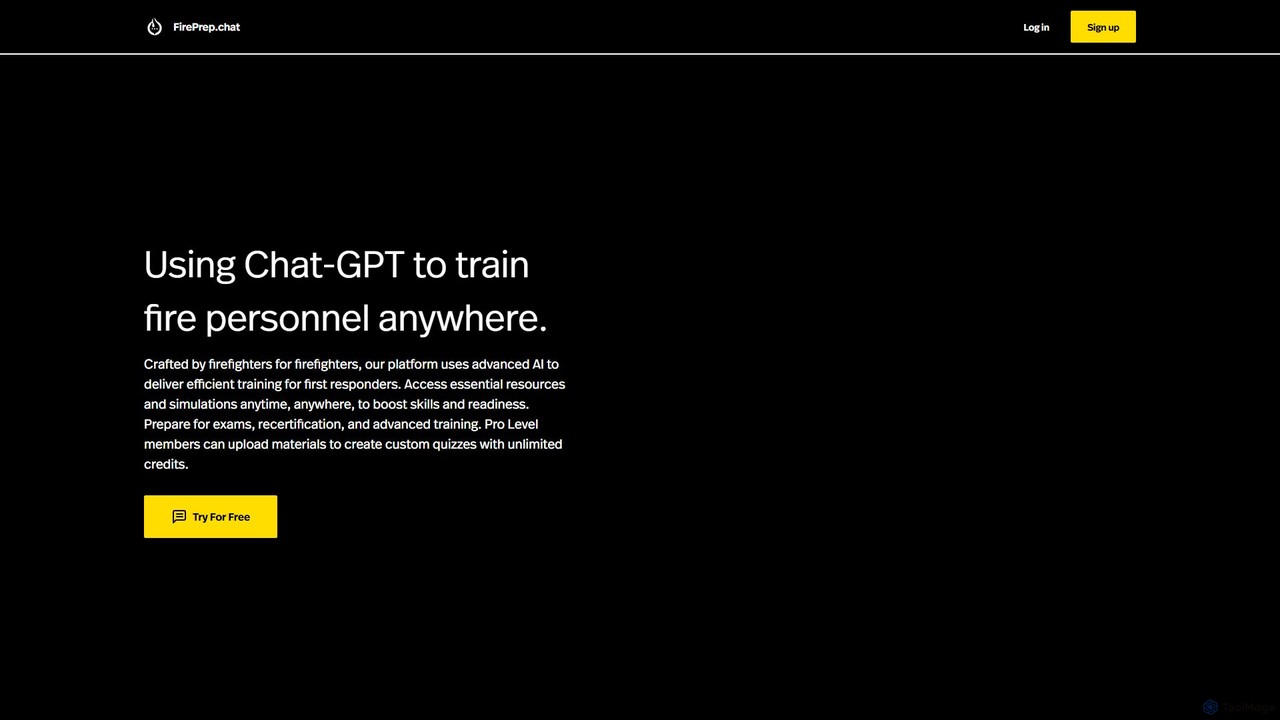
FirePrep.chat
An AI-powered training platform designed by firefighters for firefighters. It offers advanced tools like a quizbot for exam …
An AI-powered training platform designed by firefighters for firefighters. It offers advanced tools like a quizbot for exam prep, a chatbot for questions, and custom quiz creation to enhance skills and readiness for first responders.
About Specialized
Specialized AI tools are advanced solutions designed for highly specific, niche tasks or industries that demand deep domain expertise. These tools leverage sophisticated AI models, often trained on unique, proprietary datasets, to address complex challenges where general AI solutions fall short. They provide precise, high-accuracy results, automating expert-level processes and driving innovation within specific professional domains.
Core Features
- Domain-Specific Models: AI algorithms trained on highly specialized data for niche applications.
- High Accuracy & Precision: Delivers reliable and granular results for critical, complex tasks.
- Customizable Workflows: Adaptable to unique operational requirements and industry-specific processes.
- Integration with Niche Systems: Seamlessly connects with specialized software, databases, and legacy platforms.
- Expert-Level Automation: Automates tasks traditionally requiring extensive human expertise and knowledge.
Use Cases
Specialized AI tools are indispensable in fields like biotechnology for drug discovery, legal tech for contract analysis, and industrial sectors for predictive maintenance. They enable professionals to tackle problems with unprecedented precision and efficiency, transforming workflows that were previously manual, time-consuming, or beyond the scope of general AI.
How to Choose
When selecting a Specialized AI tool, prioritize solutions with proven domain relevance and validated accuracy metrics specific to your industry. Evaluate its integration capabilities with your existing specialized systems and assess the vendor's expertise in providing tailored solutions and compliance with relevant regulations. Consider the level of expert support and customization offered.
SpecializedUse Cases
Accelerate Pharmaceutical Drug Discovery
A pharmaceutical researcher utilizes specialized AI tools to analyze vast genomic data, protein structures, and preclinical trial results. By rapidly identifying potential drug candidates and predicting their efficacy and toxicity profiles, the AI significantly reduces the time and cost associated with early-stage drug discovery, accelerating the path to clinical trials and new treatments.
Automate Legal Contract Analysis
A legal professional employs specialized AI to rapidly review thousands of legal documents, such as contracts, patents, or case law. The AI identifies specific clauses, compliance risks, or relevant precedents with high accuracy, drastically reducing the manual effort and time required for due diligence in M&A, litigation, or regulatory compliance, saving hundreds of hours per project.
Optimize Industrial Predictive Maintenance
A manufacturing engineer leverages specialized AI to monitor sensor data from critical industrial machinery in real-time. The AI analyzes vibration patterns, temperature fluctuations, and operational metrics to predict equipment failures before they occur. This enables proactive maintenance scheduling, minimizes costly downtime, and extends the lifespan of valuable assets, significantly improving operational efficiency and safety.
Enhance Financial Fraud Detection
A financial analyst in a banking institution uses specialized AI to detect subtle patterns and anomalies in vast transaction data that indicate fraudulent activities. Unlike rule-based systems, the AI adapts to new fraud schemes, enhancing the accuracy of detection and reducing false positives. This proactive approach safeguards customer assets, minimizes financial losses, and strengthens the institution's security posture against evolving threats.
Streamline Scientific Research Data Interpretation
An environmental scientist applies specialized AI to process and interpret complex datasets from satellite imagery, climate models, and ground-based sensors. The AI identifies intricate patterns, correlations, and anomalies that human analysis might miss, providing deeper insights into ecological changes, resource distribution, or pollution trends. This accelerates research, supports evidence-based policy-making, and enhances conservation efforts.
Improve Agricultural Crop Yield Prediction
An agronomist uses specialized AI to analyze diverse agricultural data, including soil conditions, weather patterns, satellite imagery of crop health, and historical yield data. The AI provides highly accurate predictions for crop yields, identifies optimal planting and harvesting times, and recommends precise irrigation and fertilization strategies. This leads to optimized resource allocation, reduced waste, and significantly increased agricultural productivity for farmers.