Altered
Altered is a professional AI voice technology platform offering both real-time voice changing and post-production voice editing. With …
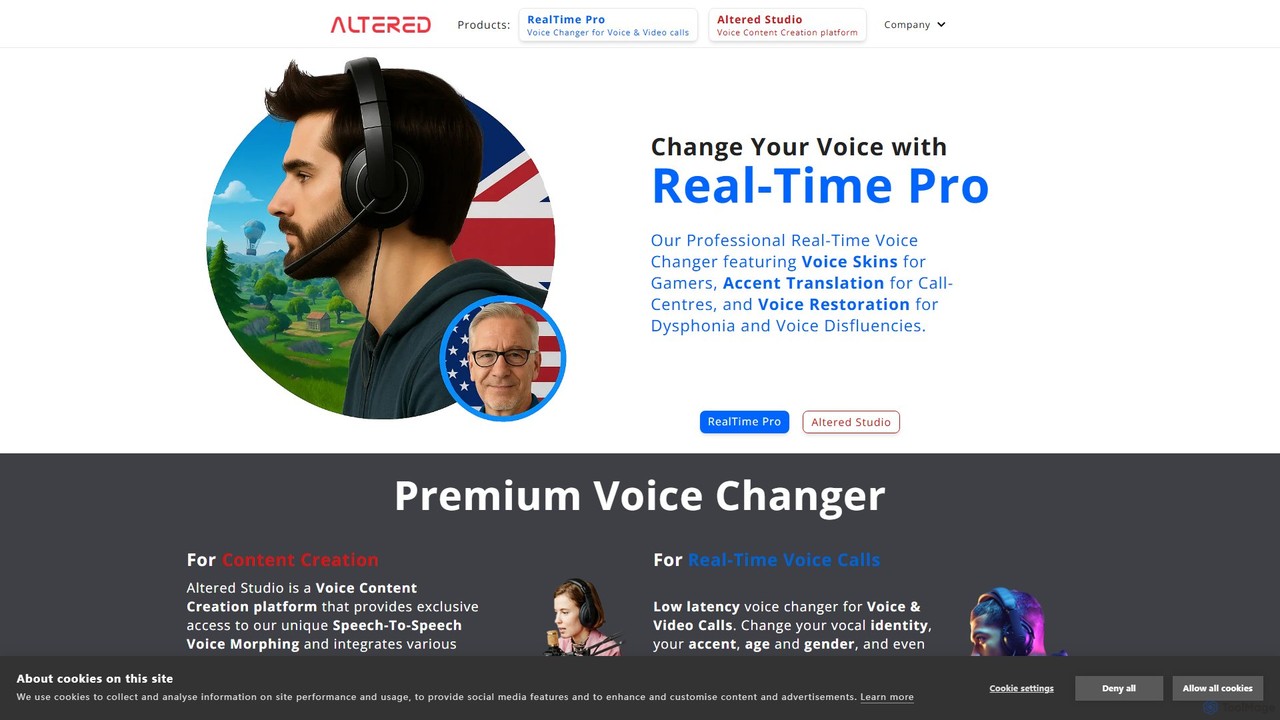
Altered is a professional AI voice technology platform offering both real-time voice changing and post-production voice editing. With its unique Speech-To-Speech morphing, users can change their voice to a curated portfolio, clone any voice, alter accents, or restore vocal clarity. It serves content creators, gamers, call centers, and individuals seeking voice modification or protection.
About Speech
AI Speech tools are a class of software that use artificial intelligence to process, generate, and understand human speech. They leverage technologies like deep learning and natural language processing to perform tasks such as converting text to audio (Text-to-Speech) and audio to text (Speech-to-Text). These tools are widely used to create voiceovers, transcribe meetings, power voice assistants, and enhance accessibility for digital content. Modern speech tools can produce highly natural-sounding voices, recognize speech with high accuracy in noisy environments, and even clone specific vocal characteristics.
Core Features
- Text-to-Speech (TTS): Generates natural, human-like audio from any written text, with options to control voice style, pitch, and speed.
- Speech-to-Text (STT) / Transcription: Accurately converts spoken words from audio or video files into written text, often with speaker identification.
- Voice Cloning & Synthesis: Creates a digital replica of a specific voice from a short audio sample or designs entirely new synthetic voices.
- Speech Enhancement: Improves audio clarity by automatically removing background noise, echo, and other unwanted sounds.
- Speech Translation: Translates spoken language into another language in real time, outputting either text or synthesized audio.
Use Cases
AI Speech tools are valuable for content creators, podcasters, and video producers for generating voiceovers. Businesses use them to transcribe meetings, analyze customer service calls, and create automated IVR systems. Developers integrate these tools to build voice-controlled applications and accessibility features.
How to Choose
When selecting an AI Speech tool, evaluate the accuracy of transcription or the naturalness of the generated voice. Check for support of required languages, dialects, and accents. For developers, the availability and documentation of an API are crucial. Also, consider the range of customization options, such as voice cloning capabilities and emotional expression controls.
SpeechUse Cases
Create Voiceovers for Videos and Audiobooks
A content creator needs to produce a professional voiceover for a documentary video but lacks recording equipment or a budget for a voice actor. Using an AI Text-to-Speech tool, they can paste their script, select a suitable voice style (e.g., narrative, calm), and generate a high-quality audio file. This process allows for quick edits to the script and re-generation of audio, saving significant time and production costs compared to traditional recording sessions.
Automate Meeting Transcription and Analysis
A project manager needs to keep accurate records of client meetings and internal discussions. After a meeting, they upload the audio recording to a Speech-to-Text tool. The service automatically transcribes the entire conversation, identifies different speakers, and provides a searchable text document. Some advanced tools can also generate summaries and identify key action items, ensuring no important details are missed and making follow-ups more efficient.
Develop Interactive Voice Response (IVR) Systems
A company wants to improve its customer service phone line with an intelligent IVR system. Developers use AI Speech APIs to power this system. The Speech-to-Text component understands the customer's spoken requests, while the Text-to-Speech component provides natural-sounding responses and guidance. This creates a more dynamic and helpful user experience than traditional button-based IVR menus.
Provide Real-time Translation for Global Events
An organization is hosting an international online conference with speakers and attendees from around the world. They employ a real-time speech translation tool to make the event accessible to everyone. As a speaker presents, the tool captures their speech, transcribes it, translates it into multiple languages, and displays it as live captions for the audience. Some tools can also provide translated audio streams, breaking down language barriers completely.
Clean Up Audio Recordings for Podcasts
A podcaster records an interview in a location with unavoidable background noise, such as a café or a windy outdoor space. Before publishing, they process the audio file through a speech enhancement tool. The AI identifies and removes the background noise, reduces echo, and balances the volume levels of the speakers. The result is a clear, professional-sounding audio track that is much more pleasant for the listener.
Create Personalized Audio Content with Voice Cloning
A brand wants to create a series of personalized audio advertisements for a streaming platform. They use a voice cloning tool to create a digital replica of their official brand spokesperson's voice from a few minutes of existing audio. This allows the marketing team to generate hundreds of ad variations with different customer names or promotional offers, all in the familiar and trusted brand voice, without needing the spokesperson to record each one individually.