Startup Best in category 1 results Business Idea Validation AI Tool

Popular AI tools in the Business Idea Validation field of Startup include Idea Validator, etc., helping you quickly improve efficiency.

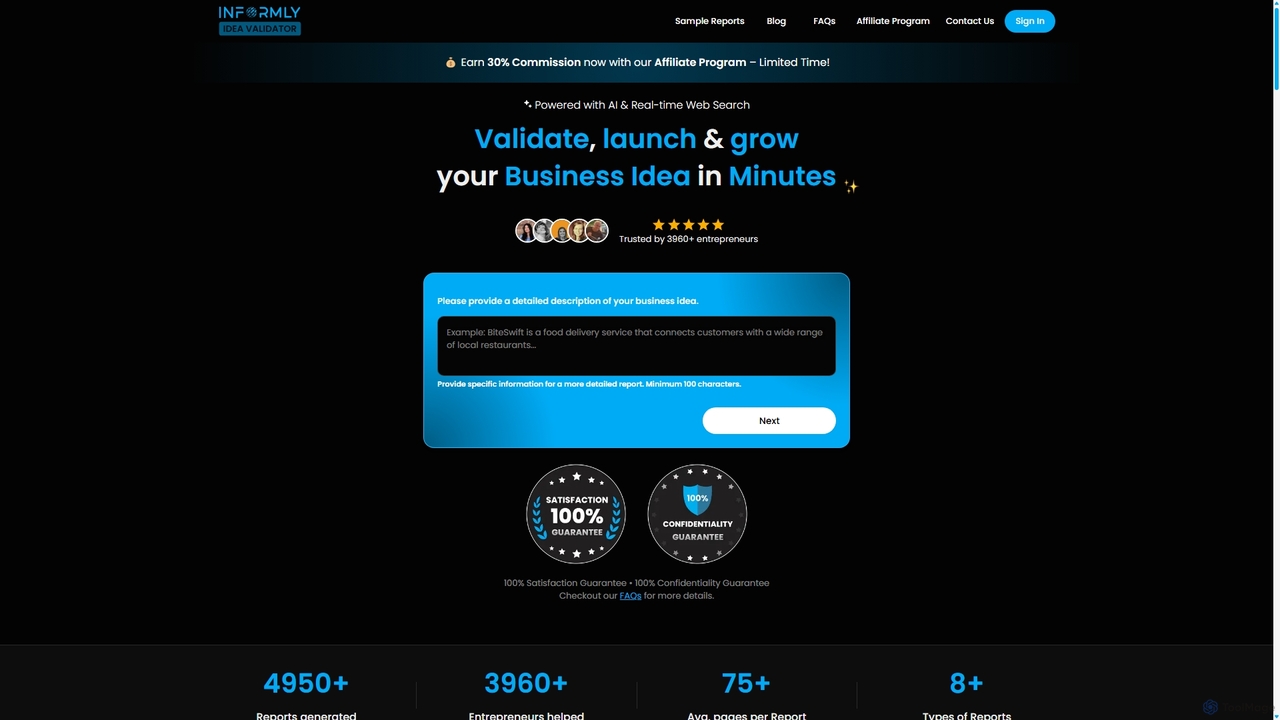
Idea Validator

Idea Validator

An AI-powered tool that instantly validates business ideas. It uses real-time web search to generate comprehensive reports (75+ …

2.9K

About Business Idea Validation

Business Idea Validation tools are a specialized category of AI-powered platforms designed to assess the viability of a new venture or product concept. They leverage machine learning models to analyze vast datasets, including market trends, competitive landscapes, and consumer behavior, to provide data-driven feedback. This process helps entrepreneurs, innovators, and product managers quantify risks and identify opportunities before committing significant time and capital. By automating in-depth research, these tools offer a structured and objective evaluation of a business idea's potential for success.

Core Features

  • Market Opportunity Analysis: Uses AI to estimate market size, growth potential, and current trends relevant to the idea.
  • Competitive Landscape Mapping: Automatically identifies and analyzes key competitors, their market share, strengths, and weaknesses.
  • Audience Persona Generation: Creates detailed profiles of the ideal target customer, including demographics, needs, and pain points.
  • Viability Scoring: Provides a quantitative score or qualitative report summarizing the idea's overall potential based on multiple factors.
  • SWOT Analysis Automation: Generates a preliminary analysis of the idea's Strengths, Weaknesses, Opportunities, and Threats.

Use Cases

These tools are primarily used by aspiring entrepreneurs in the pre-launch phase, product managers within established companies exploring new initiatives (intrapreneurship), and venture capital analysts performing initial deal screening. For example, a founder can use it to compare two different app ideas, or a corporate team can validate a new service offering before developing a full business case.

How to Choose

When selecting a Business Idea Validation tool, consider the depth and source of its data, as high-quality data is crucial for accurate insights. Evaluate the scope of analysis—some tools offer simple scores while others provide detailed financial projections. Also, consider the user interface's ease of use and whether the pricing model (e.g., per-report or subscription) aligns with your project's needs and frequency of use.

Business Idea ValidationUse Cases

1

Pre-launch Viability Check for a SaaS Product

A solo founder wants to build a new project management SaaS for creative agencies. Before writing any code, they input their core concept, target audience, and proposed features into a business idea validation tool. The AI generates a comprehensive report in minutes. It reveals a moderately crowded market but identifies a niche for agencies focused on video production. The report includes profiles of three key competitors, their pricing strategies, and a list of potential customer pain points, such as collaboration on video drafts. This data-driven insight helps the founder refine their MVP to focus on video-centric features, giving them a clearer path to product-market fit from day one.

2

Validating a Niche E-commerce Store Idea

An aspiring entrepreneur is torn between two e-commerce ideas: selling handmade artisanal soaps or high-tech smart home gadgets. They use a validation tool to analyze both concepts. For artisanal soaps, the AI reports a high level of competition but strong community engagement and low startup costs. For smart home gadgets, it identifies a rapidly growing market with higher profit margins but also higher sourcing costs and a need for technical customer support. The tool provides a viability score of 6/10 for soaps and 8/10 for gadgets, along with target audience personas for each. This comparative analysis allows the entrepreneur to make an informed decision based on their risk tolerance and capital availability.

3

Corporate Innovation for a New Product Line

A product manager at a large retail company is tasked with proposing a new digital service. Their idea is a subscription box for eco-friendly home goods. To build a compelling business case for management, they use an AI validation tool. The tool generates a market analysis showing a 20% year-over-year growth in the sustainable goods sector. It also produces a SWOT analysis, highlighting the company's existing logistics network as a key strength but identifying strong competition from established subscription services as a threat. This AI-generated report provides the concrete data and structured analysis needed to present the idea confidently, securing initial approval for a pilot program.

4

Rapid Due Diligence for Angel Investors

An angel investor receives dozens of pitches each week. To streamline their screening process, they use a business idea validation tool for a quick, initial assessment. For a pitch about a new AI-powered fitness coaching app, they input the core concept. The tool quickly generates a report highlighting a high market saturation but also a growing demand for personalized coaching. It flags two emerging competitors that were not mentioned in the pitch deck. This allows the investor to go into the first meeting with deeper, more specific questions about differentiation and competitive moats, making their evaluation process far more efficient and informed.

5

Strengthening a Business Plan for a Loan Application

A small business owner wants to open a physical bookstore with an integrated coffee shop. To apply for a bank loan, they need a robust business plan with a strong market analysis section. They use a validation tool to generate data for their local area. The AI provides demographic data, foot traffic estimates for potential locations, and an analysis of local competitors, including other cafes and bookstores. It also suggests a potential niche in hosting community events and book clubs, based on local social media trends. The owner incorporates this data and the SWOT analysis into their business plan, presenting a much more credible and well-researched proposal to the bank.

6

Pivoting a Startup Idea with Data

A startup has built an app for local restaurant discovery, but user growth is stagnant. The founders suspect they need to pivot. They use a business idea validation tool to test several new directions. They input ideas like 'a meal kit delivery service for busy professionals,' 'a booking platform for private chefs,' and 'a B2B service for restaurants to manage surplus inventory.' The tool's analysis shows that while meal kits are highly competitive, the B2B inventory management idea has a clear, underserved market and aligns with their existing restaurant connections. The data provides the confidence and strategic clarity needed to pivot the company in a more promising direction.

Business Idea ValidationFrequently Asked Questions