Brandmaven
Brandmaven is the first AI-powered Brand Performance Management platform designed for marketing leaders, CMOs, and brand strategists. It …
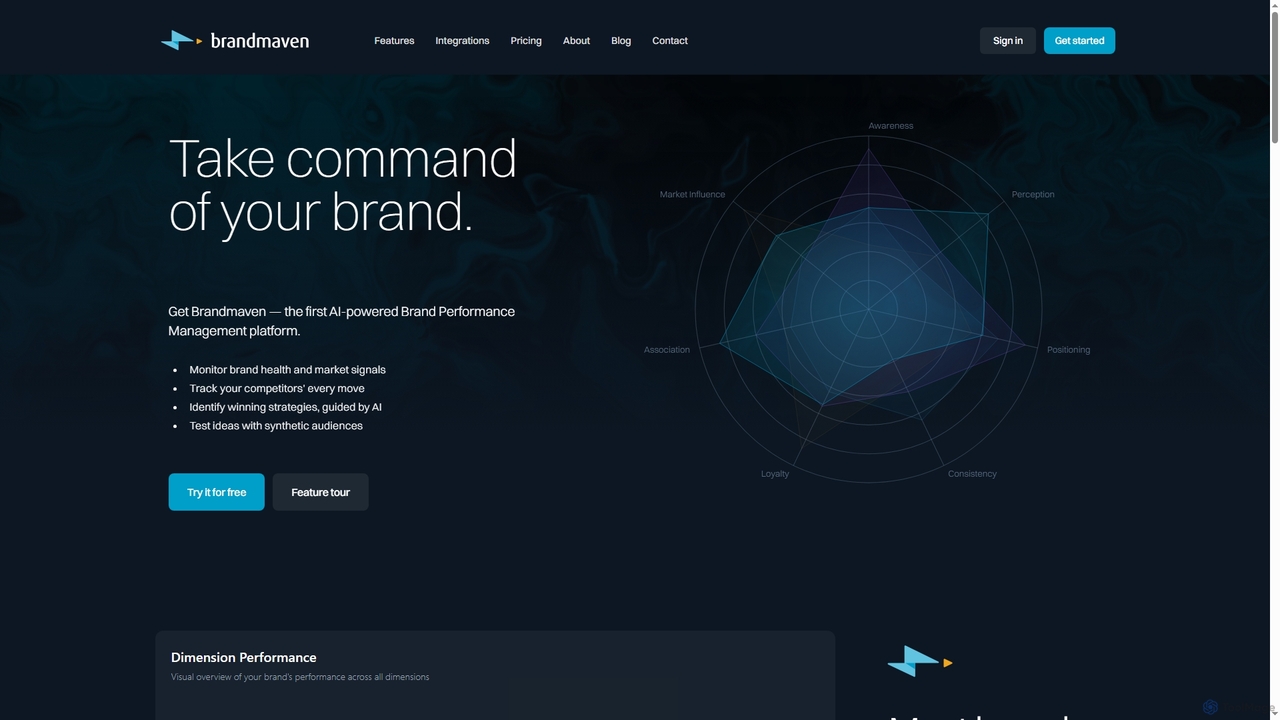
Brandmaven is the first AI-powered Brand Performance Management platform designed for marketing leaders, CMOs, and brand strategists. It offers real-time brand health monitoring, competitive intelligence, AI-guided strategic action plans, and synthetic audience testing. This tool transforms brand ambiguity into actionable insights, enabling faster, smarter decisions to improve brand KPIs and market influence.
About Business Intelligence
Business Intelligence (BI) tools are AI-powered platforms designed to collect, process, analyze, and visualize vast amounts of business data, transforming raw information into actionable insights. These tools leverage machine learning, natural language processing, and advanced analytics to uncover hidden patterns, predict future trends, and provide comprehensive, real-time reports. They empower organizations to make data-driven decisions, optimize operations, and gain a significant competitive edge by understanding complex market dynamics and internal performance metrics. Their unique advantage lies in automating complex data analysis, offering deep predictive capabilities, and enabling proactive strategic planning beyond traditional descriptive reporting.
Core Features
- Data Integration & ETL: Connects and consolidates data from diverse sources like CRM, ERP, cloud databases, and spreadsheets, performing extraction, transformation, and loading.
- Interactive Dashboards & Visualization: Creates dynamic, customizable visual representations of key performance indicators (KPIs), metrics, and trends, allowing for drill-down analysis.
- Predictive Analytics & Forecasting: Utilizes AI and machine learning algorithms to forecast future outcomes, identify potential risks, model various scenarios, and inform strategic decisions.
- Automated Reporting & Alerts: Generates scheduled or on-demand reports with minimal manual intervention and sends automated alerts for critical changes or anomalies.
- Natural Language Querying & Generation: Allows users to ask data-related questions in plain language and receive data-driven answers or even generate narrative summaries.
Applicable Scenarios
Business Intelligence tools are indispensable across various strategic functions and industries. Sales teams utilize them to analyze performance by region, product, or sales representative, identifying growth opportunities, optimizing sales strategies, and forecasting future revenue. Marketing departments leverage BI to segment customer bases, understand purchasing behaviors, predict churn risks, and personalize campaigns for higher engagement and ROI. Operations managers apply these tools to monitor supply chain efficiency, manage inventory levels, identify bottlenecks, and optimize logistics, ensuring smoother workflows and significant cost reductions. Furthermore, finance departments use BI for real-time financial dashboards, budget vs. actual analysis, and profitability insights, supporting sound financial planning.
How to Choose
When selecting a Business Intelligence tool, consider its data source compatibility to ensure seamless integration with your existing data infrastructure, including cloud services and on-premise databases. Evaluate the breadth and flexibility of its visualization capabilities, ensuring it can present complex data clearly and interactively. The sophistication of its AI and machine learning features for predictive analytics, anomaly detection, and natural language processing is crucial for advanced insights. Scalability is paramount for growing data volumes and user bases, alongside ease of use for various skill levels, from business users to data analysts. Finally, assess its integration with other business applications (e.g., CRM, ERP), the vendor's support, and the overall pricing model to align with your organizational needs and budget.

Business IntelligenceUse Cases
Optimize Sales Performance and Forecasting
Sales managers and analysts utilize BI tools to gain deep insights into sales data. By integrating CRM data, they can analyze performance across regions, products, and sales representatives, identifying top performers and areas for improvement. AI-powered forecasting models predict future sales trends, allowing for proactive adjustments to sales strategies, resource allocation, and inventory management. This leads to more accurate revenue projections and targeted sales initiatives, ultimately boosting overall sales efficiency and profitability.
Analyze Customer Behavior and Personalize Marketing
Marketing teams leverage BI tools to deeply understand customer segments, purchasing patterns, and engagement metrics. By analyzing data from various touchpoints (website, social media, CRM), they can identify high-value customers, predict churn risks, and tailor marketing campaigns. AI-driven insights enable hyper-personalization of content, offers, and communication channels, leading to improved customer satisfaction, higher conversion rates, and a stronger return on marketing investment (ROI).
Monitor Supply Chain Efficiency and Inventory
Operations managers and logistics professionals use BI tools to gain real-time visibility into their supply chain. By integrating data from ERP, warehouse management systems, and IoT sensors, they can monitor inventory levels, track shipments, identify bottlenecks, and assess supplier performance. AI algorithms can predict demand fluctuations and potential disruptions, enabling proactive adjustments to inventory, production schedules, and logistics routes, leading to reduced operational costs and improved delivery times.
Enhance Financial Reporting and Analysis
Finance departments leverage BI tools to transform raw financial data into interactive dashboards and comprehensive reports. By integrating data from accounting systems, ERP, and budgeting tools, they can monitor key financial metrics, perform budget-versus-actual analysis, and identify profitability drivers. AI capabilities can detect anomalies in financial transactions, forecast cash flow, and model various financial scenarios, supporting more accurate financial planning, risk management, and strategic investment decisions.
Optimize HR Workforce Planning and Talent Management
HR professionals utilize BI tools to analyze workforce data, including recruitment metrics, employee performance, turnover rates, and talent gaps. By integrating data from HRIS and performance management systems, they can identify trends in employee satisfaction, predict future staffing needs, and optimize talent acquisition strategies. AI-driven insights help in developing targeted training programs, improving employee retention, and ensuring optimal workforce allocation, contributing to a more engaged and productive organizational culture.
Predict Market Trends and Inform Product Strategy
Product managers and strategists leverage BI tools to analyze external market data, competitor activities, and consumer sentiment. By integrating data from market research, social media, and industry reports, they can identify emerging trends, assess product performance, and predict market shifts. AI-driven predictive models help in understanding customer preferences and competitive landscapes, enabling informed decisions on product development, feature prioritization, and market entry strategies, ensuring products remain relevant and competitive.