Strategy Best in category 1 results Foresight AI Tool

Popular AI tools in the Foresight field of Strategy include itonics_innovation, etc., helping you quickly improve efficiency.

itonics_innovation

itonics_innovation

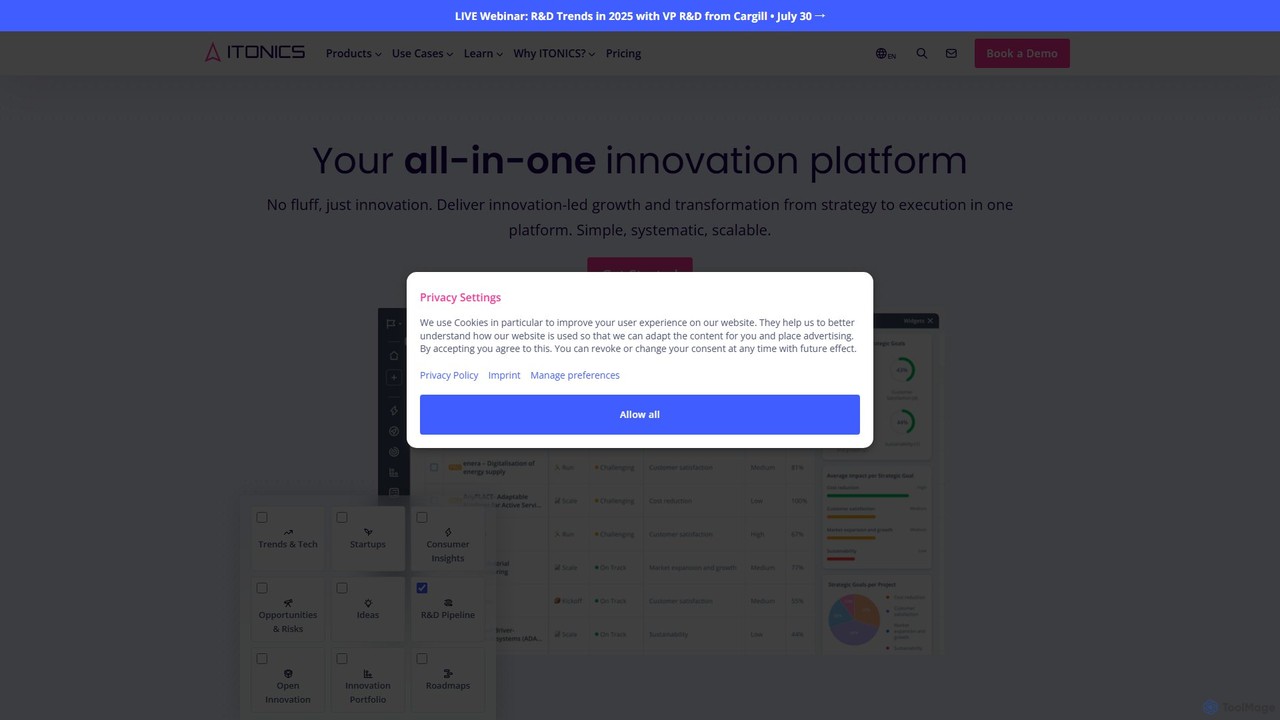
ITONICS is an AI-powered Innovation Operating System for end-to-end innovation management. It helps businesses discover opportunities, manage ideas, …

58.5K

About Foresight

Foresight AI tools are advanced platforms that leverage artificial intelligence to predict future trends, identify emerging opportunities, and assess potential risks. These tools utilize sophisticated algorithms, including machine learning and predictive analytics, to process vast datasets and uncover subtle patterns that inform strategic decision-making. By providing data-driven insights into future scenarios, Foresight tools empower businesses and individuals to anticipate market shifts, optimize resource allocation, and develop robust long-term strategies within the broader context of strategic planning.

Core Features

  • Predictive Modeling: Forecasts future market trends, consumer behavior, and economic indicators based on historical and real-time data.
  • Scenario Planning: Simulates various potential future outcomes under different assumptions, helping organizations prepare for multiple possibilities.
  • Trend Identification: Automatically detects and analyzes emerging patterns in technology, society, and industry to highlight new opportunities or threats.
  • Risk Assessment: Evaluates potential risks, such as supply chain disruptions or regulatory changes, and quantifies their likely impact.
  • Opportunity Spotting: Identifies untapped market niches, innovation areas, and strategic growth avenues by analyzing complex data relationships.

Applicable Scenarios

Foresight AI tools are invaluable for corporate strategists, investors, and R&D teams. They are used to inform long-term business planning, guide investment portfolio decisions, and identify areas for product innovation. These tools help organizations proactively adapt to change and maintain a competitive edge.

How to Choose

When selecting Foresight AI tools, consider the accuracy and reliability of their predictive models, their ability to integrate with existing data sources, and the interpretability of their insights. Evaluate the customization options for your specific industry needs, the user-friendliness of the interface, and the level of support provided for complex scenario modeling.

ForesightUse Cases

1

Market Trend Prediction for New Product Launch

A product development team uses Foresight AI to analyze global consumer data, social media trends, and competitor activities to predict market demand and potential shifts for a new product category over the next five years. This enables them to refine product features, optimize launch timing, and allocate marketing resources effectively, ensuring the product aligns with future market needs.

2

Supply Chain Resilience Planning

A supply chain director employs Foresight tools to identify potential disruptions, such as geopolitical instability, extreme weather events, or raw material shortages, by analyzing global news, economic indicators, and historical incident data. The tool models the impact of these disruptions on the supply chain, allowing the director to develop proactive mitigation strategies and build a more resilient network.

3

Strategic Investment Portfolio Optimization

A financial analyst leverages Foresight AI to forecast economic indicators, industry growth rates, and individual company performance based on vast financial datasets, news sentiment, and expert reports. This predictive insight guides investment decisions, helping to identify undervalued assets, anticipate market corrections, and optimize portfolio allocation for long-term returns.

4

Future Workforce Skill Gap Analysis

An HR strategist utilizes Foresight tools to predict future skill demands within their organization and across the broader industry by analyzing job market trends, technological advancements, and internal project roadmaps. This allows them to proactively design training programs, adjust recruitment strategies, and develop talent pipelines to address anticipated skill gaps before they become critical.

5

Anticipating Regulatory Changes

A compliance officer in a highly regulated industry uses Foresight AI to monitor legislative proposals, public discourse, and lobbying activities to anticipate upcoming regulatory changes. The tool identifies potential impacts on business operations and compliance requirements, enabling the company to prepare necessary adjustments and avoid penalties well in advance.

6

Identifying Disruptive Technologies

A Chief Technology Officer (CTO) employs Foresight tools to scan scientific publications, patent databases, startup funding rounds, and academic research for emerging technologies with the potential to disrupt their industry. The AI assesses the maturity, adoption rate, and strategic implications of these technologies, informing the company's long-term R&D investments and innovation strategy.

ForesightFrequently Asked Questions