ToolMage
Sign in

Best 4 Innovation Management AI tools for Business

Popular Innovation Management AI tools in Business include itonics_innovation, Trend Hunter AI, Brainotes, and StackRef, helping you work more efficiently.

Brainotes
Freemium

Brainotes

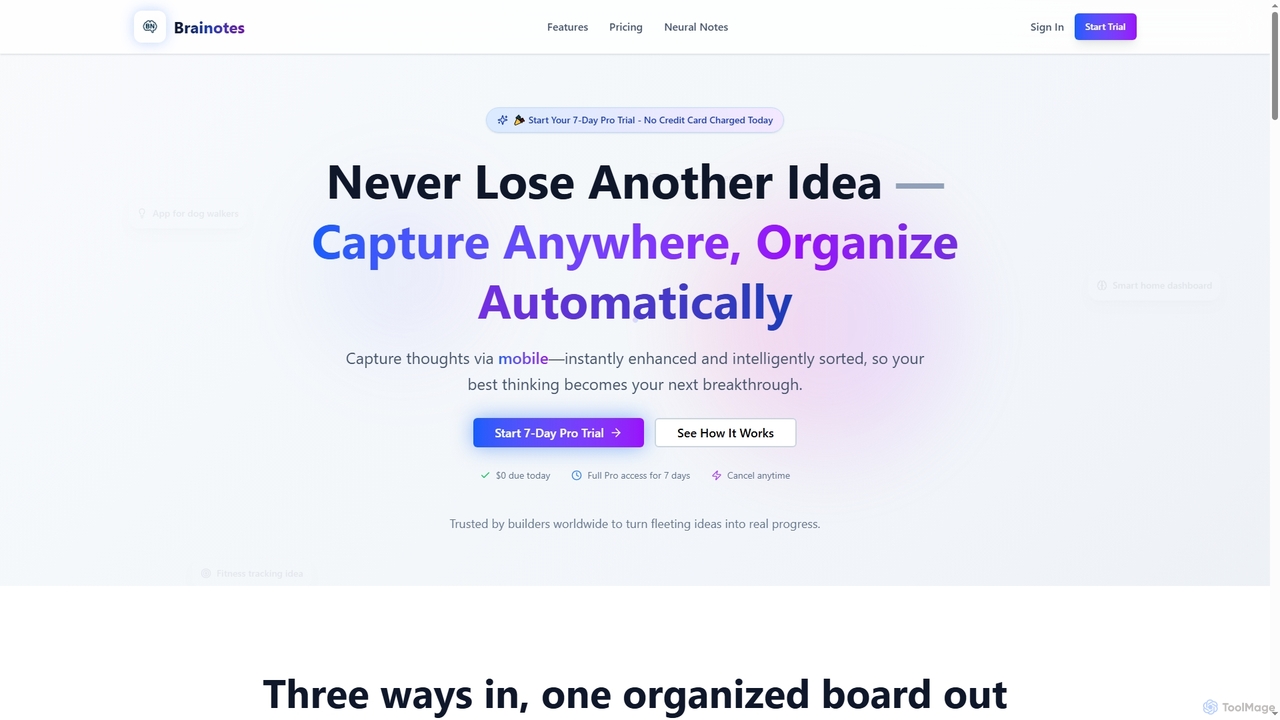
Brainotes is an AI-powered idea inbox designed for builders to capture, organize, and enrich their thoughts effortlessly. It offers instant mobile voice recording, email capture, and intelligent AI features like smart tagging, market insights, and MVP suggestions, transforming fleeting ideas into actionable plans. With automatic organization and a unified idea board, Brainotes helps users save time and accelerate progress.

Speech To Text
Visits 7.2KFavorites 89Likes 89
Trend Hunter AI
Paid

Trend Hunter AI

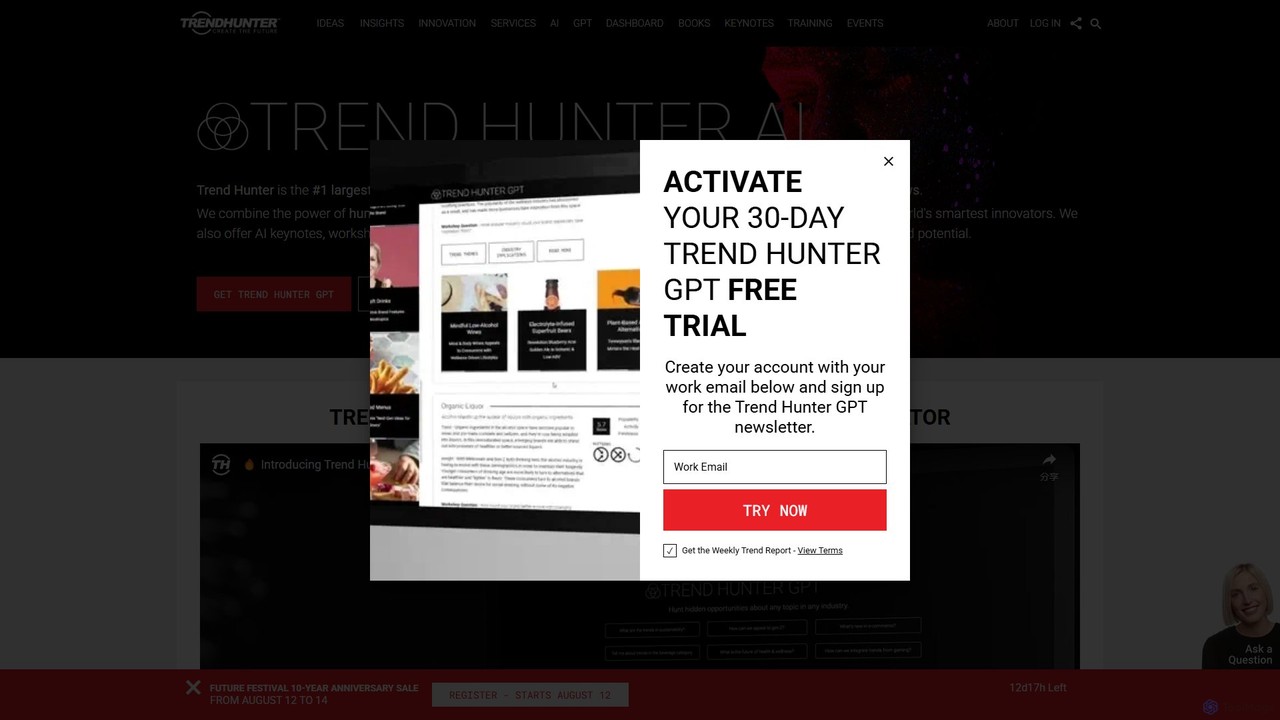
Trend Hunter AI is an advanced innovation platform that leverages the world's largest trend database and generative AI to help businesses uncover market opportunities, generate product ideas, and create in-depth trend reports. It combines AI efficiency with human-vetted insights to accelerate research and strategic planning.

Innovation Management
Visits 27.1KFavorites 129Likes 138
itonics_innovation
Paid

itonics_innovation

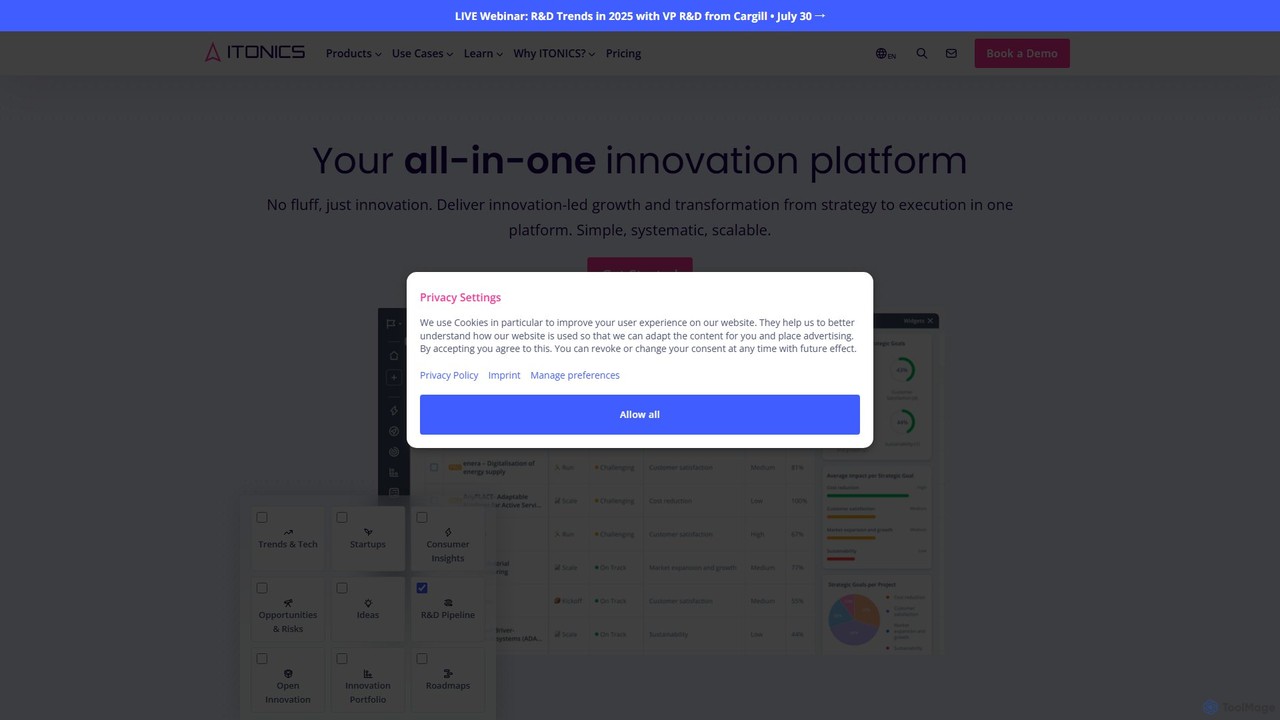
ITONICS is an AI-powered Innovation Operating System for end-to-end innovation management. It helps businesses discover opportunities, manage ideas, and execute strategies on a single, collaborative platform, covering the entire lifecycle from foresight to portfolio management.

Innovation Management
Visits 65.3KFavorites 119Likes 120
StackRef
Paid

StackRef

StackRef offers a comprehensive, managed platform for internal corporate hackathons. It simplifies event organization, provides secure AWS cloud sandboxes for teams, and utilizes AI for automated code analysis. Designed to foster innovation, collaboration, and skill development, it's an all-in-one "hackathon-in-a-box" solution, backed by cloud architecture and security experts.

Innovation Management
Visits 5.7KFavorites 124Likes 127

About Innovation Management

Innovation Management tools are AI-powered platforms designed to structure and accelerate the entire innovation lifecycle, from idea generation to market launch. These systems utilize AI for tasks like idea clustering, sentiment analysis, and predictive scoring to identify the most promising concepts. They provide a centralized hub for capturing, evaluating, and managing ideas, helping businesses systematically convert creative insights into measurable business outcomes and maintain a competitive edge.

Core Features

  • Idea Crowdsourcing: Centralizes the collection of ideas from internal employees, customers, and external partners in one platform.
  • AI-Powered Evaluation: Uses algorithms to automatically score, categorize, and detect duplicate ideas based on strategic criteria.
  • Workflow Automation: Automates the progression of ideas through predefined stages of review, approval, and development.
  • Innovation Portfolio Management: Offers dashboards to track the status, resource allocation, and potential ROI of all innovation initiatives.
  • Collaborative Workspaces: Provides dedicated spaces for teams to discuss, refine, and collaboratively develop promising concepts.

Use Cases

These tools are widely adopted in large enterprises to manage R&D pipelines and corporate venturing. Product development teams use them to build transparent feature roadmaps based on user feedback, while consulting firms leverage them to structure innovation projects for clients. They are essential for any organization aiming to foster a culture of continuous improvement.

How to Choose

When selecting an Innovation Management tool, evaluate its integration capabilities with existing systems like Jira, Slack, or Microsoft Teams. Consider the platform's scalability to support your user base and idea volume. Assess the level of workflow customization to match your internal processes, and examine the sophistication of its AI analytics and reporting features to ensure they align with your strategic goals.

Innovation Management use cases

1

Run an Enterprise-Wide Idea Challenge

An innovation manager at a multinational corporation launches a company-wide challenge to source ideas for improving sustainability. Using an Innovation Management tool, employees from all departments can submit, comment on, and vote for ideas. The platform's AI automatically categorizes submissions and flags duplicates, allowing the innovation team to efficiently review over 1,000 entries and identify the top 10 proposals with the highest potential impact for a pilot program.

2

Manage a Product Feature Pipeline

A product manager for a SaaS company uses an Innovation Management platform to centralize feature requests from customers, sales, and support teams. The tool allows stakeholders to vote on suggestions and provides the product team with a prioritized backlog. By analyzing trends in requests, the manager can build a data-driven product roadmap that directly addresses user needs, improving customer satisfaction and reducing churn.

3

Facilitate Open Innovation with Partners

An R&D department in a manufacturing company wants to collaborate with universities and startups to discover new materials. They use an Innovation Management tool to create a secure, external-facing portal where partners can submit proposals. The platform's workflow automation routes each proposal to the relevant internal expert for review, tracks feedback, and maintains a clear audit trail of all communications, streamlining the entire open innovation process.

4

Drive a Continuous Improvement Program

A hospital network implements a continuous improvement program to enhance patient care and operational efficiency. Staff, from nurses to administrators, use a mobile-accessible Innovation Management platform to submit suggestions on the go. The tool helps management track the implementation of approved ideas, such as a new patient check-in process, and measure their impact on key metrics like wait times and patient satisfaction scores.

5

Manage a Corporate Venture Capital Pipeline

A corporate venture capital (CVC) team uses an Innovation Management platform to manage its deal flow. The system acts as a central repository for all potential startup investments, tracking everything from initial contact and due diligence documents to team evaluations and funding decisions. This provides a holistic view of the investment pipeline, improves collaboration among the CVC team, and ensures no promising opportunities are overlooked.

6

Analyze Market Trends for Strategic Planning

A corporate strategy team uses the AI features within their Innovation Management tool to monitor market trends. The AI scans and analyzes thousands of data sources, including news articles, patent filings, and academic papers, to identify emerging technologies and competitive threats. The platform visualizes this data in trend maps and reports, providing the team with actionable insights to inform their long-term strategic planning and innovation focus areas.

Innovation Management FAQ

What is AI-powered Innovation Management?

AI-powered Innovation Management refers to software platforms that use artificial intelligence to streamline and enhance the process of generating, evaluating, and implementing new ideas. Unlike traditional idea databases, these tools actively analyze submissions to identify duplicates, score ideas against business goals, and predict potential impact. This makes the innovation process more data-driven, efficient, and scalable for organizations of any size.

How to choose the right Innovation Management tool?

To choose the right tool, consider these factors:

  • Scalability: Can the platform grow with your company, supporting more users and ideas over time?
  • Integration: Does it connect with your existing tools like project management software (Jira, Asana) and communication platforms (Slack, Teams)?
  • Customization: Can you tailor workflows, evaluation criteria, and submission forms to match your specific innovation process?
  • User Experience: Is the interface intuitive for all potential users, from top management to frontline employees, to encourage high adoption rates?
What's the difference between Innovation Management and Project Management tools?

Innovation Management tools focus on the 'front end' of innovation: capturing, discussing, and prioritizing a large volume of unstructured ideas to find the best ones. Project Management tools (like Jira or Asana) focus on the 'back end': executing well-defined projects with clear tasks, timelines, and deliverables. Essentially, innovation tools help you decide what to build, while project management tools help you how to build it. Many innovation platforms integrate with project management tools to create a seamless workflow.

Who are the primary users of Innovation Management software?

While these platforms are designed for broad participation, the primary users and administrators are typically:

  • Innovation Managers: They oversee the entire innovation process, run campaigns, and analyze the idea portfolio.
  • R&D Teams: They use the platform to manage research pipelines and collaborate on new technologies.
  • Product Managers: They collect and prioritize customer feedback and feature requests to inform roadmaps.
  • Corporate Strategists: They analyze trends and ideas to guide long-term business direction.

However, the goal is often to engage all employees, from frontline staff to executives, in contributing ideas.

How does AI specifically enhance the innovation process?

AI enhances innovation management in several key ways. It can automatically cluster thousands of ideas into thematic groups, making large volumes of feedback manageable. Natural Language Processing (NLP) can analyze the sentiment and urgency within idea descriptions. Furthermore, predictive analytics can score ideas based on historical data and strategic alignment, helping managers focus on concepts with the highest probability of success. This automates repetitive tasks and provides data-driven insights for better decision-making.