
CapitanPro
CapitanPro is an AI-powered tool designed to help users understand and develop effective, results-driven marketing plans. It focuses …
CapitanPro is an AI-powered tool designed to help users understand and develop effective, results-driven marketing plans. It focuses on clarifying the key components necessary for strategic business growth and market impact, guiding users through the essentials of successful marketing strategy formulation.
Brandmaven
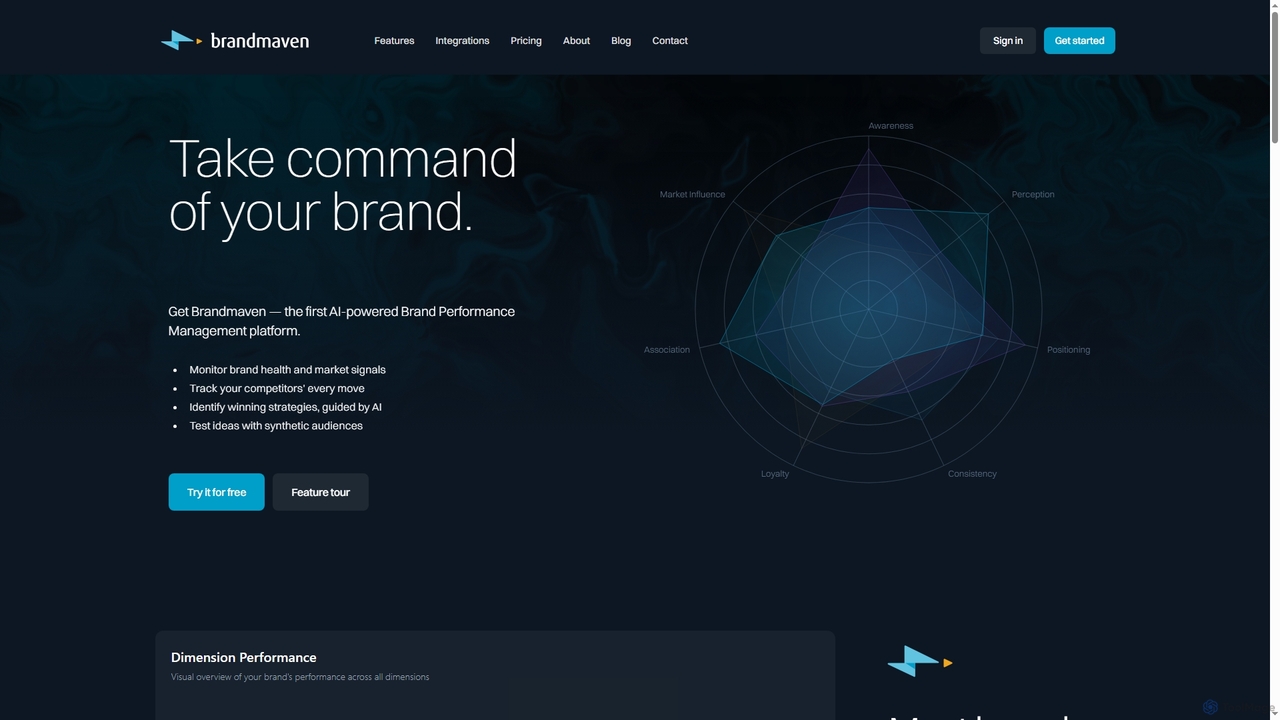
Brandmaven is the first AI-powered Brand Performance Management platform designed for marketing leaders, CMOs, and brand strategists. It …
Brandmaven is the first AI-powered Brand Performance Management platform designed for marketing leaders, CMOs, and brand strategists. It offers real-time brand health monitoring, competitive intelligence, AI-guided strategic action plans, and synthetic audience testing. This tool transforms brand ambiguity into actionable insights, enabling faster, smarter decisions to improve brand KPIs and market influence.
BrandScout
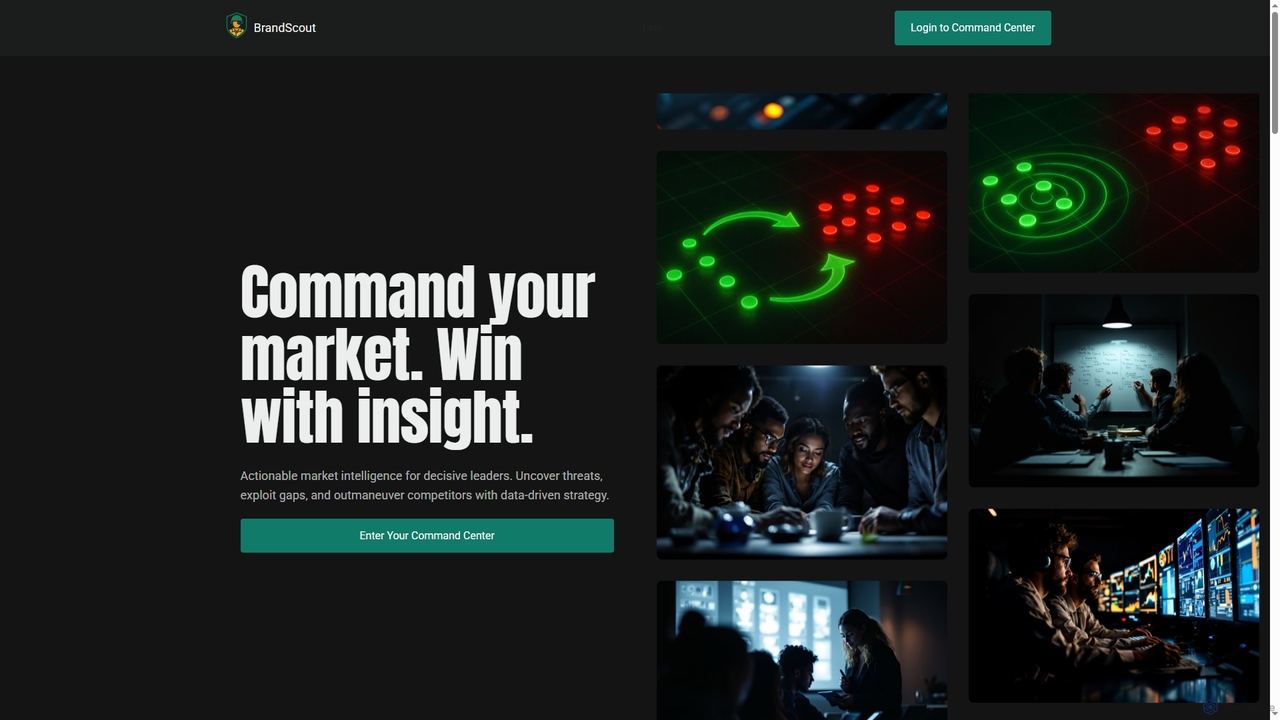
BrandScout is an AI-powered competitive and market intelligence platform designed to help businesses outsmart rivals, outmaneuver challenges, and …
BrandScout is an AI-powered competitive and market intelligence platform designed to help businesses outsmart rivals, outmaneuver challenges, and outgrow markets. It provides actionable insights, proven strategic frameworks, and tailored campaigns to anticipate change, reduce risk, and drive decisive business growth. From competitor discovery to advanced strategic analysis, BrandScout equips leaders with the intelligence needed to win.
itonics_innovation
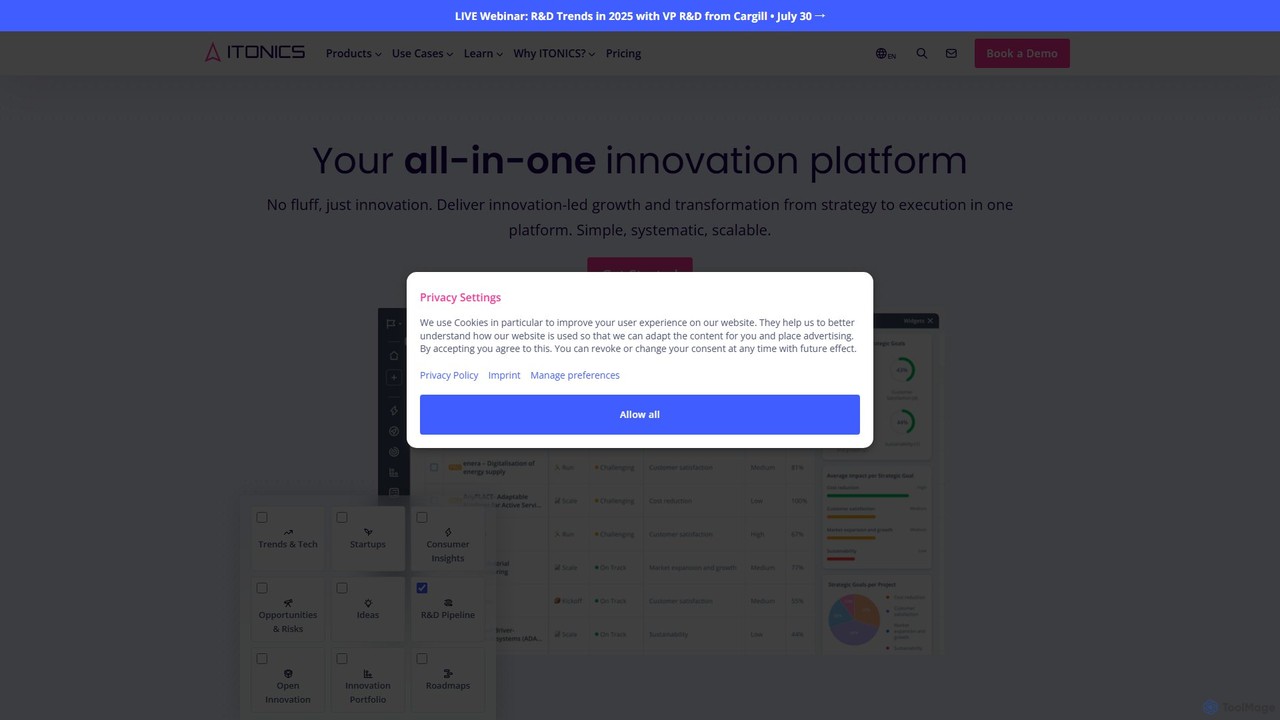
ITONICS is an AI-powered Innovation Operating System for end-to-end innovation management. It helps businesses discover opportunities, manage ideas, …
ITONICS is an AI-powered Innovation Operating System for end-to-end innovation management. It helps businesses discover opportunities, manage ideas, and execute strategies on a single, collaborative platform, covering the entire lifecycle from foresight to portfolio management.
About Strategy
AI Strategy tools are a class of advanced platforms that use machine learning and predictive analytics to support high-level business planning and decision-making. These tools process vast and complex datasets to identify market trends, simulate potential business scenarios, and forecast future outcomes. They empower organizations to move beyond historical analysis and formulate proactive, data-driven strategies, optimize resource allocation, and gain a significant competitive edge. The core value lies in transforming raw data into actionable strategic intelligence.
Core Features
- Predictive Forecasting: Utilizes historical data and machine learning algorithms to project future sales, market demand, and industry trends with a degree of probability.
- Scenario Modeling & Simulation: Allows users to create and test various 'what-if' scenarios to understand the potential impact of different decisions or market shifts.
- Competitive Intelligence Analysis: Automates the collection and analysis of competitor data from public sources to identify strategic movements, strengths, and weaknesses.
- Resource Optimization: Provides recommendations on the most effective allocation of budgets, personnel, and assets to achieve specific business objectives.
- Market Opportunity Identification: Analyzes unstructured data like news, reports, and social media to detect emerging patterns and untapped market opportunities.
Use Cases
AI Strategy tools are primarily adopted by C-level executives, corporate strategists, business analysts, and financial planners. They are invaluable in industries like finance for risk modeling, retail for expansion planning, manufacturing for supply chain optimization, and technology for product portfolio management. Common applications include market entry analysis, M&A target identification, and long-term financial planning.
How to Choose
When selecting an AI Strategy tool, first evaluate its data integration capabilities; it should seamlessly connect with your existing data sources like CRM and ERP. Second, assess the sophistication of its modeling features to ensure they match your business complexity. Third, consider the user interface and the level of technical expertise required. Finally, check for industry-specific models or templates that can accelerate implementation and improve the relevance of insights.
StrategyUse Cases
Formulating a Market Entry Strategy
A consumer electronics company plans to enter the Southeast Asian market. A strategy team uses an AI tool to analyze demographic data, consumer spending habits, local competitor landscapes, and regulatory requirements across several countries. The AI platform simulates potential market share and profitability under different entry scenarios, such as direct investment versus partnering with a local distributor. Based on the simulation, the tool recommends Vietnam as the initial entry point and suggests a product pricing strategy that is 10% lower than the main competitor to accelerate market penetration, providing a data-backed roadmap that reduces uncertainty.
Assessing Competitive Threats in Real-Time
A SaaS company in the project management space uses an AI strategy tool to continuously monitor its top three competitors. The tool scrapes and analyzes competitors' press releases, blog posts, pricing page changes, and customer reviews from G2 and Capterra. When a competitor launches a new feature related to AI-powered scheduling, the tool immediately alerts the product strategy team. It provides an impact analysis, forecasting a potential 5% churn rate over the next quarter if no action is taken. This allows the team to quickly prioritize a response on their own product roadmap.
Optimizing a Product Portfolio for Profitability
A large manufacturing firm with over 500 SKUs uses an AI strategy platform to optimize its product portfolio. The system integrates sales data, production costs, supply chain logistics, and customer feedback for each product. The AI model identifies a cluster of 30 products that have low margins and declining sales but high production complexity. It simulates the financial impact of discontinuing these products, projecting a 15% increase in overall operational efficiency and a 7% boost in net profit. The platform also identifies features from high-performing products that could be incorporated into mid-tier products to increase their appeal.
Mitigating Supply Chain Risks Proactively
A global automotive manufacturer uses an AI strategy tool to enhance its supply chain resilience. The platform monitors geopolitical news, weather forecasts, shipping lane data, and supplier financial health in real-time. When the tool detects early signs of a potential labor strike at a key port, it automatically runs simulations to identify the most at-risk components. It then recommends rerouting shipments through an alternative port and temporarily increasing orders from a secondary supplier in a different region. This proactive alert and recommendation system allows the company to avoid a production shutdown that could have cost millions per day.
Identifying Potential Merger & Acquisition (M&A) Targets
A private equity firm leverages an AI strategy platform to screen for potential acquisition targets in the fintech sector. The firm sets criteria such as revenue growth above 20%, a customer base of over 10,000, and specific patent filings related to blockchain technology. The AI scans thousands of companies from financial databases, news articles, and industry reports. It shortlists 15 companies that meet the criteria and provides a synergy score for each, based on how well they would integrate with the firm's existing portfolio. This automates a process that would manually take months, allowing analysts to focus on deep due diligence for the most promising candidates.
Conducting Long-Term Strategic Financial Planning
The CFO's office at a multinational corporation uses an AI platform for its 5-year strategic planning process. The tool integrates internal financial data with macroeconomic forecasts, including inflation rates, GDP growth, and currency fluctuations for key markets. The finance team models several scenarios, such as a global recession, a rapid technological disruption in their industry, or a major shift in consumer behavior. The AI forecasts the impact of each scenario on revenue, costs, and cash flow, highlighting potential financial vulnerabilities. This enables the leadership team to develop more resilient financial strategies and contingency plans to navigate future uncertainties effectively.