ToolMage
Sign in

Best 1 Exam Preparation AI tools for Student Tools

Popular Exam Preparation AI tools in Student Tools include markme, helping you work more efficiently.

markme
Freemium

markme

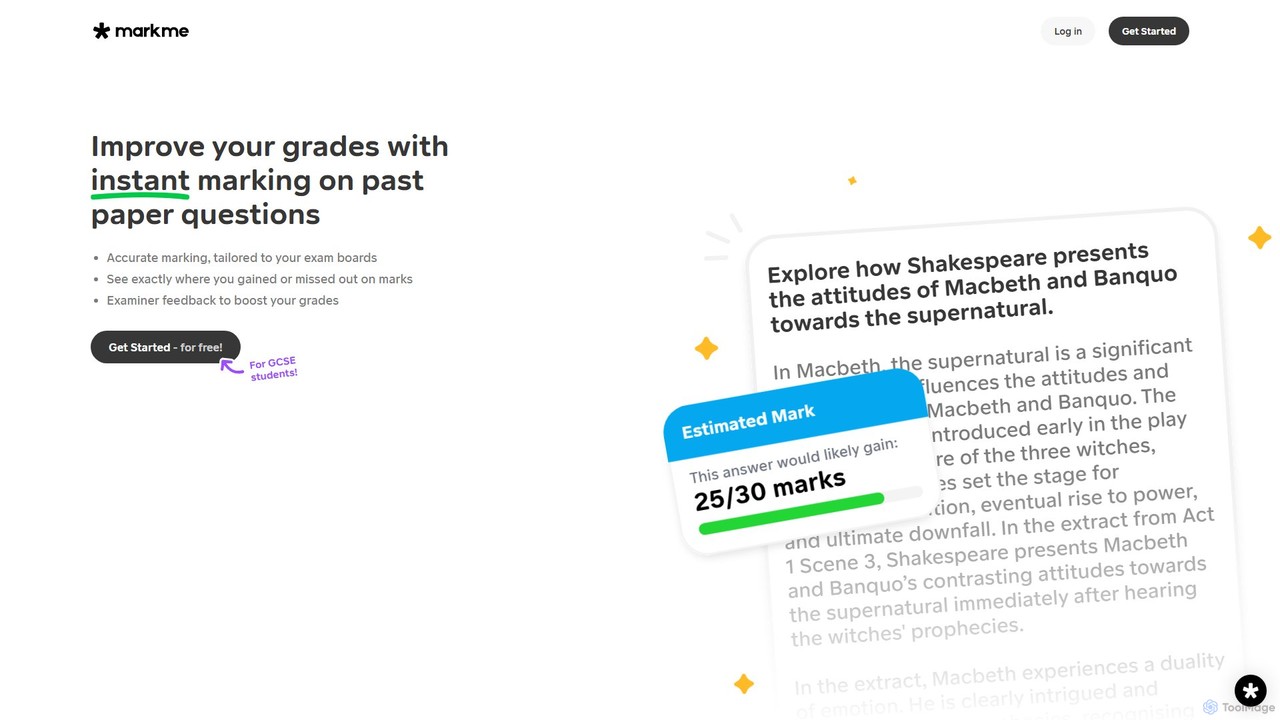
MarkMe is an AI-powered platform designed to help GCSE students improve their grades. It provides instant, accurate marking and detailed examiner-style feedback on past paper essay questions. Tailored to specific exam boards, it helps students understand where they gained or lost marks and offers actionable suggestions for improvement, acting as a 24/7 personal AI tutor for exam preparation.

Tutoring
Visits 8.2KFavorites 182Likes 192

About Exam Preparation

AI Exam Preparation tools are specialized AI-powered platforms designed to help students efficiently prepare for various academic and professional assessments. These tools leverage artificial intelligence to offer highly personalized study plans, generate adaptive practice questions, and provide intelligent, actionable feedback. By analyzing individual learning patterns and performance, they aim to enhance learning efficiency, pinpoint specific knowledge gaps, and significantly boost confidence, making them a crucial and highly effective subset within the broader category of Student Tools. They move beyond traditional rote learning by adapting to the user's pace and understanding, ensuring a more targeted and productive study experience.

Core Features

  • Personalized Study Plans: AI algorithms analyze individual performance data and learning styles to create dynamic, optimized study schedules and content recommendations, ensuring focused preparation.
  • Adaptive Practice Questions: Generates a vast array of practice questions that dynamically adjust in difficulty and topic coverage based on the user's progress and areas needing improvement, closely mimicking actual exam conditions.
  • Performance Analytics & Diagnostics: Provides detailed, visual insights into strengths, weaknesses, and progress over time, allowing users to understand where to focus their efforts for maximum impact.
  • Content Summarization & Key Concept Extraction: Automatically condenses lengthy textbooks, lecture notes, and articles into concise, digestible summaries and highlights key concepts, facilitating quicker revision and comprehension.
  • AI Tutoring & Instant Feedback: Offers immediate, detailed explanations, hints, and step-by-step guidance on incorrect answers or complex topics, acting as an on-demand virtual tutor to clarify doubts.

Applicable Scenarios

These sophisticated tools are invaluable for a wide range of learners. High school students preparing for critical standardized tests like the SAT, ACT, or AP exams can benefit from targeted practice. University students revising for challenging midterms and final exams across diverse subjects, from engineering to humanities, find them essential. Furthermore, professionals seeking to pass rigorous certification exams such as PMP, CFA, or medical board exams utilize these platforms for structured and efficient preparation. They also significantly support language learners aiming for proficiency tests like IELTS, TOEFL, or JLPT by providing interactive practice and feedback.

How to Choose

When selecting an AI exam preparation tool, several key factors should guide your decision. Firstly, consider its specific subject and exam coverage to ensure it aligns with your assessment needs. Secondly, evaluate the depth and sophistication of its adaptive learning capabilities – how truly personalized is the experience? Thirdly, assess the quality, clarity, and actionability of its feedback mechanisms. Furthermore, verify the accuracy, reliability, and up-to-dateness of its content. Finally, consider the overall user interface, ease of navigation, and pricing model to ensure it offers a seamless and valuable study experience that fits your budget and preferences.

Exam Preparation use cases

1

Mastering Standardized Tests with Adaptive Practice

High school students preparing for standardized tests like SAT or ACT use AI tools to get personalized practice questions, identify weak areas through diagnostic assessments, and receive targeted study recommendations, significantly improving scores and boosting confidence for college admissions.

2

Efficient University Exam Revision and Concept Mastery

University students leverage AI to summarize lengthy lecture notes and textbooks, create custom flashcards based on their learning gaps, and generate realistic mock exams. This ensures comprehensive understanding and retention of complex subjects, leading to better performance in midterms and finals.

3

Accelerating Professional Certification Exam Readiness

Professionals pursuing critical certifications (e.g., PMP, CFA, medical boards) utilize AI tools for structured study plans, access to vast, up-to-date question banks, and detailed performance tracking. This optimizes their preparation time, focuses efforts on high-yield topics, and significantly increases pass rates.

4

Enhancing Language Skills for IELTS/TOEFL Exams

Language learners use AI-powered platforms to practice all sections (speaking, listening, reading, writing) of exams like IELTS or TOEFL. They receive instant, AI-driven feedback on grammar, vocabulary usage, pronunciation, and essay structure, allowing for rapid improvement and score optimization.

5

Pinpointing and Addressing Knowledge Gaps Effectively

Any student can use AI exam prep tools to take diagnostic tests that accurately pinpoint specific areas of weakness across various subjects. The AI then intelligently suggests tailored resources, remedial exercises, and focused review sessions to efficiently close these gaps, preventing wasted study time on already mastered topics.

6

Optimizing Study Schedules with AI-Driven Planners

Students struggling with effective time management employ AI tools to create dynamic and adaptive study schedules. These planners automatically adjust based on individual progress, upcoming deadlines, and identified learning needs, ensuring all subjects are covered adequately without burnout, leading to balanced and stress-free preparation.

Exam Preparation FAQ

What are AI Exam Preparation tools?

AI Exam Preparation tools are intelligent software applications that utilize artificial intelligence to assist students in preparing for tests and exams. They typically offer features like personalized study plans, adaptive practice questions, performance analytics, and AI-driven feedback, aiming to make studying more efficient, targeted, and effective than traditional methods.

How do I choose the best AI tool for exam preparation?

To choose the best tool, consider several factors: ensure it covers your specific exam or subject area, evaluate its adaptive learning capabilities for personalized study, check the quality and clarity of its AI feedback, and verify the accuracy and currency of its content. Also, assess the user interface and pricing model to find a tool that fits your learning style and budget.

What are the main benefits of using AI for exam preparation?

The main benefits include highly personalized learning experiences tailored to individual needs, increased study efficiency through targeted practice, instant and actionable feedback on performance, and the ability to accurately identify and address specific knowledge gaps. These tools can significantly boost confidence and improve overall exam performance.

Are AI exam prep tools more effective than traditional study methods?

AI exam prep tools often complement and enhance traditional study methods by offering unique advantages. While traditional methods provide foundational knowledge, AI tools excel in personalization, adaptive practice, and immediate feedback, which can lead to more efficient learning and better retention. They are particularly effective for identifying weaknesses and optimizing study time.

How do AI Exam Preparation tools fit within the broader category of Student Tools?

Within the broader "Student Tools" category, which includes general aids like note-taking apps, research assistants, and writing tools, AI Exam Preparation tools represent a specialized subset. Their primary focus is on structured, goal-oriented learning specifically for assessments, offering deep analytical features, adaptive content delivery, and targeted practice to ensure students are fully prepared for specific exams, distinguishing them from more general academic support tools.