ToolMage
Sign in

Best 1 Study Aid AI tools for Student Tools

Popular Study Aid AI tools in Student Tools include lodown, helping you work more efficiently.

lodown
Freemium

lodown

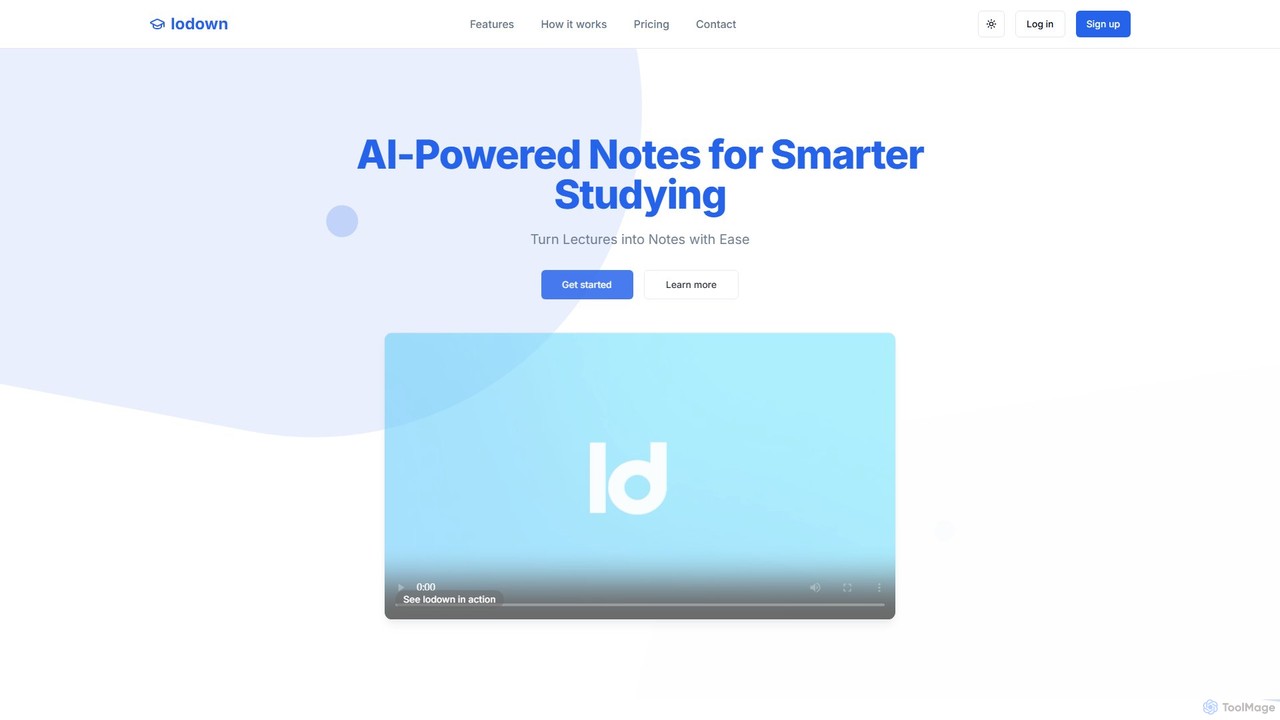
lodown is an AI-powered note-taking assistant designed for students. It automatically transcribes live or recorded lectures into organized, searchable, and study-ready notes. By structuring content with headings, summaries, and flashcards, lodown helps students save time, improve focus during class, and enhance their academic performance.

Note Taking
Visits 10.1KFavorites 150Likes 159

About Study Aid

Study Aid AI tools are designed to enhance learning efficiency and academic performance for students and lifelong learners. These tools leverage artificial intelligence to personalize study experiences, automate tedious tasks, and provide intelligent feedback. They empower users to grasp complex concepts faster, manage study materials effectively, and prepare for assessments with greater confidence, forming a crucial part of the broader Student Tools ecosystem.

Core Features

  • Personalized Learning Paths: AI adapts content and pace to individual learning styles and progress.
  • Automated Note-Taking & Summarization: Converts lectures or texts into concise notes and summaries.
  • Intelligent Flashcards & Quizzes: Generates adaptive review materials based on spaced repetition and performance.
  • Plagiarism Detection & Citation Assistance: Helps ensure academic integrity and simplifies referencing.
  • Essay & Writing Feedback: Provides constructive criticism on grammar, style, and argument structure.

Applicable Scenarios

Students from high school to university utilize Study Aid AI for various academic needs. Researchers and professionals also benefit from these tools for continuous learning and skill development. Typical scenarios include preparing for exams, writing academic papers, learning new languages, or mastering complex technical subjects.

How to Choose

When selecting a Study Aid AI tool, consider its specific functionalities (e.g., note-taking, quizzing, writing assistance), the subjects it supports, and its integration capabilities with existing learning platforms. Evaluate the accuracy of its AI models, user interface intuitiveness, and pricing structure. Look for tools that offer adaptive learning features and robust privacy policies to protect personal data.

Study Aid use cases

1

Efficiently Summarizing Research Papers

University students and researchers often face overwhelming amounts of academic literature. Study Aid AI tools can quickly process lengthy research papers, journal articles, or textbooks, extracting key arguments, methodologies, and conclusions. This allows users to grasp the core content in minutes, saving hours of reading time and facilitating faster literature reviews for essays, dissertations, or project proposals.

2

Creating Personalized Exam Study Guides

Students preparing for major exams can utilize Study Aid AI to generate customized study guides. By inputting course materials, lecture notes, or textbook chapters, the AI identifies critical concepts and creates targeted summaries, practice questions, and even simulated exam environments. This tailored approach ensures focus on areas needing improvement, optimizing revision time and boosting confidence.

3

Enhancing Language Learning with AI Tutors

Language learners, from beginners to advanced, can leverage Study Aid AI for interactive practice. These tools offer AI-powered conversational partners for speaking practice, provide instant feedback on pronunciation and grammar, and generate vocabulary quizzes based on user-defined topics. This personalized tutoring experience accelerates language acquisition and improves fluency outside traditional classroom settings.

4

Receiving Instant Feedback on Essay Drafts

High school and university students writing essays or reports can submit their drafts to Study Aid AI for immediate, constructive feedback. The AI analyzes grammar, spelling, punctuation, style, clarity, and even argument coherence. This allows students to refine their writing before submission, improving the quality of their academic work and developing stronger writing skills over time.

5

Organizing and Structuring Lecture Notes

Students attending lectures or webinars can use Study Aid AI to automatically transcribe audio, organize notes into logical structures, and highlight key points. Some tools can even convert handwritten notes into digital text. This streamlines the note-taking process, making study materials more accessible, searchable, and easier to review, especially for complex subjects requiring detailed organization.

6

Generating Adaptive Practice Quizzes for STEM Subjects

Students tackling challenging STEM subjects like mathematics, physics, or computer science can benefit from AI-generated adaptive quizzes. These tools create problem sets tailored to the user's current understanding, gradually increasing difficulty and focusing on weak areas. This iterative practice, combined with step-by-step solutions, helps solidify foundational knowledge and problem-solving skills.

Study Aid FAQ

What are AI Study Aid tools?

AI Study Aid tools are software applications that use artificial intelligence to assist students and learners with various academic tasks. They leverage technologies like natural language processing, machine learning, and adaptive algorithms to offer features such as personalized learning, automated summarization, intelligent quizzing, and writing assistance. Their primary goal is to make studying more efficient, effective, and engaging.

How do AI Study Aid tools differ from traditional learning methods?

Unlike traditional methods, AI Study Aid tools offer dynamic, personalized, and often automated support. While textbooks and human tutors provide static content or limited interaction, AI tools can adapt to individual learning paces, provide instant feedback, generate infinite practice questions, and summarize vast amounts of information in seconds. They complement traditional methods by offering scalable and highly customized learning experiences.

Who can benefit most from using AI Study Aid tools?

A wide range of learners can benefit, including high school and university students seeking to improve grades, lifelong learners acquiring new skills, and professionals needing to stay updated in their fields. Students with specific learning styles, those needing help with organization, or individuals looking for personalized tutoring outside of class will find these tools particularly valuable for enhancing comprehension and productivity.

What should I consider when choosing an AI Study Aid tool?

When choosing an AI Study Aid tool, evaluate its core functionalities to ensure they align with your specific learning needs (e.g., note-taking, essay feedback, language practice). Consider the tool's accuracy and reliability, user-friendliness, and compatibility with your devices or existing learning platforms. Also, check its pricing model, data privacy policies, and whether it offers adaptive learning features to truly personalize your experience.

Can AI Study Aid tools help with academic integrity?

Yes, many AI Study Aid tools include features that support academic integrity. For instance, some offer plagiarism detection capabilities to help students identify and correct unoriginal content before submission. Others provide citation assistance, automatically generating references in various academic styles, which helps prevent accidental plagiarism and ensures proper attribution of sources. However, students must use these tools responsibly and ethically.