Zerofy
Zerofy is an AI-powered Home Energy Management System (HEMS) that intelligently optimizes your home's energy use. By connecting …
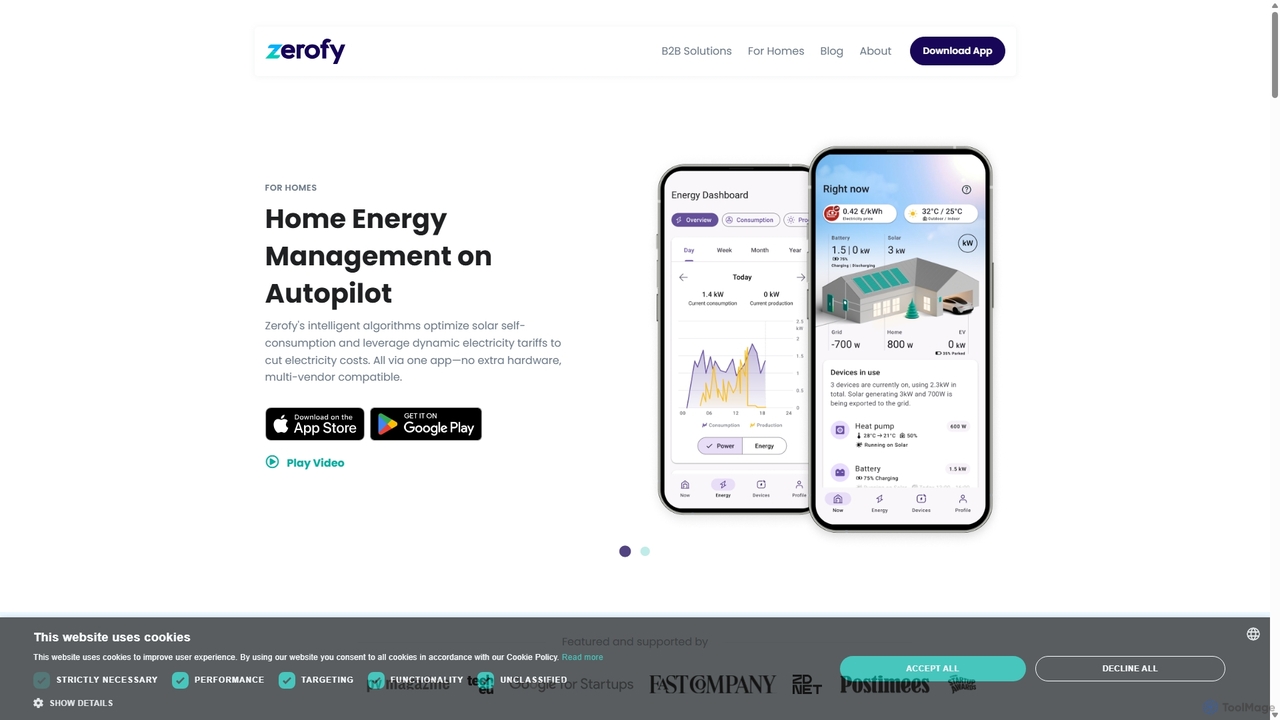
Zerofy is an AI-powered Home Energy Management System (HEMS) that intelligently optimizes your home's energy use. By connecting your solar panels, EV charger, heat pump, and smart appliances in a single app, Zerofy's algorithms automatically reduce electricity costs and maximize solar self-consumption, all without extra hardware. It's smart energy management on autopilot for a sustainable, cost-effective home.
About Carbon Footprint
Carbon Footprint tools are specialized AI platforms designed to measure, analyze, and manage greenhouse gas (GHG) emissions. These tools automate the collection of activity data from diverse sources and apply standardized emission factors to accurately calculate an organization's, product's, or individual's environmental impact. They provide actionable insights for developing effective decarbonization strategies, ensuring compliance with reporting standards, and tracking progress towards sustainability goals. AI enhances these platforms by improving data accuracy, modeling complex emission scenarios, and identifying reduction opportunities within the value chain.
Core Features
- Automated Data Collection: Gathers data from sources like utility bills, ERP systems, and travel logs to streamline input.
- Emission Calculation Engine: Utilizes methodologies like the GHG Protocol to calculate Scope 1, 2, and 3 emissions accurately.
- Reduction Scenario Modeling: Simulates the impact of various decarbonization initiatives, such as switching to renewable energy or optimizing logistics.
- Compliance Reporting: Generates reports formatted for standards like CDP, GRI, and TCFD to meet regulatory and stakeholder requirements.
- Supply Chain Analysis: Tracks and quantifies emissions from suppliers and other value chain partners (Scope 3).
Use Cases
These tools are essential for corporate sustainability departments, ESG (Environmental, Social, and Governance) analysts, and supply chain managers. They are used for annual corporate sustainability reporting, conducting product lifecycle assessments (LCA), setting science-based reduction targets, and managing climate-related financial risks.
How to Choose
When selecting a Carbon Footprint tool, consider the scope of emissions it covers (especially the relevant Scope 3 categories), its data integration capabilities with your existing software, the transparency of its calculation methodologies and emission factor databases, and its support for specific reporting frameworks your organization uses.

Carbon FootprintUse Cases
Automating Corporate ESG Reporting
A sustainability manager at a multinational corporation needs to compile the annual carbon footprint report for CDP submission. Using an AI Carbon Footprint tool, they connect it to the company's ERP, utility providers, and travel management systems. The tool automatically ingests and categorizes data, calculates Scope 1, 2, and key Scope 3 emissions, and generates a pre-formatted report. This process reduces manual data entry by over 80% and ensures higher accuracy and auditability, freeing up the team to focus on reduction strategies rather than data collection.
Analyzing Supply Chain Emissions (Scope 3)
A supply chain director for a retail brand wants to decarbonize their value chain. They use a Carbon Footprint tool to analyze Scope 3 emissions. By inputting procurement data and supplier information, the platform maps out high-emission hotspots in the supply chain, such as transportation routes or raw material production. The director can then use the tool's modeling feature to compare the carbon impact of switching suppliers or changing logistics partners, enabling data-driven decisions to effectively reduce their overall environmental footprint.
Calculating a Product Carbon Footprint (PCF)
A product designer at a consumer goods company is tasked with creating a more sustainable product line. They use a PCF-focused Carbon Footprint tool to conduct a lifecycle assessment (LCA). The tool guides them through inputting data for each stage: raw material extraction, manufacturing, distribution, consumer use, and end-of-life. The AI-powered platform calculates the total carbon footprint and highlights that 60% of emissions come from a specific raw material. This insight allows the designer to source an alternative, lower-carbon material, significantly reducing the product's overall impact before it even goes to market.
Setting Science-Based Reduction Targets
An ESG consultant is helping a mid-sized company set a science-based target (SBT) for emissions reduction. They use a Carbon Footprint tool to first establish an accurate baseline of the company's Scope 1, 2, and 3 emissions. Then, they use the tool's scenario modeling capabilities to project future emissions based on business growth and test various reduction levers, such as investing in energy efficiency, procuring renewable energy, and engaging suppliers. The tool helps them identify the most cost-effective pathway to meet the SBTi criteria, providing a clear, data-backed roadmap for the company's climate action plan.
Carbon Analysis for Investment Portfolios
An ESG analyst at an investment firm needs to assess the climate risk of their portfolio. They use a Carbon Footprint tool that aggregates emissions data for publicly traded companies. The platform allows the analyst to calculate the weighted average carbon intensity (WACI) of the portfolio, identify laggards and leaders in climate performance, and model the financial impact of potential carbon taxes. This analysis informs their engagement strategy with portfolio companies and helps in constructing lower-carbon investment funds that align with client sustainability preferences.
Planning a Carbon-Neutral Event
An event organizer is planning a large international conference and aims to make it carbon-neutral. They use a Carbon Footprint tool specialized for events. The tool helps them estimate emissions from various sources, including attendee travel (based on origin cities), venue energy consumption, catering choices, and waste generation. After calculating the total footprint, the platform suggests certified carbon offset projects to purchase credits from. This provides a transparent and credible way to achieve carbon neutrality and communicate their sustainability commitment to attendees and sponsors.