
Zerofy
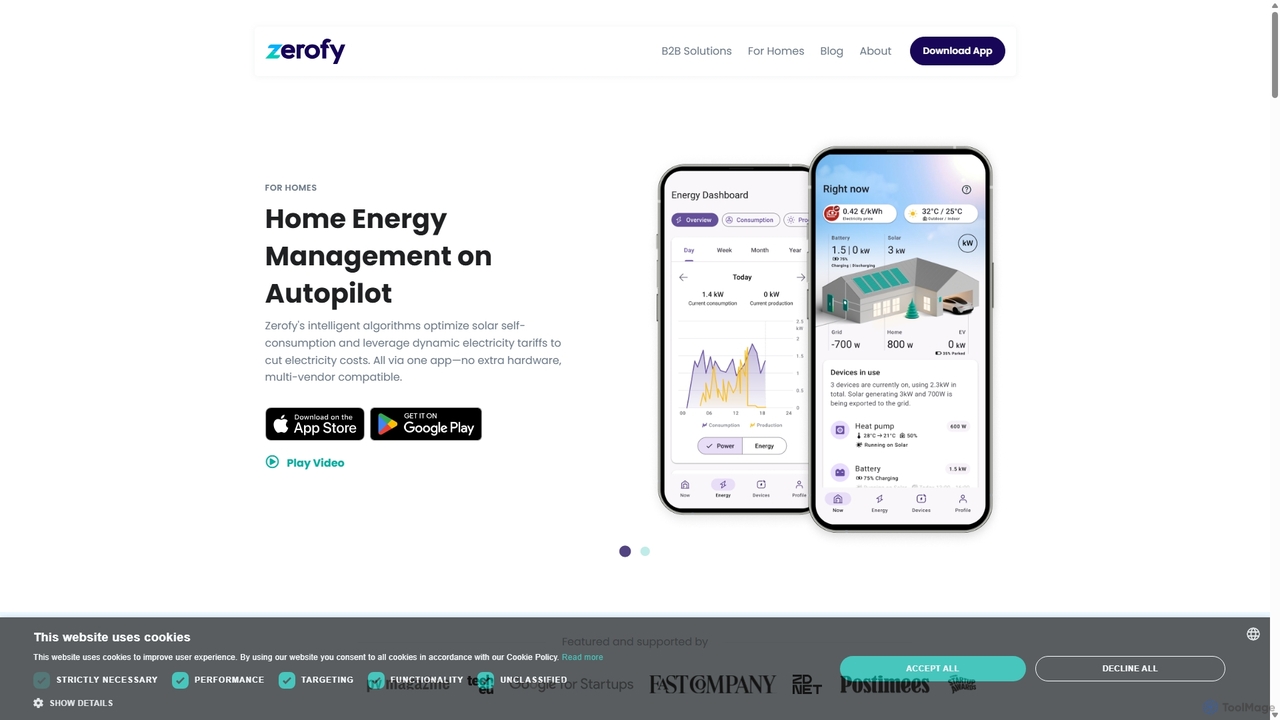
Zerofy is an AI-powered Home Energy Management System (HEMS) that intelligently optimizes your home's energy use. By connecting …
Zerofy is an AI-powered Home Energy Management System (HEMS) that intelligently optimizes your home's energy use. By connecting your solar panels, EV charger, heat pump, and smart appliances in a single app, Zerofy's algorithms automatically reduce electricity costs and maximize solar self-consumption, all without extra hardware. It's smart energy management on autopilot for a sustainable, cost-effective home.
About Energy Management
Energy Management AI tools are advanced solutions that leverage artificial intelligence to monitor, analyze, and optimize energy consumption across various sectors. These tools utilize machine learning algorithms to process vast datasets from sensors and meters, enabling predictive analytics for demand forecasting and anomaly detection. Their primary value lies in reducing operational costs, enhancing sustainability, and improving grid stability by intelligently managing energy resources. They offer a proactive approach to energy efficiency, moving beyond traditional reactive methods.
Core Features
- Real-time Monitoring: Continuously track energy usage from diverse sources and equipment.
- Predictive Analytics: Forecast future energy demand and supply based on historical data and external factors.
- Anomaly Detection: Automatically identify unusual energy consumption patterns indicative of waste or equipment malfunction.
- Load Optimization: Dynamically adjust energy distribution and consumption to minimize peak demand and costs.
- Renewable Integration: Optimize the use and storage of energy from renewable sources within existing grids.
Use Cases
Industrial facilities use these tools to optimize machinery schedules and reduce energy waste during production cycles. Smart buildings deploy them to intelligently control HVAC and lighting systems based on occupancy and weather. Utility companies leverage AI for grid balancing and predicting localized demand fluctuations.
How to Choose
When selecting an Energy Management AI tool, consider its integration capabilities with existing infrastructure (BMS, SCADA). Evaluate the accuracy of its predictive models and its ability to handle diverse data sources. Assess the level of customization for specific operational needs and the clarity of its reporting and visualization features. Finally, review its scalability to accommodate future growth and evolving energy demands.
Energy ManagementUse Cases
Optimizing HVAC in Commercial Buildings
Facility managers in large office complexes use AI energy management tools to dynamically adjust heating, ventilation, and air conditioning (HVAC) systems. By analyzing occupancy data, external weather forecasts, and historical energy patterns, the AI predicts optimal settings, reducing energy consumption during off-peak hours or in unoccupied zones, leading to significant cost savings and improved occupant comfort.
Predictive Maintenance for Industrial Equipment
Manufacturing plants deploy AI energy management to monitor the energy signatures of critical machinery. The AI detects subtle deviations from normal energy consumption patterns, indicating potential mechanical failures or inefficiencies. This enables proactive maintenance scheduling, preventing costly breakdowns, extending equipment lifespan, and ensuring consistent energy efficiency in production.
Smart Grid Load Balancing for Utilities
Utility companies leverage AI to manage and balance electricity loads across their distribution networks. By integrating data from smart meters, weather stations, and renewable energy sources, the AI forecasts demand fluctuations and optimizes power flow. This minimizes transmission losses, prevents overloads, and efficiently integrates intermittent renewable energy, enhancing grid stability and reliability.
Energy Consumption Forecasting for Retail Chains
Retail operations managers utilize AI energy management to forecast energy needs across multiple store locations. The AI considers factors like store hours, seasonal sales events, local weather, and foot traffic. Accurate forecasting allows for optimized energy procurement, demand-side management strategies, and budgeting, leading to reduced energy expenditures and better resource allocation.
Optimizing Renewable Energy Storage and Dispatch
Operators of solar farms or wind power facilities use AI to optimize the charging and discharging of battery storage systems. The AI predicts renewable energy generation based on weather and historical data, alongside grid demand. This ensures that stored energy is dispatched at the most economically advantageous times or when grid stability requires it, maximizing revenue and grid contribution.
Identifying Energy Waste in Data Centers
Data center administrators employ AI energy management tools to pinpoint inefficiencies in power usage effectiveness (PUE). The AI analyzes power consumption across servers, cooling systems, and other infrastructure components. It identifies areas of excessive energy draw or cooling waste, recommending adjustments to server loads, airflow management, or cooling setpoints to significantly reduce operational costs and environmental impact.