DevBlogs
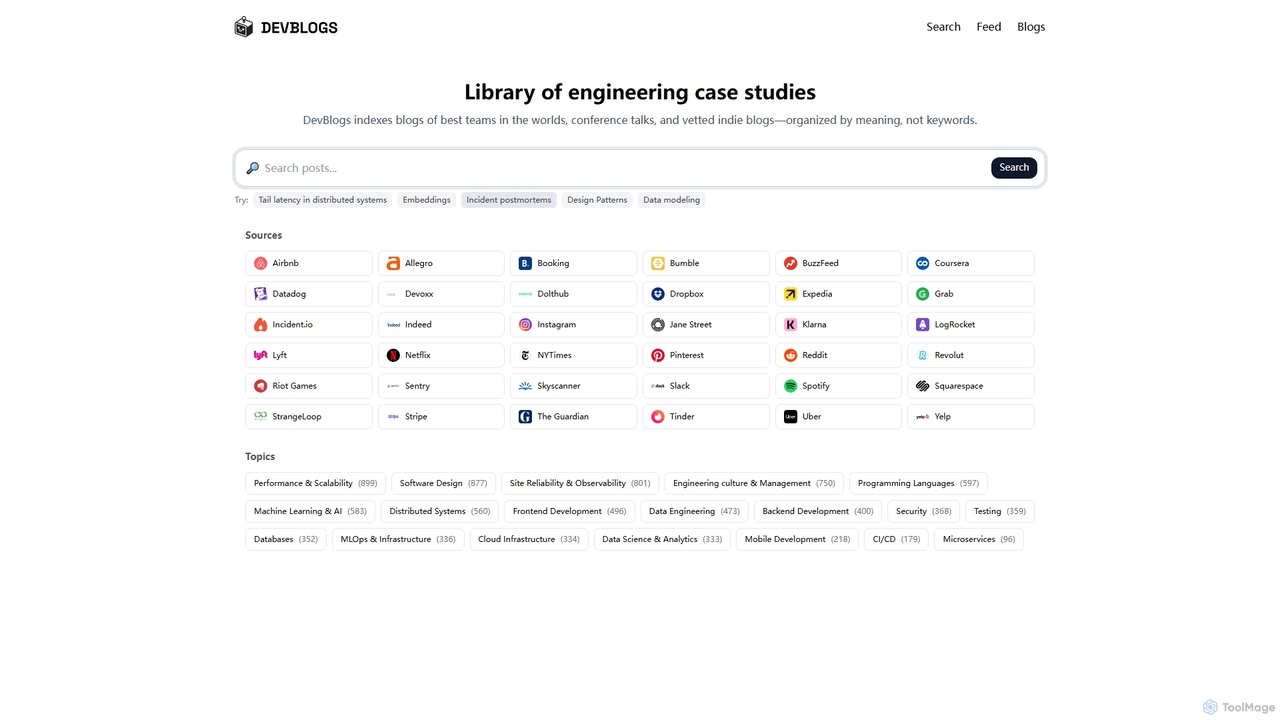
DevBlogs is a curated library indexing engineering case studies, tech blogs, and conference talks from leading global teams. …
DevBlogs is a curated library indexing engineering case studies, tech blogs, and conference talks from leading global teams. It organizes content by meaning and specific technical topics, providing a valuable resource for developers and engineers to discover insights and best practices.
About Systems
AI Systems are comprehensive platforms that integrate multiple AI technologies to automate complex processes and manage large-scale operations. These systems function as a central nervous system for business intelligence, combining capabilities like machine learning, natural language processing, and computer vision into a unified framework. They are designed to handle end-to-end workflows, from data ingestion and analysis to automated decision-making and execution. The primary value of AI Systems lies in their ability to provide holistic, scalable solutions that transform core business functions rather than addressing isolated tasks.
Core Features
- Integrated AI Capabilities: Combines diverse AI models (e.g., NLP, computer vision, predictive analytics) into a single, cohesive platform.
- Workflow Automation Engine: Allows users to design, build, and deploy complex, multi-step automated processes without extensive coding.
- Large-Scale Data Processing: Engineered to ingest, manage, and analyze massive datasets from various sources in real-time or in batches.
- Model Management & Deployment: Provides tools for training, versioning, deploying, and monitoring machine learning models at an enterprise scale.
- API & Integration Hub: Offers robust APIs and pre-built connectors to seamlessly integrate with existing enterprise software like ERP, CRM, and databases.
Use Cases
AI Systems are predominantly used in enterprise environments where complex, data-driven operations are critical. Industries such as manufacturing leverage them for predictive maintenance and quality control automation. In finance, they are used for algorithmic trading and comprehensive fraud detection. Logistics and supply chain companies use these systems to optimize routing, predict demand, and manage warehouse automation.
How to Choose
Selecting an AI System requires evaluating its scalability to handle future growth and its integration capabilities with your current tech stack. Assess the platform's security protocols and compliance with industry regulations (e.g., GDPR, HIPAA). Consider the total cost of ownership, including implementation, maintenance, and training. Finally, evaluate the vendor's technical support and expertise in your specific industry.
SystemsUse Cases
Automating Enterprise Supply Chain Management
A global logistics company uses an AI System to overhaul its entire supply chain. The system ingests real-time data from shipping containers, weather forecasts, and port traffic. Its predictive analytics module forecasts demand fluctuations, allowing for proactive inventory adjustments and reducing stockouts by over 30%. The workflow automation engine optimizes shipping routes dynamically to avoid delays and minimize fuel consumption. By integrating computer vision at warehouses, the system automates package sorting and inventory checks, increasing operational efficiency and reducing manual errors significantly.
Real-Time Financial Fraud Detection
A major financial institution deploys an enterprise-level AI System to combat sophisticated fraud. The platform continuously analyzes millions of transactions, user account activities, and device data in real-time. It uses machine learning models to identify anomalous patterns that deviate from a customer's normal behavior, flagging suspicious activities instantly. The system integrates with existing banking applications to automatically block fraudulent transactions and trigger alerts for security teams, reducing financial losses and improving response time by over 90% compared to rule-based methods.
Developing Autonomous Vehicle Operating Systems
An automotive technology firm builds its autonomous driving software on a core AI System. This system acts as the vehicle's brain, integrating data from multiple sensors like LiDAR, radar, and cameras. It uses advanced computer vision models for object detection and scene perception. A separate decision-making module processes this information to plan the vehicle's path and control acceleration, braking, and steering. The entire system is designed for high reliability and low latency, ensuring safe and efficient navigation in complex urban environments.
Intelligent Manufacturing and Predictive Maintenance
A smart factory implements an AI System to monitor its production lines. The system uses high-resolution cameras and computer vision algorithms to perform real-time quality control checks, identifying product defects with over 99% accuracy. Simultaneously, it collects sensor data from machinery to power a predictive maintenance module. This module analyzes vibration, temperature, and performance metrics to forecast potential equipment failures before they occur, allowing maintenance to be scheduled proactively. This reduces unplanned downtime by up to 50% and extends the lifespan of critical assets.
Creating Personalized Patient Care Platforms
A large healthcare network utilizes an AI System to deliver personalized patient care. The system securely integrates electronic health records (EHR), medical imaging data, and genomic information. It assists radiologists by analyzing MRIs and CT scans to highlight potential abnormalities for further review. For clinicians, the platform analyzes patient history and treatment outcomes to suggest personalized care plans based on evidence-based medicine. This approach helps improve diagnostic accuracy and enables the creation of tailored treatment strategies for complex diseases.
Enterprise-Scale Customer Data Platform (CDP)
A multinational retail corporation centralizes its customer data using an AI-powered System. This platform unifies data from online sales, in-store purchases, mobile app usage, and customer service interactions into a single customer view. It uses machine learning to segment customers, predict lifetime value, and identify churn risks. The system then automates personalized marketing campaigns across email, social media, and the company's app, delivering relevant product recommendations and offers. This results in a measurable lift in customer engagement and conversion rates.