goblueish
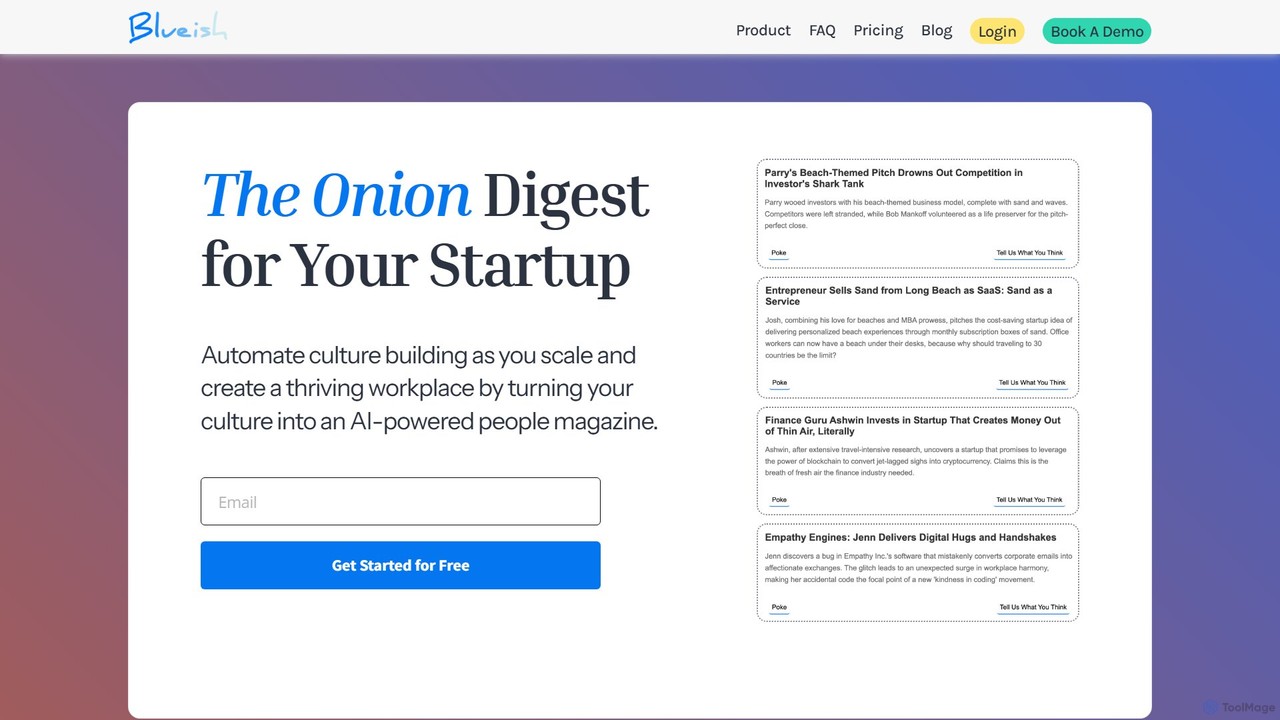
goblueish is an AI-powered culture automation platform designed for distributed teams. It combats disconnection and boosts engagement by …
goblueish is an AI-powered culture automation platform designed for distributed teams. It combats disconnection and boosts engagement by transforming your company culture into a personalized "people magazine." Through automated stories, daily reflections, and gamification, it helps strengthen team bonds, improve morale, and reduce employee turnover effortlessly.
About Culture Building
AI Culture Building tools are a specialized category of software designed to analyze, foster, and sustain a positive organizational culture. They leverage AI for sentiment analysis, communication pattern recognition, and personalized engagement suggestions to measure and improve team morale. These tools are particularly valuable for remote and hybrid teams, helping leaders proactively address issues, promote inclusivity, and align daily activities with core company values. Unlike general team management platforms that focus on tasks, these tools provide data-driven insights into the human dynamics of a team.
Core Features
- Sentiment Analysis: Automatically analyzes communications in platforms like Slack or Teams to gauge team morale and detect potential burnout.
- Peer Recognition & Rewards: Facilitates easy, public, and values-based recognition among team members to boost motivation and reinforce desired behaviors.
- Automated Pulse Surveys: Deploys short, frequent surveys to gather real-time, anonymous feedback on employee engagement and satisfaction.
- Inclusivity & D&I Analytics: Identifies communication biases and promotes inclusive language to support diversity, equity, and inclusion initiatives.
- Values Alignment Nudges: Provides gentle reminders and suggestions within workflows to reinforce company values in daily actions and decisions.
Use Cases
These tools are ideal for HR leaders, people managers, and executive teams in distributed companies, fast-growing startups aiming to codify their culture, and large enterprises focused on employee retention. They are used to improve remote team cohesion, automate recognition programs, and gain early warnings on potential employee disengagement.
How to Choose
When selecting an AI Culture Building tool, prioritize its integration capabilities with your existing communication platforms (e.g., Slack, Microsoft Teams). Evaluate the robustness of its privacy controls and anonymity features to ensure employee trust. Assess the depth of its analytics and reporting; it should offer actionable insights, not just raw data. Finally, consider the level of customization available to align the tool with your unique company values and culture programs.
Culture BuildingUse Cases
Enhancing Remote Team Cohesion
A manager of a fully remote team uses a culture building tool to foster connection and combat isolation. The AI schedules automated 'virtual water cooler' prompts in Slack, encouraging non-work-related conversations. It also analyzes communication patterns to identify team members who may be becoming disengaged. Based on this data, the manager can facilitate a peer-to-peer recognition program directly through the tool, boosting morale and making everyone feel valued, which has been shown to reduce feelings of disconnection by over 30% in distributed teams.
Automating Employee Recognition Programs
An HR manager implements a culture tool to streamline and democratize recognition. They set up custom recognition categories tied to specific company values like 'Customer Obsession' or 'Innovate and Simplify'. Employees can now give 'kudos' to colleagues directly in MS Teams. The AI aggregates this data, identifies top contributors for each value, and automatically includes them in a weekly company-wide digest. This automates a previously manual process, saving the HR team 8-10 hours per month and increasing recognition frequency by 200%.
Proactively Measuring Employee Sentiment
A leadership team uses AI-powered pulse surveys and anonymous feedback channels to stay ahead of potential issues. The tool deploys a short, two-question survey every Friday. Its sentiment analysis engine processes the anonymous responses and flags a significant decline in morale within the engineering department. The report highlights recurring keywords like 'deadline pressure' and 'meeting overload'. This early warning allows management to intervene with targeted support, such as re-prioritizing projects and implementing 'no-meeting Wednesdays', before the issue escalates into turnover.
Promoting Diversity and Inclusion (D&I)
A Diversity & Inclusion officer uses a culture tool's communication analytics to foster a more inclusive environment. The AI scans public channels for potentially non-inclusive language (e.g., gendered terms, idioms that may not translate well). Instead of public call-outs, the tool sends a private, automated message to the user with a constructive suggestion and an explanation. This educational approach helps employees learn and adapt their language in a safe space, leading to a measurable increase in inclusive terminology usage and positive sentiment from underrepresented groups in subsequent pulse surveys.
Reinforcing Values During Onboarding
To ensure new hires understand and embody company values from day one, an onboarding specialist uses a culture tool to create a 'Values Challenge'. During their first week, new employees receive automated prompts and micro-tasks related to core values, such as 'Share a piece of feedback with a colleague' (for 'Radical Candor'). The tool tracks completion and connects them with a 'culture buddy'. This gamified approach accelerates cultural integration and ensures that values are not just posters on a wall, but practiced behaviors from the very beginning.
Identifying and Preventing Burnout
A people operations team uses a culture tool to monitor team well-being without infringing on privacy. The AI analyzes anonymized, aggregated data such as the volume of after-hours communication, meeting density, and sentiment shifts in project channels. It identifies a specific team showing a 40% increase in late-night Slack activity and a negative sentiment trend. The system alerts the manager with data-backed insights, suggesting actions like enforcing 'focus time' blocks and reviewing project timelines. This proactive approach helps address the root causes of stress before they lead to widespread burnout.