VibeSonic
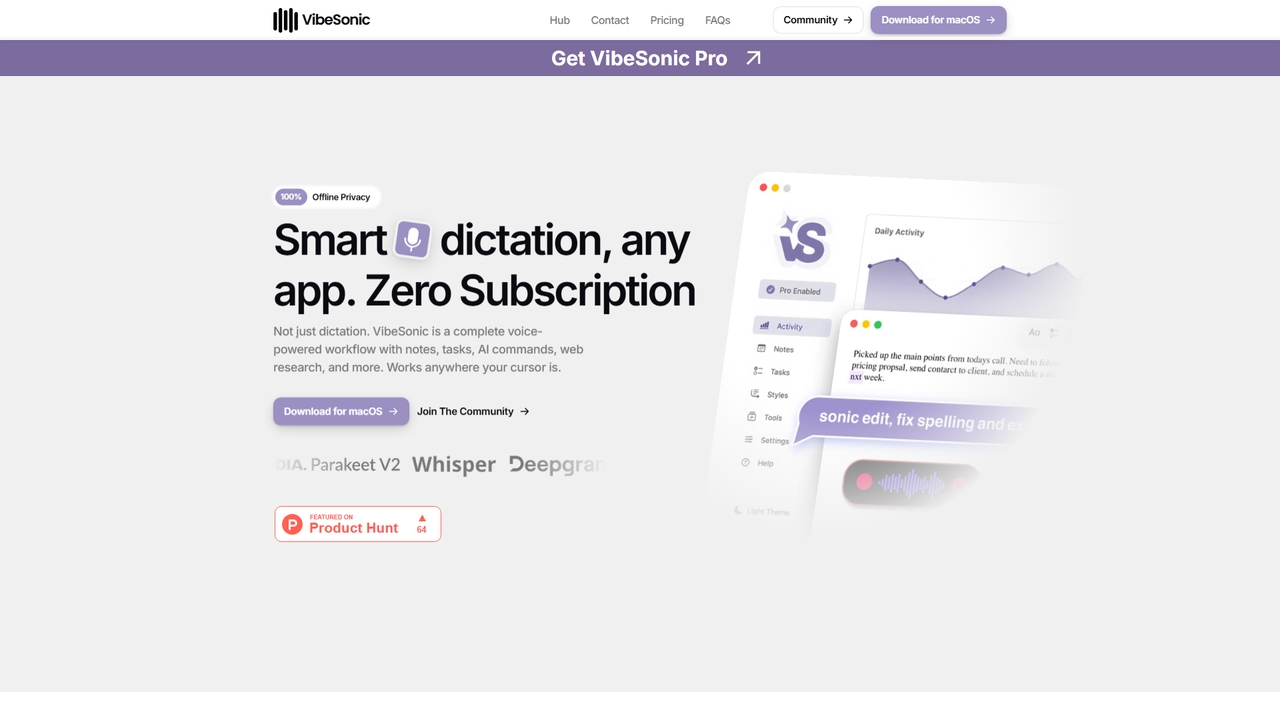
VibeSonic is a comprehensive, voice-powered workflow application for macOS that combines offline transcription, AI-assisted editing, voice-triggered notes and …
VibeSonic is a comprehensive, voice-powered workflow application for macOS that combines offline transcription, AI-assisted editing, voice-triggered notes and tasks, and integrated web research. It prioritizes user privacy by processing audio locally on the device and offers a lifetime license model with no subscription required.
About Tools
Tools are a broad category of AI-powered applications and platforms designed to augment human capabilities across various domains. These solutions leverage advanced artificial intelligence, machine learning, and natural language processing to automate complex tasks, generate creative content, analyze vast datasets, and provide intelligent insights. They empower individuals and organizations to enhance productivity, streamline workflows, and innovate more effectively by transforming how work is done.
Core Features
- Automation: Automate repetitive and time-consuming tasks, from data entry to content scheduling.
- Content Generation: Create diverse forms of content, including text, images, audio, and video, with AI assistance.
- Data Analysis: Process and interpret large datasets to identify patterns, trends, and actionable insights.
- Intelligent Assistance: Provide smart recommendations, predictive analytics, and personalized user experiences.
- Workflow Optimization: Integrate seamlessly into existing systems to improve operational efficiency and decision-making.
Use Cases
AI tools find application across virtually every industry and professional role. For content creators, they can generate article drafts, social media posts, or image variations. Marketing teams utilize them for audience segmentation, ad copy generation, and campaign optimization. Developers leverage AI for code generation, bug detection, and automated testing. Businesses employ these tools for customer service automation, predictive maintenance, and strategic planning, driving innovation and competitive advantage.
How to Choose
Selecting the right AI tool involves evaluating several factors. Consider the specific problem you aim to solve and the core functionalities required. Assess its integration capabilities with your existing tech stack and the ease of use for your team. Evaluate the pricing model against your budget and the scalability of the solution as your needs evolve. Finally, review user feedback and support resources to ensure long-term viability and effective implementation.
ToolsUse Cases
Automating Customer Support Inquiries
Customer service teams can deploy AI-powered chatbots to handle routine inquiries, answer frequently asked questions, and guide users through basic troubleshooting steps 24/7. This frees up human agents to focus on complex issues, significantly reducing response times and improving overall customer satisfaction by providing instant, consistent support.
Generating Marketing Copy and Ad Creatives
Marketing professionals use AI tools to rapidly generate multiple variations of ad headlines, product descriptions, social media posts, and email subject lines. By inputting key product features and target audience details, the AI can produce compelling copy and even suggest visual elements, accelerating campaign creation and A/B testing processes.
Streamlining Data Analysis for Business Intelligence
Business analysts and data scientists utilize AI tools to process and interpret vast amounts of structured and unstructured data, identifying hidden patterns and trends. These tools can automate report generation, create interactive dashboards, and provide predictive insights, enabling faster, more informed strategic decision-making without extensive manual effort.
Assisting Software Development with Code Generation
Developers leverage AI-powered coding assistants to generate boilerplate code, suggest code completions, and identify potential bugs or vulnerabilities in real-time. This accelerates the development cycle, reduces errors, and allows engineers to focus on more complex architectural challenges and innovative problem-solving, enhancing code quality and efficiency.
Personalizing Educational Content and Learning Paths
Educators and e-learning platforms employ AI tools to create adaptive learning experiences. These tools can analyze a student's performance and learning style, then dynamically adjust content, recommend resources, and provide personalized feedback. This tailored approach enhances engagement, improves comprehension, and optimizes individual learning outcomes.
Optimizing Supply Chain and Logistics Operations
Logistics managers use AI tools to predict demand fluctuations, optimize routing for delivery fleets, and manage inventory levels more efficiently. By analyzing historical data, real-time traffic, and weather patterns, AI can minimize operational costs, reduce delivery times, and improve overall supply chain resilience and responsiveness.