Flighty
A powerful flight tracking app for iOS that provides real-time updates, the fastest alerts, and AI-powered delay predictions. …
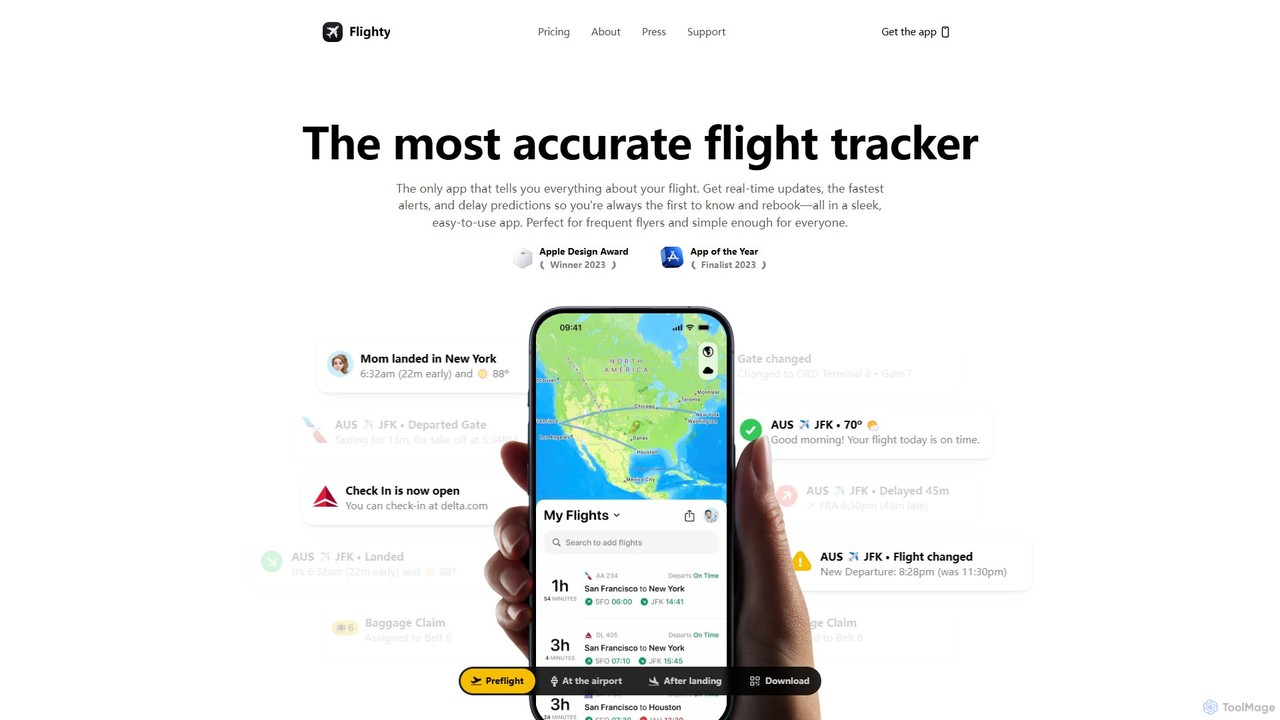
A powerful flight tracking app for iOS that provides real-time updates, the fastest alerts, and AI-powered delay predictions. It tracks inbound aircraft and ATC mandates to notify you of changes before the airline does, offering pilot-grade data in a beautifully designed, user-friendly interface.
About Flight Tracking
Flight Tracking tools are specialized platforms that provide real-time positional data and status updates for aircraft worldwide. These tools primarily utilize data from sources like ADS-B transponders, MLAT, and satellite feeds to display live aircraft movements on an interactive map. They offer crucial information for travelers monitoring their journey, individuals tracking the arrival of friends or family, and aviation enthusiasts exploring global air traffic. The core value lies in delivering accurate, up-to-the-minute flight information, enhancing travel planning and situational awareness.
Core Features
- Real-Time Map View: Displays live aircraft positions on a global map with detailed route overlays.
- Comprehensive Flight Status: Provides up-to-date information on departure/arrival times, delays, cancellations, and gate changes.
- Detailed Aircraft Information: Offers specifics such as aircraft type, registration number, age, and flight history.
- Custom Alerts & Notifications: Sends push notifications for significant status changes to a tracked flight.
- Historical Data Playback: Allows users to review and replay past flights and air traffic patterns for a specific time.
Use Cases
Flight Tracking tools are widely used by individual travelers to reduce uncertainty and manage connections. Family and friends use them to coordinate airport pickups accurately. Aviation enthusiasts and plane spotters leverage these tools to identify aircraft and learn about flight paths. Additionally, professionals in logistics and business travel management use them to monitor assets and personnel movements in real time.
How to Choose
When selecting a Flight Tracking tool, consider the accuracy and source of its data (e.g., direct ADS-B feeds). Evaluate the geographical coverage to ensure it meets your needs. Assess the user interface and platform availability (web, iOS, Android). Finally, compare the features offered in free versus paid subscription tiers, such as historical data access, weather overlays, and ad-free experiences, to find the best fit for your requirements.

Flight TrackingUse Cases
Monitoring Personal Travel for Peace of Mind
A frequent traveler uses a flight tracking app on their smartphone to monitor an upcoming flight. The day before travel, they receive a notification about a 30-minute schedule change, allowing them to adjust their plans. On the day of the flight, they track the inbound aircraft's arrival to anticipate potential delays. While at the airport, they get a real-time alert for a gate change, saving them from a last-minute rush across the terminal. This proactive monitoring reduces travel stress and ensures they are always informed.
Coordinating Airport Pickups Accurately
A person is picking up a family member from the airport. Instead of relying on the scheduled arrival time, they use a flight tracking tool to see the plane's actual position on a map. They notice the flight is circling due to air traffic congestion and will land 25 minutes later than expected. By using this real-time data, they can delay their departure for the airport, avoiding long waits and expensive parking fees. They arrive at the terminal just as the passenger is ready to be picked up.
Fueling the Passion of Aviation Enthusiasts
An aviation enthusiast sits near an airport runway. When a plane flies overhead, they use a flight tracking app's augmented reality (AR) feature to point their phone at the sky and instantly identify it. The app displays the aircraft type (e.g., Airbus A380), airline, registration number, and its origin and destination. They can then explore the aircraft's full flight history and technical details. This enriches their plane-spotting hobby by providing a wealth of data that goes far beyond simple visual identification.
Proactive Business Travel Management
A corporate travel manager is responsible for a team flying to an important conference. Using a flight tracking tool with fleet-tracking capabilities, they monitor all their team's flights on a single dashboard. The tool sends an alert that one flight is significantly delayed due to a technical issue. The manager can then proactively book the affected employee onto an alternative flight and adjust their ground transportation and hotel check-in times, minimizing disruption and ensuring the employee arrives with minimal stress.
Analyzing Historical Flight Data for Research
A university researcher is studying the impact of weather patterns on airline on-time performance. They use a flight tracking service's premium subscription to access and download historical flight data for a specific region over a six-month period. By cross-referencing this data with meteorological records, they can analyze how events like thunderstorms or snowstorms affected flight paths, delays, and cancellations. This data-driven approach allows for quantitative analysis that would be impossible without access to comprehensive historical flight records.
Enhancing Situational Awareness for Private Pilots
A private pilot planning a cross-country flight uses a flight tracking tool that integrates weather overlays and air traffic data. Before takeoff, they review the real-time traffic in their vicinity to understand current patterns. During the flight, they use the app on a tablet as a supplementary tool to visualize nearby commercial traffic that might not be visible on their basic onboard equipment. This provides an extra layer of situational awareness, helping them make more informed decisions about routing and altitude adjustments to maintain safe separation from other aircraft.