Tat Ink
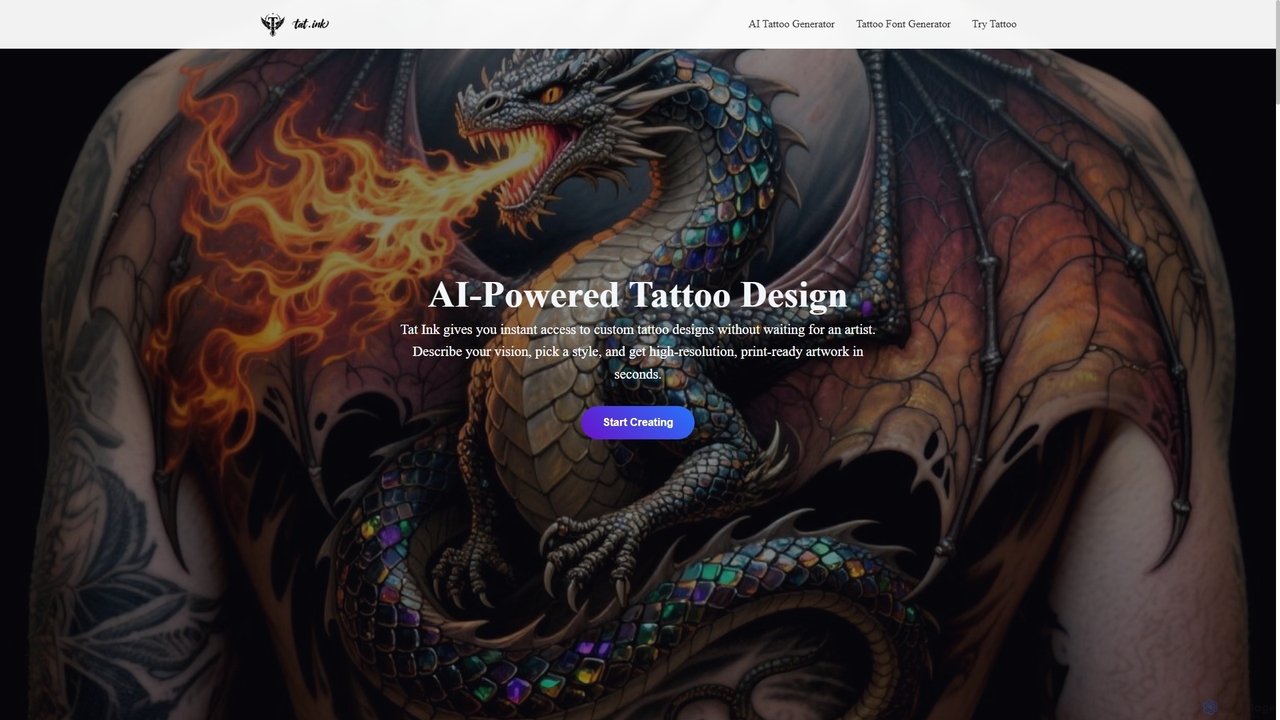
Tat Ink is an innovative AI-powered platform that transforms your tattoo ideas into unique, high-resolution designs in seconds. …
Tat Ink is an innovative AI-powered platform that transforms your tattoo ideas into unique, high-resolution designs in seconds. It offers an AI tattoo generator, a vast idea explorer, a versatile font generator, and a realistic virtual try-on feature, allowing users to visualize custom ink on their skin before commitment. Perfect for enthusiasts, artists, and designers seeking creative inspiration and personalized body art.
About Typography
Typography tools are AI-powered solutions that enhance, automate, and generate typographic elements to improve visual communication and readability. These tools leverage advanced algorithms to analyze text, suggest optimal font pairings, refine styles, and even create unique typefaces. They streamline the design process, ensuring consistency and aesthetic appeal across various digital and print mediums, making professional-grade typography accessible to a wider audience.
Core Features
- AI Font Pairing: Automatically suggests harmonious font combinations for headings and body text.
- Style Transfer & Generation: Applies specific typographic styles to new text or generates entirely new fonts based on user input.
- Readability Analysis: Evaluates text for legibility, contrast, and visual hierarchy, offering suggestions for improvement.
- Layout Optimization: Assists in arranging text blocks, line spacing, and character spacing for optimal visual balance.
Use Cases
Graphic designers utilize these tools to quickly iterate on branding projects, ensuring consistent typography across logos, websites, and marketing materials. Web developers employ them to optimize text for responsive design, enhancing user experience on different devices. Content creators benefit from AI-driven suggestions to make their articles and social media posts more engaging and visually appealing.
How to Choose
When selecting an AI typography tool, consider its AI sophistication for tasks like font pairing and style generation. Evaluate the breadth and quality of its integrated font library, and check for compatibility with your existing design software. Assess the level of customization offered, ensuring it meets your specific creative needs, and consider the pricing model relative to its features and your budget.
TypographyUse Cases
Streamlining Brand Identity Design
Graphic designers can use AI typography tools to rapidly experiment with font combinations and styles for new brand identities. By inputting brand keywords or existing visual assets, the AI suggests suitable typefaces, ensuring consistency across logos, websites, and marketing collateral, significantly reducing design iteration time and maintaining brand cohesion.
Enhancing Website Readability and User Experience
Web developers and UX designers leverage AI typography tools to analyze and optimize text elements on websites. The AI can suggest ideal font sizes, line heights, letter spacing, and color contrasts to improve legibility across various devices and screen sizes. This ensures a comfortable reading experience, reducing bounce rates and enhancing overall user engagement.
Generating Unique Typefaces for Creative Projects
Artists and independent designers can utilize AI typography tools to generate entirely new and unique fonts. By providing initial sketches, stylistic preferences, or even descriptive text prompts, the AI can create custom typefaces that perfectly match the project's aesthetic. This opens up new creative possibilities beyond standard font libraries for games, animations, or bespoke branding.
Automating Marketing Material Creation
Marketing professionals can use AI typography tools to quickly generate visually appealing text for advertisements, social media graphics, and promotional banners. The AI can adapt text styles to fit different campaign themes or target audiences, ensuring brand consistency while producing diverse and engaging visual content at scale, saving time on manual adjustments.
Optimizing Document Layout for Professional Reports
Business professionals and content creators can employ AI typography tools to automatically format and optimize the layout of reports, presentations, and e-books. The AI ensures proper heading hierarchy, consistent paragraph styling, and balanced white space, transforming raw text into polished, professional-looking documents with minimal manual effort, enhancing readability and perceived professionalism.
Personalizing Content for Diverse Audiences
Content strategists and publishers can use AI typography to tailor text presentation for different audience segments or platforms. The AI can analyze audience demographics and platform requirements to suggest optimal font choices and styles that resonate best, improving engagement. This allows for dynamic content delivery where typography adapts to maximize impact and connection with specific readers.