TapAI
TapAI is an iOS productivity tool that uses the iPhone's Back Tap feature to instantly process on-screen information. …
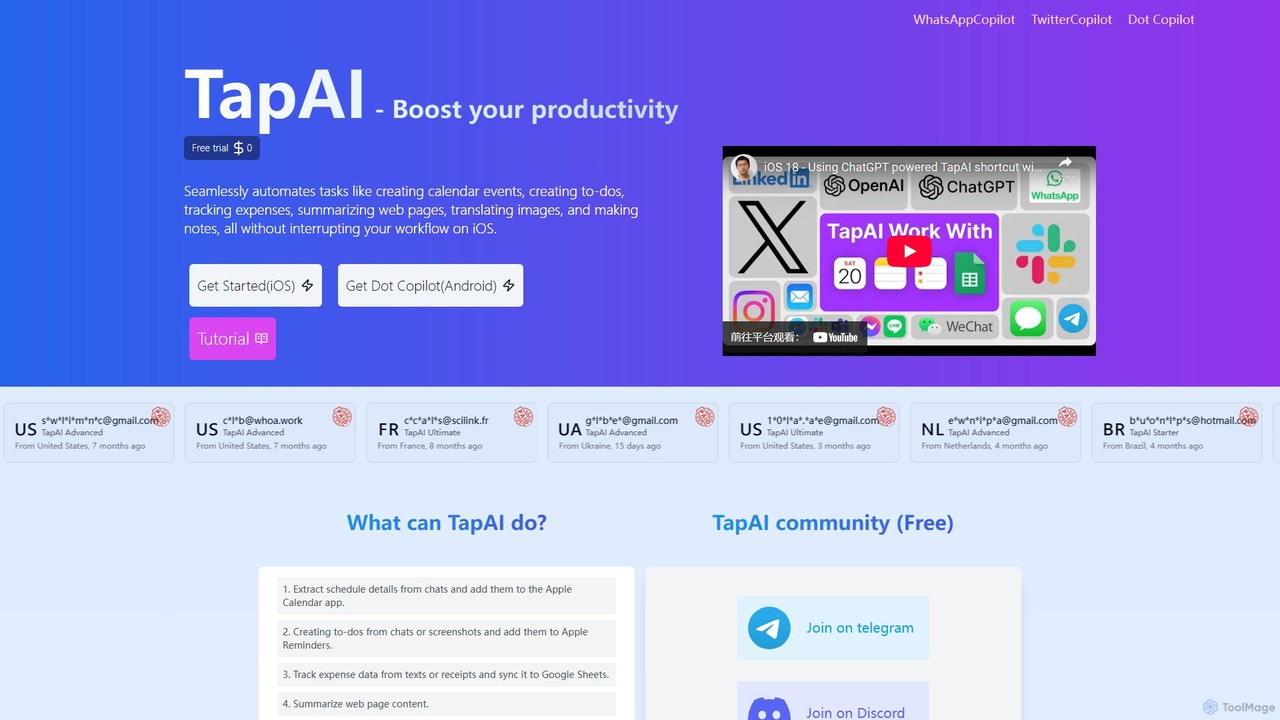
TapAI is an iOS productivity tool that uses the iPhone's Back Tap feature to instantly process on-screen information. Powered by ChatGPT, it can extract text, create calendar events, manage to-do lists, track expenses to Google Sheets, translate content, and generate smart replies without ever leaving your current app.
About Task Management
Task Management AI tools are designed to automate, optimize, and streamline the planning, execution, and tracking of tasks and projects. Leveraging artificial intelligence, these platforms can intelligently prioritize, assign, and monitor progress, enhancing individual and team productivity. They transform traditional task workflows into more dynamic and adaptive systems, making them an essential component of modern digital utilities.
Core Features
- Intelligent Prioritization: AI algorithms analyze deadlines, dependencies, and impact to suggest optimal task order.
- Automated Assignment: Based on team member skills, availability, and workload, AI can recommend or automatically assign tasks.
- Progress Tracking & Prediction: Monitor task status in real-time, identify potential bottlenecks, and predict completion times.
- Natural Language Task Creation: Convert spoken or written natural language commands into actionable tasks.
- Smart Reminders & Notifications: Deliver context-aware alerts to keep projects on track and team members informed.
Use Cases
Task Management AI tools are invaluable for project managers overseeing complex initiatives, ensuring timely delivery and resource optimization. They assist individual professionals in organizing daily to-dos and long-term goals, reducing cognitive load. Marketing teams utilize them to coordinate campaign launches, track content creation, and manage cross-functional dependencies efficiently.
How to Choose
When selecting an AI task management tool, consider its integration capabilities with existing project management or communication platforms. Evaluate the depth of its AI features, such as intelligent prioritization and automation rules, to match your specific workflow needs. Assess scalability for team growth and the clarity of its user interface for ease of adoption. Finally, review data security protocols, especially for sensitive project information.
Task ManagementUse Cases
Automating Project Task Prioritization for Teams
Project managers in software development or marketing agencies can leverage AI task management tools to automatically prioritize hundreds of tasks. The AI analyzes dependencies, deadlines, and team member workloads, suggesting an optimal sequence. This reduces manual planning time by up to 30% and ensures critical path items are always addressed first, preventing project delays.
Streamlining Personal Daily Task Organization
Individual professionals, such as freelancers or consultants, use AI task management to organize their daily to-do lists. By inputting tasks via natural language, the AI categorizes, estimates effort, and suggests optimal times for completion based on personal work patterns. This helps maintain focus, reduces decision fatigue, and ensures important tasks aren't overlooked, boosting personal productivity.
Enhancing Cross-Functional Team Collaboration
Large enterprises with cross-functional teams, like product development or R&D, deploy AI task management to improve collaboration. The AI automatically assigns sub-tasks to relevant departments based on project milestones and skill sets, and provides real-time updates across all stakeholders. This minimizes communication overhead and ensures everyone is aligned, accelerating project delivery by 15-20%.
Proactive Identification of Project Bottlenecks
Operations managers in manufacturing or logistics utilize AI task management to monitor complex workflows. The AI continuously analyzes task progress, resource allocation, and potential delays, proactively flagging tasks at risk of falling behind. This allows managers to intervene early, reallocate resources, or adjust schedules, preventing costly disruptions and maintaining operational efficiency.
Automating Follow-ups and Reminder Generation
Sales teams or customer success managers can use AI task management to automate follow-up tasks. After a client interaction, the AI can automatically create reminders for future calls, email sequences, or proposal submissions, integrating with CRM systems. This ensures no client opportunity is missed and improves client engagement rates by maintaining consistent communication.
Optimizing Resource Allocation in Agile Sprints
Agile development teams benefit from AI task management by optimizing resource allocation during sprints. The AI analyzes team capacity, individual skill sets, and sprint backlog items to suggest balanced task distribution. This prevents over-commitment, ensures equitable workload, and maximizes sprint velocity, leading to more predictable and efficient software releases.