ToolMage
Sign in

Best 1 Deal Flow Management AI tools for Venture Capital

Popular Deal Flow Management AI tools in Venture Capital include Gohorto, helping you work more efficiently.

Gohorto
Freemium

Gohorto

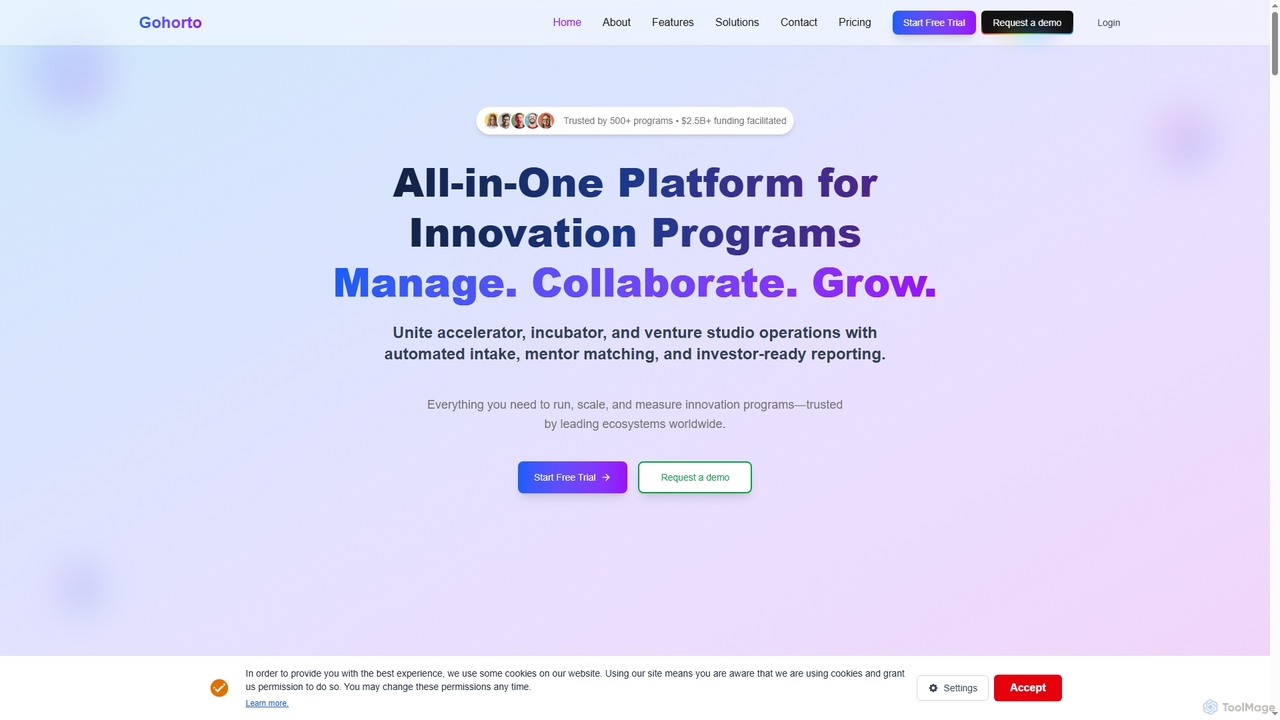
Gohorto is an AI-powered innovation program management platform designed for startup ecosystems. It unifies operations for accelerators, incubators, venture studios, universities, and corporations, streamlining application intake, mentor matching, and investor-ready reporting to foster growth and impact.

Performance Tracking
Visits 6KFavorites 131Likes 144

About Deal Flow Management

Deal Flow Management tools are AI-powered solutions designed to streamline and optimize the entire lifecycle of investment opportunities, from initial sourcing to final closing. These platforms leverage artificial intelligence to automate data collection, enhance deal evaluation, and provide predictive insights into potential investments. They empower venture capital firms, private equity funds, and corporate development teams to efficiently manage their pipeline, identify promising deals faster, and make data-driven investment decisions.

Core Features

  • Automated Deal Sourcing: AI algorithms scan vast data sources (news, social media, industry reports) to identify potential investment targets based on predefined criteria.
  • Intelligent Due Diligence: AI assists in analyzing company financials, market trends, and team backgrounds, flagging risks and opportunities more efficiently.
  • Pipeline Management & Tracking: Centralized dashboards and automated workflows for tracking deal progress, managing tasks, and ensuring timely follow-ups.
  • Predictive Analytics: AI models forecast deal success probabilities, potential returns, and market fit, aiding in strategic decision-making.
  • Relationship Management: Integrates CRM functionalities to manage interactions with founders, co-investors, and advisors throughout the deal process.

Applicable Scenarios

Venture capital analysts use these tools to discover emerging startups that fit their investment thesis, automating the initial screening process. Private equity firms leverage them to manage complex M&A pipelines, ensuring no critical due diligence steps are missed. Corporate development teams utilize deal flow management platforms to identify strategic acquisition targets and track their engagement efficiently.

How to Choose

When selecting a Deal Flow Management tool, consider its integration capabilities with existing CRM and data sources, the sophistication of its AI for sourcing and analytics, and its customization options for specific investment criteria. Evaluate the user interface for ease of use, the level of automation offered for routine tasks, and the security features for sensitive deal information. Scalability and pricing models should also align with your firm's growth and budget.

Deal Flow Management use cases

1

Automating Startup Sourcing for VC Funds

A venture capital analyst needs to identify early-stage startups in the FinTech sector that have recently raised seed funding and show high growth potential. Using an AI-powered deal flow management tool, they configure specific criteria (industry, funding stage, growth metrics). The AI then autonomously scans public databases, news feeds, and social media, presenting a curated list of relevant startups, saving hundreds of hours of manual research and ensuring no promising opportunities are missed.

2

Automating Early-Stage Startup Sourcing

Venture capital analysts use AI-powered deal flow tools to automatically identify and filter thousands of early-stage startups from public databases, social media, and industry news, matching them against specific investment theses (e.g., SaaS in healthcare, pre-seed stage). This saves hundreds of hours typically spent on manual research, allowing analysts to focus on deeper evaluation of pre-qualified leads.

3

Streamlining Inbound Pitch Management

Venture capital analysts often receive hundreds of unsolicited investment proposals. Deal Flow Management tools automatically ingest these pitches, extract key data points like industry, stage, and funding ask, and categorize them. This allows analysts to quickly filter out irrelevant submissions and prioritize promising leads, saving significant manual review time and ensuring no potential gem is missed.

4

Automating Early-Stage Startup Sourcing

For a venture capital analyst, manually sifting through thousands of pitch decks and industry reports is time-consuming. Deal Flow Management AI tools can automatically scan public databases, social media, and news feeds for startups matching predefined investment criteria, generating a qualified list of potential targets. This saves hundreds of hours weekly, allowing analysts to focus on deeper due diligence and relationship building.

5

Automate Startup Sourcing for Venture Capital Funds

Venture capital analysts often spend significant time manually searching for promising startups. Deal Flow Management tools with AI can automatically scan industry news, patent databases, social media, and pitch platforms to identify companies matching specific investment criteria. This allows analysts to focus on deeper evaluation, reducing sourcing time by up to 70% and expanding the pool of potential investments.

6

Automating Early-Stage Deal Sourcing for VCs

Venture capital analysts often spend significant time manually searching for promising startups. Deal Flow Management tools with AI can automate this process by scanning industry news, social media, patent databases, and company registries. They identify companies matching specific investment criteria (e.g., sector, funding stage, technology stack), presenting a curated list of leads. This allows analysts to focus on deeper analysis and engagement, significantly reducing the time spent on initial discovery and ensuring no high-potential opportunities are missed.

7

Automated Startup Sourcing for VC Firms

Venture capital analysts can configure AI-powered Deal Flow Management tools to continuously scan public databases, news feeds, and industry reports for startups matching specific investment criteria (e.g., sector, funding stage, revenue growth). This automates the initial identification of promising companies, significantly reducing manual research time and expanding the reach of deal sourcing beyond traditional networks, ensuring a robust and diverse pipeline.

8

Streamlining VC Deal Sourcing

Venture capital analysts utilize AI deal flow tools to automatically scan industry news, startup databases, and social media for emerging companies matching specific investment criteria. This significantly expands their top-of-funnel, allowing them to discover a broader range of potential investment opportunities more efficiently than manual research, saving hundreds of hours per year.

9

Streamlining Early-Stage Deal Sourcing

For a busy venture capital analyst, manually sifting through hundreds of pitch decks and inbound inquiries is time-consuming. Deal Flow Management tools automate the ingestion of these submissions, often using AI to extract key information and categorize deals, allowing the analyst to quickly identify and prioritize the most relevant opportunities, saving up to 60% of initial screening time.

10

Streamlining Due Diligence for Private Equity

A private equity firm is evaluating multiple acquisition targets simultaneously. The deal flow management platform integrates with financial databases and legal document repositories. AI algorithms automatically extract key financial data, identify potential red flags in legal documents, and summarize market research reports, allowing the investment team to focus on strategic analysis rather than manual data compilation, significantly accelerating the due diligence phase.

11

Automating Due Diligence Data Extraction

Investment associates leverage deal flow tools to automatically extract key financial data, legal documents, and market research from pitch decks, company reports, and data rooms. This significantly reduces manual data entry and speeds up initial assessments, allowing teams to process 50% more deals in the same timeframe and focus on qualitative analysis.

12

Streamlining Due Diligence for Private Equity

Private equity firms often manage complex due diligence processes involving vast amounts of financial, legal, and operational data. Deal Flow Management tools with AI capabilities can centralize these documents, automatically extract key information, and flag potential risks or discrepancies. This significantly reduces the manual effort required, accelerates the due diligence timeline, and provides a more robust, data-driven assessment of acquisition targets.

13

Streamlining Due Diligence for Series A Rounds

Investment managers leverage the tools to rapidly analyze financial models, market reports, and legal documents submitted by Series A candidates. AI can highlight inconsistencies, identify key risks, and summarize critical information, significantly accelerating the due diligence process from weeks to days and enabling faster investment decisions.

14

Streamlining Due Diligence for Private Equity

Private equity associates use these tools to accelerate the due diligence phase for potential acquisitions. By uploading company financials, market research, and legal documents, the AI can quickly analyze key metrics, identify red flags, and summarize critical information. This allows the team to focus on strategic analysis and negotiation, rather than spending excessive time on data aggregation and initial review, leading to faster and more informed investment decisions.

15

Streamlining Due Diligence for Private Equity Acquisitions

Private equity firms manage complex acquisition processes that involve extensive due diligence. AI-powered Deal Flow Management tools can centralize all relevant documents, financial statements, legal contracts, and market research. They use natural language processing (NLP) to extract key information, identify red flags, and summarize findings, accelerating the review process. This ensures that investment teams have a comprehensive and organized view of target companies, enabling faster and more informed decision-making while reducing the risk of oversight.

16

Managing Due Diligence Workflows

An investment manager needs to coordinate extensive due diligence across multiple deals simultaneously. The tool provides a centralized hub for document requests, secure sharing, and tracking the completion of tasks by legal, financial, and technical advisors. This ensures all necessary information is gathered systematically, reducing the risk of oversight and accelerating the due diligence phase by weeks.

17

Streamline Due Diligence for Private Equity Acquisitions

Private equity firms face extensive due diligence processes for potential acquisitions. AI-powered Deal Flow Management platforms can ingest and analyze large volumes of company documents, financial reports, and market data, highlighting key risks and opportunities. This accelerates the information gathering phase, enabling investment teams to make faster, more informed decisions and reduce the overall deal cycle time.

18

Proactive Market Scanning for Investment Opportunities

Investment teams need to continuously monitor specific market segments for emerging companies. These tools use AI to scan news, industry reports, social media, and company databases, identifying startups that fit predefined investment theses. This proactive sourcing helps firms discover opportunities before they become widely known, gaining a competitive edge in deal acquisition.

19

Automating Due Diligence Data Collection

During the due diligence phase, collecting and organizing vast amounts of company data (financials, legal documents, market research) is time-consuming. Deal Flow Management platforms can automate the request and collection of these documents, track their status, and even perform initial data extraction and analysis, accelerating the evaluation process for investment managers.

20

Enhancing Investor Relations and Reporting

Investment firms need to provide regular, detailed reports to their limited partners (LPs). Deal Flow Management tools can consolidate all relevant data—from deal progress and portfolio performance to communication logs—into customizable dashboards and automated reports. This ensures transparency, saves time in report generation, and allows LPs to have real-time access to critical investment insights, fostering stronger investor relationships.

21

Optimizing Portfolio Management and Follow-on Investments

After an investment, fund managers need to monitor portfolio companies and identify opportunities for follow-on investments. Deal Flow Management tools track the performance of existing portfolio companies, integrating financial data, news, and key milestones. AI can analyze this data to predict future growth, flag underperforming assets, or suggest strategic follow-on rounds. This proactive approach helps optimize portfolio returns and ensures that capital is deployed effectively to support successful ventures, maximizing overall fund performance.

22

Managing M&A Pipeline for Corporate Development

Corporate development teams in large enterprises leverage Deal Flow Management platforms to track and manage a complex pipeline of potential mergers and acquisitions. The tools centralize communication, document sharing, and task assignments across internal and external stakeholders. This ensures a structured approach to evaluating targets, coordinating legal and financial advisors, and moving deals efficiently through various approval stages, from initial contact to integration planning.

23

Optimizing M&A Target Identification

Corporate development teams utilize deal flow platforms to identify potential acquisition targets by analyzing market trends, competitive landscapes, and financial performance data. The AI-driven insights ensure a strategic fit, helping teams narrow down thousands of potential companies to a shortlist of 5-10 highly relevant targets, improving M&A success rates.

24

Tracking Investor Relations & Follow-ups

A fund manager needs to maintain strong relationships with a vast network of founders, limited partners, and industry experts. The platform centralizes all communication history, meeting notes, and follow-up tasks, ensuring no important interaction is missed. Automated reminders for check-ins or portfolio updates help nurture relationships effectively, improving investor confidence and future deal referrals.

25

Manage M&A Pipeline for Corporate Development Teams

Corporate development teams continuously seek strategic acquisition targets or partnership opportunities. A Deal Flow Management system centralizes all potential M&A leads, tracks their progress through various evaluation stages, and provides a clear overview of the entire pipeline. This ensures consistent communication, prevents duplication of effort, and helps prioritize the most impactful strategic initiatives.

26

Managing Investor Relations and Communication

Fund managers utilize the integrated CRM features to track all communications with founders, co-investors, and limited partners. This ensures timely follow-ups, personalized outreach, and a comprehensive historical record of interactions, fostering stronger relationships and improving transparency throughout the fundraising and investment lifecycle.

27

Managing M&A Pipeline for Corporate Development

A corporate development team at a large tech company is constantly looking for strategic acquisition opportunities. They use the tool to track potential targets, manage communication with founders, and monitor the progress of various acquisition stages. Automated reminders ensure that follow-ups are timely, and a centralized dashboard provides a real-time overview of the entire M&A pipeline, improving coordination and reducing deal cycle times.

28

Optimizing Investment Portfolio Fit Analysis

For firms with existing portfolios, evaluating new deals requires assessing their strategic fit. AI-powered Deal Flow Management tools can analyze a new opportunity against the current portfolio's industry focus, stage, and geographic distribution. This helps investment committees make informed decisions about diversification, synergy, and potential conflicts, ensuring a balanced and strategic portfolio growth.

29

Predicting Investment Success for Angel Investors

An angel investor wants to make more informed decisions by leveraging data. They input details of potential investments into the deal flow management tool. The AI analyzes historical data, market trends, and company-specific metrics to provide a probability score for investment success and potential ROI, helping the investor prioritize opportunities and mitigate risks before committing capital.

30

Enhance Investor Relationship Management and Outreach

Maintaining strong relationships with founders, co-investors, and limited partners is crucial. Deal Flow Management tools integrate CRM functionalities, allowing investment professionals to log all interactions, track communication history, and schedule follow-ups. This ensures personalized engagement, strengthens networks, and provides a comprehensive view of all stakeholder relationships within the investment ecosystem.

31

Enhancing Investor Relations and Reporting

Fundraising and maintaining investor trust require transparent and timely reporting. Deal Flow Management platforms consolidate all investor communications, meeting notes, and performance reports. They can automate the generation of customized investor updates, quarterly reports, and capital call notices. This not only saves administrative time but also ensures consistency and accuracy in investor communications, fostering stronger relationships and simplifying compliance with reporting requirements for limited partners.

32

Analyzing Investment Pipeline Performance

A VC firm's partners need to understand the health and efficiency of their investment pipeline. Deal Flow Management tools generate detailed reports on deal velocity, conversion rates at each stage, and team member contributions. This data helps identify bottlenecks, optimize resource allocation, and refine investment strategies, leading to more informed decisions and a higher success rate for promising ventures.

33

Optimizing Investor Relations and Follow-on Funding

Investment managers utilize these platforms to monitor the performance of existing portfolio companies and identify opportunities for follow-on funding rounds. The tools can track key performance indicators (KPIs), generate alerts for significant milestones or challenges, and manage communication with founders. This proactive approach helps maintain strong investor relations and ensures timely support or additional investment for high-potential ventures within the portfolio.

34

Prioritizing Investment Opportunities with Predictive Scoring

A private equity firm employs deal flow management software to assign predictive scores to potential acquisition targets based on financial performance, market position, and growth potential. This allows the investment committee to quickly identify and prioritize the most promising deals, optimizing resource allocation and reducing time spent on less viable options.

35

Centralizing Communication and Collaboration

Investment teams, especially those spread across different locations, require seamless communication and collaboration. Deal Flow Management platforms provide a centralized hub for all team members to share documents, leave comments, assign tasks, and track progress on specific deals. This eliminates information silos, ensures everyone is on the same page, and accelerates decision-making throughout the investment process.

36

Enhancing Investor Relations & Communication

Private equity firms use the CRM functionalities within deal flow management tools to track all communications with limited partners (LPs) and portfolio companies. This ensures timely updates, personalized engagement, and a comprehensive record of interactions throughout the deal lifecycle, improving LP satisfaction by 20% and fostering stronger relationships.

37

Collaborating on Deal Evaluation

An investment committee needs to collectively evaluate a potential deal, with members located globally. The tool provides a shared workspace for reviewing pitch decks, financial models, and due diligence findings, allowing for real-time comments, voting, and discussion threads. This fosters efficient collaboration, ensures all perspectives are considered, and streamlines the decision-making process for investment approvals.

38

Facilitating Cross-Border Investment Opportunities

For global investment firms, identifying and managing cross-border deals presents unique challenges. Deal Flow Management tools can integrate data from various international sources, including regulatory databases, market intelligence platforms, and local news. AI-driven translation and sentiment analysis features help overcome language barriers and provide cultural insights. This enables investment professionals to efficiently evaluate opportunities in diverse markets, manage international due diligence, and navigate complex legal and cultural landscapes with greater confidence and reduced operational friction.

39

Optimizing Investor Relations for Fund Managers

A fund manager needs to keep limited partners (LPs) updated on the performance of their portfolio companies and new deal opportunities. The deal flow management system generates automated reports and personalized updates based on deal progress and portfolio company milestones. This ensures transparent and consistent communication with LPs, strengthening investor relationships and facilitating future fundraising efforts.

40

Enhancing Cross-Team Collaboration on Deals

Multiple team members, from associates to partners, are involved in evaluating a single deal. These tools provide a centralized platform for communication, document sharing, and task assignment. Everyone has real-time visibility into deal status, comments, and next steps, fostering seamless collaboration and reducing communication overhead, leading to faster deal progression.

41

Enhancing Deal Qualification and Prioritization

Investment committees employ Deal Flow Management tools to standardize the qualification process for incoming pitches. Customizable scoring models, powered by AI, can assess factors like team strength, market opportunity, and financial projections. This provides an objective framework for prioritizing deals, ensuring that resources are allocated to the most promising opportunities and reducing bias in the initial screening phase, leading to a more efficient allocation of time and capital.

42

Predicting Deal Success & Risk Factors

Fund managers employ predictive analytics features within deal flow platforms to assess the likelihood of a deal closing successfully and identify potential red flags early on. By analyzing historical data and current market conditions, the AI provides insights that allow for proactive risk mitigation and optimized resource allocation, increasing deal closing rates by 15%.

43

Utilize Predictive Analytics for Investment Opportunities

Identifying future market trends and high-growth sectors is vital for competitive advantage. Advanced Deal Flow Management platforms use AI to analyze historical deal data, market signals, and industry trends to predict emerging opportunities or potential risks. This empowers investors to proactively position their portfolios, identify undervalued assets, and make data-driven strategic investment decisions.

44

Data-Driven Investment Decision Making

Investment professionals need robust data to make informed decisions. Deal Flow Management tools integrate various data points—from market trends and company financials to team backgrounds and competitive landscapes—and use AI to provide predictive analytics and risk assessments. This enables investors to identify patterns, evaluate opportunities more objectively, and mitigate potential risks before committing capital, leading to better investment outcomes.

45

Tracking and Reporting on Investment Pipeline Health

A corporate venture arm uses the dashboard features to visualize their entire investment pipeline, from initial contact to portfolio management. They can track key metrics like conversion rates at each stage, average deal velocity, and sector distribution, providing clear insights into pipeline health and informing strategic adjustments.

46

Centralizing Deal Pipeline Management

Investment teams consolidate all potential deals into a single platform, visualizing each stage from initial contact to closing. This allows for efficient task assignment, collaborative note-taking, and real-time progress tracking, ensuring a clear overview of their entire pipeline and reducing deal cycle time by 25% through improved coordination.

47

Facilitating Collaborative Deal Evaluation

An angel investor network uses the platform to share deal information, conduct internal discussions, and gather feedback from multiple members on potential investments. The centralized system ensures all relevant documents and evaluations are accessible to the team, fostering efficient collaboration and consensus-building before making investment decisions.

48

Automate Reporting and Portfolio Monitoring

Investment firms require regular reporting on deal pipeline status, fund performance, and portfolio company health. Deal Flow Management tools automate the generation of customizable reports, pulling data directly from the tracked deals and portfolio companies. This saves significant administrative time, provides real-time insights for stakeholders, and ensures compliance with reporting requirements.

49

Monitoring Portfolio Company Performance & Follow-on Rounds

Beyond initial investment, a portfolio manager uses the tool to track the performance metrics of existing portfolio companies. It helps monitor key milestones, identify potential follow-on investment opportunities, and manage subsequent funding rounds. This continuous oversight ensures proactive support for portfolio companies and strategic planning for future capital deployment.

50

Predictive Analytics for Deal Success Rates

Investment firms seek to improve their success rates. Advanced Deal Flow Management tools can analyze historical deal data, including factors like industry, founding team, and valuation, to predict the likelihood of a new deal closing successfully or generating a strong return. This predictive insight helps partners allocate resources more effectively and focus on the most promising opportunities.

51

Tracking Co-Investment Opportunities with Partners

Fund managers use Deal Flow Management systems to collaboratively track co-investment opportunities with syndicate partners or limited partners (LPs). The platform facilitates secure sharing of deal memos, financial models, and communication logs, ensuring all parties have access to the latest information. This streamlines the coordination of joint due diligence efforts and accelerates decision-making for shared investment ventures, fostering stronger partnerships.

52

Enhancing Deal Collaboration for Investment Teams

An investment team spread across different geographies needs to collaborate seamlessly on complex deals. The deal flow management platform provides a shared workspace where team members can upload documents, leave comments, assign tasks, and track each other's progress in real-time. This centralized collaboration hub eliminates communication silos, ensures everyone is working with the latest information, and accelerates decision-making.

53

Enhancing Collaboration Among Investment Teams

Investment deals often involve multiple team members, from analysts to partners, across different departments. Deal Flow Management platforms provide a centralized workspace where teams can share documents, assign tasks, track progress, and communicate securely. Features like shared calendars, comment threads, and version control ensure everyone is aligned and has access to the latest information. This fosters seamless collaboration, reduces communication silos, and accelerates the decision-making process, leading to more efficient deal execution and better outcomes.

54

Optimizing Portfolio Construction and Diversification

For fund managers, building a well-diversified portfolio is crucial. Deal Flow Management tools can analyze the characteristics of potential investments against existing portfolio holdings, identifying gaps or over-concentrations. AI-driven insights can suggest optimal allocation strategies based on risk tolerance and return objectives, helping managers make strategic decisions to enhance portfolio resilience and achieve long-term financial goals.

Deal Flow Management FAQ

What is Deal Flow Management?

Deal Flow Management refers to the systematic process of identifying, tracking, evaluating, and managing potential investment opportunities, primarily in venture capital and private equity. These specialized tools centralize all deal-related activities, from initial contact to closing, ensuring efficient pipeline oversight. They help investment teams streamline operations, reduce administrative burden, and make data-driven decisions throughout the investment lifecycle.

What are AI-powered Deal Flow Management tools?

AI-powered Deal Flow Management tools are specialized software solutions that leverage artificial intelligence to automate and optimize the entire investment deal lifecycle. They help investors, particularly in venture capital and private equity, to efficiently source, evaluate, track, and manage potential investment opportunities. Their core value lies in centralizing deal data, automating repetitive tasks, and providing data-driven insights to accelerate decision-making and improve investment outcomes.

What is Deal Flow Management in Venture Capital?

Deal Flow Management in venture capital refers to the systematic process of identifying, sourcing, evaluating, and tracking potential investment opportunities from initial contact to closing. These AI-powered tools streamline this complex pipeline, helping VC firms efficiently manage a high volume of startup pitches and ensure promising deals are not overlooked. They integrate data, communication, and analytics to optimize investment decision-making.

What are Deal Flow Management tools?

Deal Flow Management tools are specialized software solutions, often enhanced with AI, that help investment firms, such as venture capitalists and private equity funds, manage the entire process of identifying, evaluating, and closing investment opportunities. They centralize deal data, automate repetitive tasks, and provide insights to optimize the investment pipeline, from initial sourcing to post-investment monitoring.

What are Deal Flow Management tools?

Deal Flow Management tools are specialized software platforms that help investment firms and corporate development teams efficiently identify, track, and manage potential investment opportunities. They centralize deal information, automate sourcing, and provide analytical insights to streamline the entire investment pipeline from initial contact to closing.

What are Deal Flow Management tools?

Deal Flow Management tools are specialized software solutions, often enhanced with AI, that help investment firms and corporate development teams systematically identify, track, evaluate, and manage potential investment or acquisition opportunities. They centralize deal data, automate workflows, and provide analytical insights to streamline the entire deal lifecycle from sourcing to closing.

What are Deal Flow Management tools?

Deal Flow Management tools are specialized software platforms, often enhanced with AI, designed to help investment firms, such as venture capital and private equity, efficiently manage their pipeline of potential investment opportunities. They centralize the process of sourcing, evaluating, tracking, and closing deals, from initial contact to portfolio monitoring. These tools aim to streamline complex investment workflows and improve decision-making.

What is Deal Flow Management?

Deal Flow Management refers to the systematic process of identifying, tracking, evaluating, and managing potential investment opportunities from initial contact to closing. AI-powered tools in this category automate many of these steps, providing a centralized platform for investment firms, private equity funds, and corporate development teams to efficiently handle a large volume of deals. They aim to streamline the entire investment lifecycle, from sourcing to due diligence and portfolio management, ensuring no promising opportunity is overlooked.

What are Deal Flow Management tools?

Deal Flow Management tools are specialized software platforms designed to help investment firms, such as venture capital and private equity funds, manage their entire investment pipeline. They centralize the process from identifying potential deals and conducting due diligence to tracking portfolio performance and investor relations. These tools leverage automation and data analytics to streamline workflows, enhance decision-making, and improve the efficiency of investment operations.

How do AI tools enhance Deal Flow Management?

AI tools significantly enhance Deal Flow Management by automating repetitive tasks like deal sourcing and data collection, providing intelligent screening and scoring of opportunities, and offering predictive analytics. They can analyze vast amounts of data to identify trends, flag risks, and prioritize deals, leading to more efficient processes, better-informed decisions, and ultimately, a stronger investment portfolio.

How do Deal Flow Management tools differ from general CRMs?

While general CRMs manage customer relationships, Deal Flow Management tools are specifically tailored for the unique lifecycle of investment deals. They offer specialized features like automated deal sourcing, due diligence workflows, portfolio fit analysis, and industry-specific data integration, which go beyond the scope of a typical sales or marketing CRM.

How do Deal Flow Management tools differ from general CRMs?

While both manage relationships, Deal Flow Management tools are specifically tailored for the complex, multi-stage process of investment deals, unlike general CRMs designed for sales or customer service. Deal Flow Management platforms offer specialized features like automated deal sourcing, due diligence support, investment-specific pipeline stages, and portfolio monitoring. General CRMs lack these industry-specific functionalities, making them less effective for the unique demands of investment management.

How do AI tools enhance Deal Flow Management?

AI tools significantly enhance Deal Flow Management by automating repetitive tasks, providing data-driven insights, and improving predictive capabilities. They can automatically source leads, perform initial screening, analyze vast amounts of data for due diligence, and identify patterns that human analysts might miss. This leads to more efficient deal sourcing, faster due diligence, better risk assessment, and ultimately, more informed investment decisions, allowing teams to focus on strategic engagement rather than manual data processing.

How do AI-powered Deal Flow Management tools differ from traditional CRM?

While traditional CRM focuses on customer relationship management, AI-powered Deal Flow Management tools are specifically tailored for investment processes. They go beyond contact management by offering specialized features like automated deal sourcing, intelligent due diligence support, predictive analytics for investment outcomes, and pipeline management optimized for complex deal stages, which are typically absent in generic CRMs.

How do Deal Flow Management tools differ from standard CRMs?

While standard CRMs focus broadly on customer relationship management, Deal Flow Management tools are specifically tailored for the unique complexities of investment deal pipelines. They offer specialized features like automated deal sourcing, customizable investment stages, integrated due diligence workflows, and advanced analytics for deal velocity and conversion rates, which are not typically found in generic CRM platforms. They are designed for the specific needs of venture capital and private equity.

How do Deal Flow Management tools differ from general CRM systems?

While both manage relationships, Deal Flow Management tools are purpose-built for the unique complexities of investment deals, unlike general CRM systems. They offer specialized features like automated deal sourcing, investment-specific due diligence workflows, financial modeling integration, and portfolio performance tracking. General CRMs lack these deep functionalities tailored for the investment lifecycle, making them less effective for managing deal flow.

How do Deal Flow Management tools differ from standard CRMs?

While both manage relationships, standard CRMs are general-purpose sales and customer relationship management systems. Deal Flow Management tools are purpose-built for the unique complexities of investment deal cycles, offering specialized features like automated deal sourcing, due diligence workflows, cap table integration, and portfolio performance tracking, which go beyond typical sales CRM functionalities. They are tailored to the specific needs of venture capital and private equity firms.

How do AI tools enhance Deal Flow Management?

AI tools significantly enhance deal flow management by automating repetitive tasks like data entry and document analysis, improving deal sourcing through intelligent recommendations, and providing predictive analytics for better decision-making. They can quickly process vast amounts of data to identify promising opportunities, flag potential risks, and offer real-time insights into the health and progress of the deal pipeline, leading to faster and more informed investment decisions and reducing human error.

What are the key benefits of using AI in Deal Flow Management?

AI significantly enhances Deal Flow Management by automating repetitive tasks like data entry and initial screening, improving the accuracy of deal matching with investment criteria, and providing predictive analytics for deal success. This leads to faster deal cycles, better investment decisions, and a more efficient allocation of resources for investment teams.

What's the difference between Deal Flow Management and a standard CRM for sales?

While both Deal Flow Management (DFM) and Customer Relationship Management (CRM) systems manage pipelines, their focus differs significantly. A standard CRM is optimized for sales processes, tracking customer interactions, sales leads, and conversion rates for products/services. DFM tools, however, are tailored for the complex, long-cycle investment process. They handle unique aspects like due diligence, cap table analysis, valuation models, limited partner reporting, and portfolio company monitoring, which are not typically found in a sales-focused CRM. DFM provides specialized functionalities for the nuances of venture capital and private equity.

Who primarily uses Deal Flow Management tools?

Deal Flow Management tools are primarily used by venture capital firms, private equity funds, angel investors, corporate development teams, and family offices. Key users within these organizations include investment analysts, associates, partners, and fund managers who are responsible for sourcing, evaluating, and closing investment deals, as well as managing investor relations and portfolio companies.

Who benefits most from using Deal Flow Management software?

The primary beneficiaries are professionals and firms involved in investment activities, including venture capitalists, private equity funds, angel investors, corporate development teams, and M&A advisors. These tools are particularly valuable for organizations managing a high volume of potential deals, seeking to improve the efficiency of their sourcing and due diligence processes, and aiming for better data-driven investment decisions. They help scale operations and maintain a competitive edge.

Who primarily benefits from using Deal Flow Management tools?

The primary beneficiaries are venture capital firms, private equity funds, angel investors, corporate development teams, and M&A advisors. These tools are crucial for anyone involved in identifying, evaluating, and closing investment or acquisition deals, helping them manage a large volume of opportunities, reduce manual effort, and make more informed decisions.

What are the key benefits of using AI in Deal Flow Management?

AI significantly enhances Deal Flow Management by automating repetitive tasks like sourcing and data entry, freeing up investment professionals for strategic work. It provides advanced analytics for deal scoring, risk assessment, and predictive insights, allowing for more data-driven and objective decision-making. AI also improves efficiency in due diligence by quickly processing large volumes of documents and identifying key information or red flags, leading to faster and more informed investment cycles.

What are the key features to look for in a Deal Flow Management platform?

When choosing a Deal Flow Management platform, prioritize features such as robust AI-driven deal sourcing and discovery, customizable screening and scoring models, comprehensive pipeline tracking with visual dashboards, and seamless CRM integration for communication. Additionally, look for strong due diligence support capabilities and advanced reporting and analytics to gain actionable insights into your investment process.

Who primarily uses Deal Flow Management tools?

Deal Flow Management tools are primarily used by professionals in the investment sector. This includes venture capital firms, private equity funds, angel investors, corporate development teams focused on mergers and acquisitions (M&A), and investment banks. These users rely on the tools to manage their extensive pipelines of potential deals, conduct thorough due diligence, maintain organized records of all interactions and evaluations, and ultimately optimize their investment strategies and outcomes.

What are the key benefits of using AI in Deal Flow Management?

AI significantly enhances Deal Flow Management by automating repetitive tasks like deal sourcing and initial screening, identifying patterns in vast datasets to uncover promising opportunities, and providing data-driven insights for due diligence. AI can also help in risk assessment and predicting deal outcomes, leading to faster, more informed, and less biased investment decisions, ultimately improving efficiency and deal quality.

What are the key benefits of using Deal Flow Management software?

The main benefits include increased efficiency in managing a high volume of deals, improved collaboration among investment teams, enhanced visibility into the entire deal pipeline, and better data-driven decision-making. These tools help reduce the risk of missing promising opportunities, streamline due diligence processes, and provide valuable insights into deal flow performance, ultimately leading to more successful investments.

Who benefits most from using Deal Flow Management tools?

The primary beneficiaries of Deal Flow Management tools are investment professionals and firms operating in the venture capital, private equity, corporate development, and M&A sectors. This includes fund managers, analysts, associates, and partners who need to efficiently source, evaluate, and manage a high volume of potential deals. Additionally, limited partners (LPs) can benefit indirectly from the improved transparency and performance reporting these tools enable, leading to better communication and trust with their general partners (GPs).

Who primarily benefits from using Deal Flow Management tools?

Deal Flow Management tools primarily benefit venture capital firms, angel investors, private equity funds, and corporate development teams. These entities deal with a high volume of potential investments or acquisitions and require efficient systems to manage their pipeline, conduct due diligence, and make strategic investment decisions. Founders seeking funding can also benefit indirectly from a more streamlined process.

What key features should I look for in a Deal Flow Management solution?

When evaluating solutions, prioritize automated deal sourcing and discovery capabilities, robust pipeline management with customizable stages, and strong due diligence support features like document analysis and data room integration. Look for comprehensive analytics and reporting, seamless integration with other financial tools, and a user-friendly interface. Security, compliance, and scalability are also critical for handling sensitive investment data and growing deal volumes.

Who typically uses Deal Flow Management software?

Deal Flow Management software is primarily used by venture capital firms, private equity funds, angel investors, corporate development teams, and M&A advisors. Roles include investment analysts, associates, partners, and fund managers who need to manage a high volume of potential deals and make data-driven investment decisions.

Who primarily uses Deal Flow Management tools?

Deal Flow Management tools are primarily used by professionals in the investment sector. This includes venture capitalists (VCs) and their analysts, private equity (PE) firms, angel investors, corporate development teams, and family offices. These roles require efficient management of a large volume of potential deals, rigorous due diligence, and comprehensive portfolio oversight, all of which these specialized tools are designed to facilitate.

What's the difference between Deal Flow Management and a general CRM?

While both involve managing relationships and pipelines, Deal Flow Management tools are specialized CRMs tailored specifically for the investment lifecycle. General CRMs focus broadly on sales and customer relationships across various industries. In contrast, deal flow platforms offer features unique to investments, such as automated deal sourcing, due diligence automation, financial modeling integration, and specific reporting for investment metrics (e.g., IRR, multiples). They are designed to handle the complex, multi-stage process of evaluating and closing deals, rather than just customer interactions.

What key features should I look for in a Deal Flow Management platform?

Key features to prioritize include robust automated deal sourcing capabilities, advanced AI-driven analytics for due diligence and predictive insights, customizable pipeline management workflows, seamless integration with external data sources and existing systems, and comprehensive reporting tools. Strong security and collaboration features are also essential for sensitive deal information and team coordination.

Who typically uses Deal Flow Management platforms?

Deal Flow Management platforms are primarily used by professionals in the investment sector. This includes venture capitalists, private equity fund managers, corporate development teams, M&A advisors, and angel investors. Their roles involve identifying, evaluating, and managing a continuous stream of potential investments or acquisition targets, making these tools essential for maintaining an organized and efficient investment pipeline.

Can Deal Flow Management tools help with post-investment portfolio monitoring?

Yes, many advanced Deal Flow Management tools extend their capabilities to post-investment portfolio monitoring. They allow investors to track the performance of their portfolio companies, monitor key metrics, manage follow-on investments, and generate reports on overall fund health. By integrating with portfolio company data, these tools provide a holistic view of investments from initial contact through exit, ensuring continuous oversight and strategic management.

What features should I look for in a Deal Flow Management platform?

When choosing a Deal Flow Management platform, look for robust automated deal sourcing capabilities that leverage AI to identify opportunities. A comprehensive pipeline tracking system with customizable stages is essential for visualizing progress. Strong due diligence automation features for data extraction and analysis will save significant time. Essential elements also include predictive analytics for deal success forecasting, seamless integration with existing financial and communication tools, and flexible reporting dashboards to monitor key performance indicators and overall deal flow health effectively.

How does Deal Flow Management differ from general CRM software?

While general CRM software focuses broadly on customer relationship management, Deal Flow Management tools are specialized for the unique lifecycle of investment opportunities. They offer specific functionalities like AI-driven deal sourcing, intelligent screening, due diligence support, and investment-specific pipeline tracking, which go beyond typical sales or customer service CRM features. They are tailored to the complex, long-term nature of investment deals.

What key features should I look for in a Deal Flow Management tool?

When evaluating Deal Flow Management tools, prioritize features such as robust deal sourcing and lead generation capabilities, often AI-powered, to identify relevant opportunities. Look for comprehensive pipeline management with customizable stages and intuitive visualization. Strong due diligence support, including document management, data extraction, and risk flagging, is crucial. Integration with existing CRM, financial, and communication tools is also vital for seamless workflows. Finally, ensure it offers powerful analytics and reporting for portfolio performance and investor updates, alongside robust security and compliance features.

What should I consider when choosing a Deal Flow Management tool?

When selecting a Deal Flow Management tool, prioritize its core functionalities such as automated sourcing, customizable pipeline stages, and robust due diligence support. Evaluate its integration capabilities with existing systems (e.g., CRM, data providers), scalability for future growth, and data security features. Consider the intuitiveness of the user interface, the quality of analytics and reporting, and the vendor's industry reputation and support services.

What features should I look for in a Deal Flow Management platform?

Look for robust deal sourcing and ingestion capabilities, customizable pipeline stages, comprehensive due diligence management features, and strong communication and relationship tracking. Essential features also include powerful reporting and analytics for performance insights, seamless integration with other business tools, and a user-friendly interface. Security and compliance features are also critical for handling sensitive investment data.

Can Deal Flow Management tools help improve investment success rates?

Yes, by providing data-driven insights and automating repetitive tasks, Deal Flow Management tools can significantly improve investment success rates. They enable firms to identify more promising opportunities, conduct more thorough and efficient due diligence, mitigate risks through predictive analytics, and ensure a disciplined approach to managing their investment pipeline, leading to better-informed decisions and potentially higher returns.

What should I look for when choosing a Deal Flow Management tool?

When choosing a tool, prioritize robust deal sourcing capabilities, seamless integration with existing systems (like CRMs or data providers), customizable workflows for your specific investment process, strong analytics and reporting features, and a user-friendly interface. Scalability, security, and customer support are also crucial considerations.

What should I consider when choosing a Deal Flow Management solution?

When selecting a Deal Flow Management solution, prioritize its integration capabilities with your existing CRM, financial software, and data providers to ensure seamless data flow. Look for robust AI features for automated sourcing, deal scoring, and risk analysis. Customization options for workflows and reporting are crucial to match your firm's unique investment process. Also, consider data security, scalability, user-friendliness, and the quality of customer support to ensure long-term value and adoption.