ToolMage
Sign in

Best 2 Automotive AI tools for Verticals

Popular Automotive AI tools in Verticals include Impel and Toma, helping you work more efficiently.

Impel
Paid

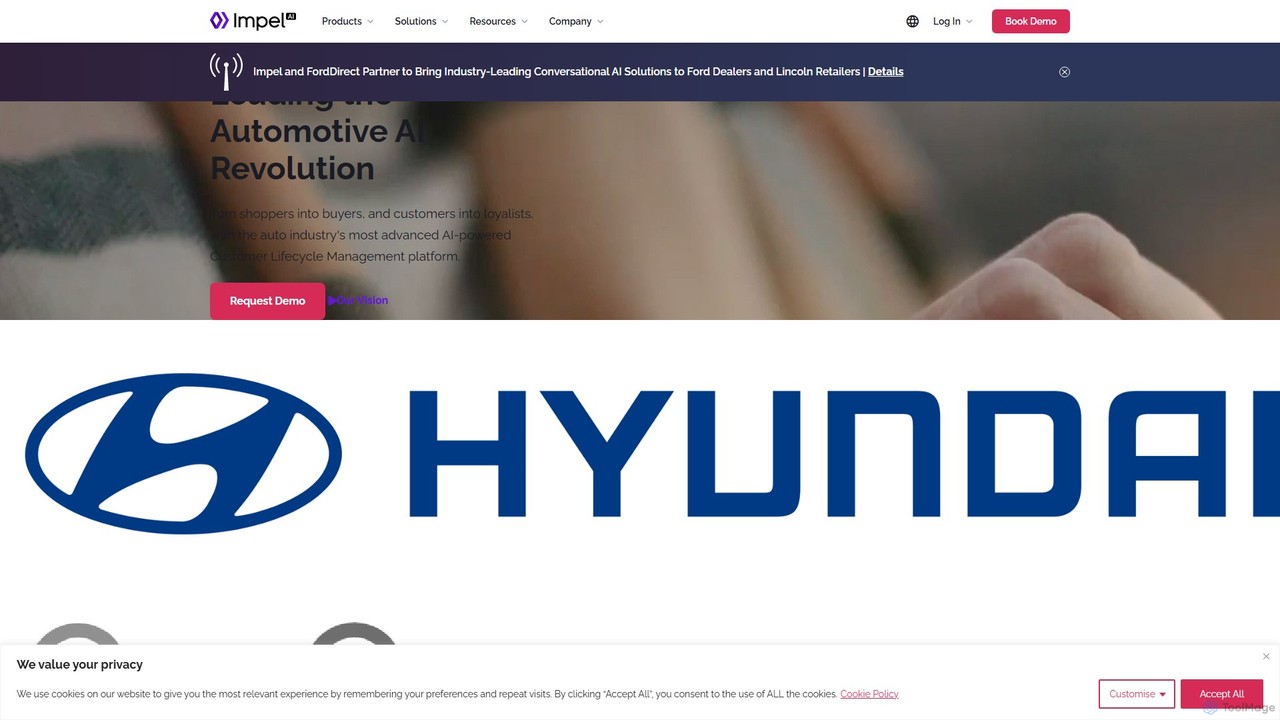
Impel

Impel is an AI-powered customer lifecycle management platform specifically for the automotive industry. It enhances the car buying experience through conversational AI, digital merchandising with 360° virtual tours, and automated sales engagement. The platform helps dealers increase lead conversion, improve sales efficiency, and build lasting customer relationships.

Conversational Ai
Visits 46.4KFavorites 146Likes 124
Toma
Paid

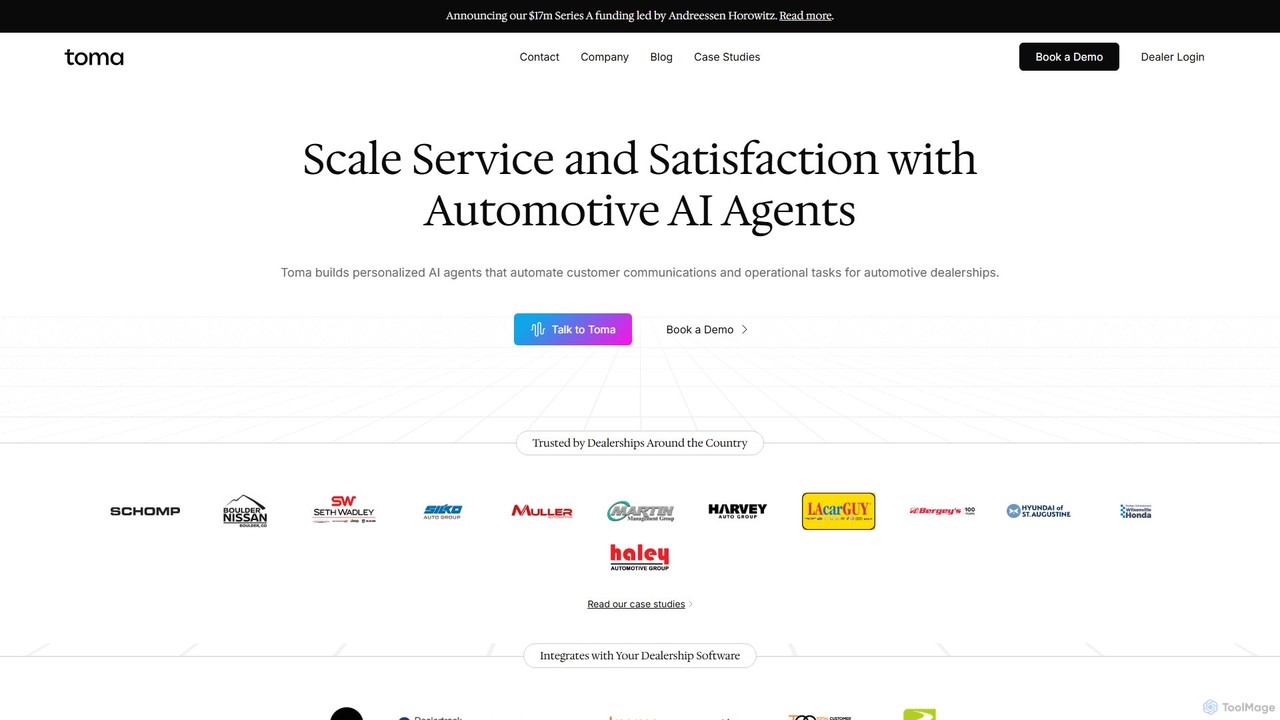
Toma

Toma provides advanced AI agents specifically designed for automotive dealerships. It automates customer interactions across voice and SMS, handling tasks like service appointment booking, recall notifications, parts orders, and appointment reminders. By acting as a virtual team member, Toma helps dealerships increase service revenue, reduce operational costs, and improve customer satisfaction without adding headcount. Its proprietary AI ensures natural, low-latency conversations and seamless integration with existing dealership software.

Virtual Assistant
Visits 20.6KFavorites 113Likes 133

About Automotive

Automotive AI tools are specialized artificial intelligence solutions designed to transform various aspects of the automotive industry. These tools leverage advanced machine learning, computer vision, natural language processing, and predictive analytics to enhance vehicle design, manufacturing, operations, and the in-car experience. They play a crucial role in developing autonomous driving capabilities, optimizing production processes, improving vehicle safety, and personalizing user interactions, driving innovation across the entire automotive ecosystem.

Core Features

  • Autonomous Driving Systems: AI algorithms for real-time perception, decision-making, and control in self-driving vehicles.
  • Predictive Maintenance: Analyzing vehicle sensor data to forecast potential component failures and schedule proactive servicing.
  • Smart Manufacturing Automation: AI-driven robotics, quality inspection systems, and process optimization for efficient vehicle production.
  • In-Cabin AI Assistants: Voice-activated controls, driver monitoring, and personalized infotainment systems for enhanced user experience.
  • Supply Chain Optimization: AI models for demand forecasting, inventory management, and logistics route optimization for automotive parts.

Applicable Scenarios

Automotive AI tools are indispensable for car manufacturers, component suppliers, fleet management companies, and technology developers. They are used in R&D for new vehicle features, in factories for automated assembly and quality control, and in post-sales for predictive maintenance and customer support. These tools enable the creation of safer, more efficient, and intelligent vehicles, impacting everything from design to end-user interaction.

How to Choose

When selecting Automotive AI tools, consider their integration capabilities with existing automotive platforms and data systems, compliance with industry safety standards (e.g., ISO 26262), and scalability to handle vast amounts of vehicle data. Evaluate the accuracy and robustness of their AI models, the level of customization offered, and the vendor's expertise in automotive-specific applications and regulatory requirements.

Automotive use cases

1

Developing Autonomous Driving Features

AI engineers and researchers utilize automotive AI tools to design, simulate, and test advanced autonomous driving features. By processing vast datasets from sensors like cameras, radar, and lidar, AI models learn to perceive the environment, predict behaviors, and make real-time driving decisions, accelerating the development cycle of self-driving vehicles and enhancing their safety and reliability.

2

Optimizing Vehicle Manufacturing Quality

Production managers in automotive factories deploy AI-powered computer vision systems for automated quality inspection. These tools can detect microscopic defects on paintwork, identify assembly errors, or verify component placement with high precision and speed, significantly reducing manual inspection time, minimizing rework, and ensuring consistent product quality across thousands of vehicles.

3

Enhancing In-Car User Experience

Automotive designers and software developers integrate AI into vehicle infotainment systems to create personalized and intuitive user experiences. AI voice assistants respond to natural language commands for navigation, media, and climate control, while driver monitoring systems use AI to detect fatigue or distraction, enhancing comfort, convenience, and safety for occupants.

4

Predictive Maintenance for Fleet Management

Fleet operators leverage AI tools to analyze real-time telematics data from their vehicles, predicting potential mechanical failures before they occur. This enables proactive scheduling of maintenance, minimizing unexpected breakdowns, reducing vehicle downtime, and extending the lifespan of the fleet. For example, AI can predict when brake pads need replacement based on driving patterns.

5

AI-Powered Automotive Sales & Marketing

Automotive dealerships and marketing teams use AI to personalize customer interactions and optimize sales strategies. AI analyzes customer preferences, browsing history, and demographic data to recommend suitable vehicle models, personalize marketing campaigns, and generate high-quality leads, leading to improved conversion rates and a more tailored purchasing journey for customers.

6

Supply Chain and Logistics Optimization

Logistics managers in the automotive sector employ AI to streamline their complex supply chains. AI models forecast demand for specific parts, optimize inventory levels to prevent stockouts or overstock, and plan the most efficient delivery routes for components to manufacturing plants or dealerships. This reduces operational costs, improves delivery times, and enhances overall supply chain resilience.

Automotive FAQ

What are Automotive AI tools?

Automotive AI tools are specialized artificial intelligence applications designed for the automotive industry. They leverage technologies like machine learning, computer vision, and predictive analytics to address industry-specific challenges. Their core purpose is to enhance vehicle intelligence, safety, manufacturing efficiency, and the overall driving and ownership experience.

How do AI tools enhance vehicle safety?

AI tools significantly enhance vehicle safety through several mechanisms. They power Advanced Driver-Assistance Systems (ADAS) like automatic emergency braking and lane-keeping assist, using computer vision to perceive hazards. AI also enables driver monitoring systems to detect fatigue or distraction, and predictive maintenance to prevent critical component failures, thereby reducing accident risks.

What is the role of AI in automotive manufacturing?

In automotive manufacturing, AI plays a transformative role by automating complex tasks, improving quality control, and optimizing production lines. AI-powered robots perform precision assembly, while computer vision systems conduct rapid and accurate defect detection. Furthermore, AI optimizes supply chain logistics and predicts equipment maintenance needs, leading to increased efficiency and reduced costs.

How do I choose an Automotive AI solution for my business?

Choosing an Automotive AI solution requires careful consideration of several factors. Evaluate its compatibility with your existing infrastructure, adherence to automotive safety and regulatory standards (e.g., ISO 26262, GDPR for data privacy), and the scalability of its AI models to handle large datasets. Also, assess the vendor's industry expertise, support, and the solution's specific functionalities relevant to your operational needs.

What's the difference between general AI and Automotive-specific AI?

General AI refers to broad AI applications applicable across various sectors, such as generic chatbots or image recognition. Automotive-specific AI, however, is highly specialized, trained on vast amounts of automotive data, and designed to meet the unique safety, performance, and regulatory requirements of the industry. It focuses on tasks like autonomous driving, predictive vehicle diagnostics, and smart manufacturing processes, which demand deep domain expertise and robust, safety-critical implementations.