ToolMage
Sign in

Best 1 Api AI tools for Video Generation

Popular Api AI tools in Video Generation include MidAPI, helping you work more efficiently.

MidAPI
Freemium

MidAPI

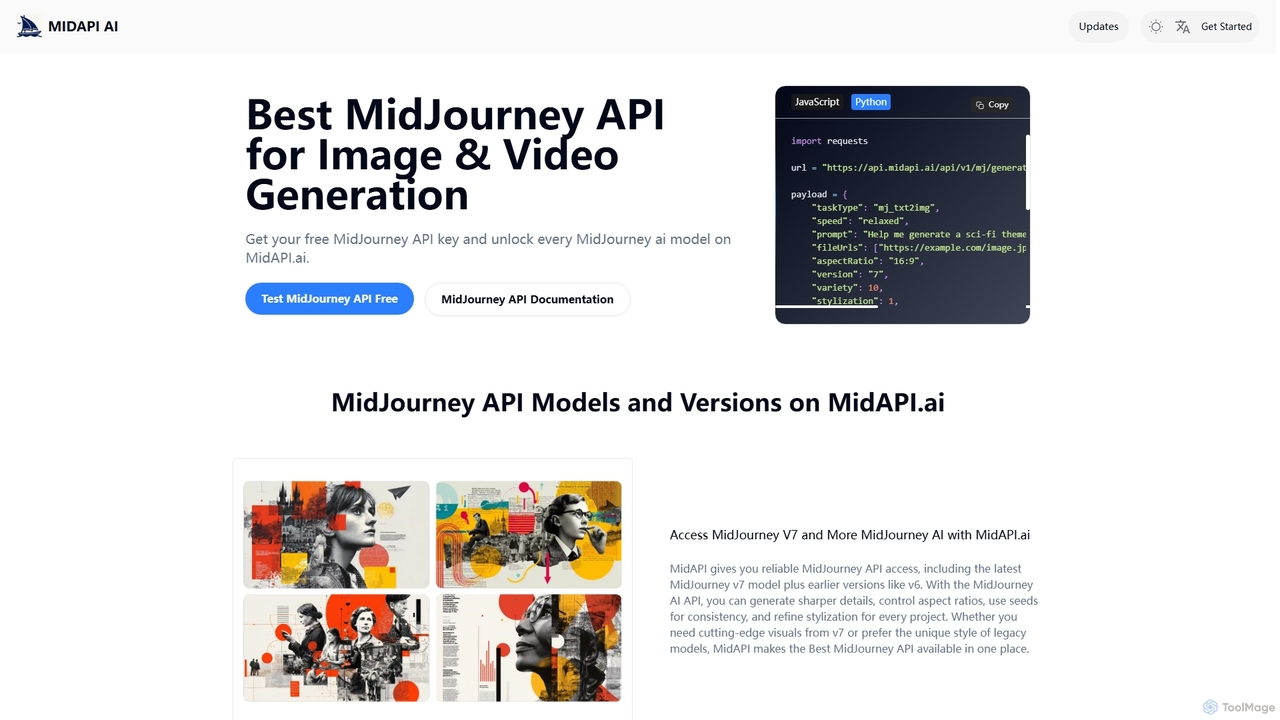
MidAPI provides reliable API access to MidJourney's powerful AI models, including the latest V7 for image generation and V1 for video creation. It enables developers and creators to programmatically generate high-quality images and animated clips, offering a free playground for testing.

Api & Integration
Visits 3.5KFavorites 170Likes 154

About Api

Video Generation APIs are programmatic interfaces that allow developers to integrate AI-powered video creation directly into their applications and workflows. These tools process inputs like text, scripts, images, or structured data to automatically produce videos without a manual user interface. This enables the automation of video production at scale, facilitating dynamic content creation for marketing, e-commerce, and data visualization. They offer a powerful way to build custom video solutions and embed generation capabilities into existing software.

Core Features

  • Programmatic Control: Generate and manage videos using code via REST APIs or SDKs, enabling full automation.
  • Scalable Production: Create hundreds or thousands of videos in parallel for large-scale campaigns or personalized content.
  • Custom Integration: Seamlessly embed video creation features into your own website, app, or platform.
  • Flexible Inputs: Support for various inputs including text-to-video, image-to-video, and data-driven video synthesis.
  • Asynchronous Processing: Utilize webhooks to receive notifications when video rendering is complete, optimizing application performance.

Applicable Scenarios

These APIs are ideal for SaaS companies wanting to add video features, marketing automation platforms generating personalized ads, e-commerce businesses creating product videos in bulk, and media outlets automating the production of news summaries from articles.

Selection Criteria

When choosing a Video Generation API, evaluate the quality of its documentation, the availability of SDKs for your preferred language, its pricing model (e.g., per-minute or per-API call), rendering speed, and the level of customization available for branding and templates.

Featured tool rankings

Api use cases

1

Automated E-commerce Product Videos

E-commerce platforms can integrate a video generation API to automatically create engaging product videos for their entire catalog. By feeding product data such as images, descriptions, prices, and specifications into the API, the system can generate a unique video for each item. This process eliminates the need for manual video editing, drastically reducing costs and time-to-market for new products. It ensures a consistent brand style across all video content and helps improve customer engagement and conversion rates by providing a richer product experience.

2

Personalized Video Marketing at Scale

Marketing automation platforms can leverage a video API to generate thousands of personalized videos for targeted campaigns. By connecting to a CRM or customer database, the API can pull customer-specific data like names, purchase history, or loyalty status and dynamically insert them into video templates. This allows a company to send a unique video message to each customer, significantly increasing engagement and click-through rates compared to generic video ads. The entire process is automated, enabling hyper-personalization on a scale that would be impossible manually.

3

Automated News and Data Visualization Videos

Media outlets and financial data providers can use a video generation API to transform text articles, blog posts, or market data into short, digestible video summaries. An automated workflow can be set up to monitor new content, extract key points or data, and send it to the API to generate a video with relevant stock footage, charts, and voice-over. This allows for rapid creation of video content for social media feeds and websites, keeping audiences informed and engaged with up-to-date information in a visually appealing format.

4

Integrating Video Creation into SaaS Platforms

A SaaS company, such as a social media management tool or a digital marketing platform, can use a video API to offer native video creation capabilities to its users. Instead of building a complex video generation engine from scratch, they can integrate the API to provide features like 'turn this blog post into a video' or 'create a video ad for this campaign'. This adds significant value to their product, increases user retention, and creates a new revenue stream without the massive R&D investment required to develop the underlying AI technology themselves.

5

Batch Video Generation for Corporate Training

Large enterprises can automate the creation of internal training and communication videos. An HR or training department can maintain a series of standardized video templates and scripts in a spreadsheet or database. By running a script that calls the video generation API, they can produce hundreds of customized videos for different departments, roles, or languages in a single batch process. This is useful for onboarding new employees, compliance training, or product updates, ensuring consistency and saving countless hours of manual production work.

6

Dynamic Video Generation for Real Estate Listings

Real estate agencies can use a video API to automatically create video tours for every property listing. By providing the API with property photos, address, price, key features, and agent contact information, a dynamic video slideshow or virtual tour can be generated instantly. This enhances property listings, making them more engaging than static photos alone. The process can be integrated directly into their listing management system, so a new video is created automatically whenever a new property is added, ensuring all listings have a professional video presence without manual effort.

Api FAQ

What is a Video Generation API?

A Video Generation API is a developer tool that provides programmatic access to AI video creation technology. Unlike user-facing video creation platforms, an API allows developers to build video generation functions directly into their own software, websites, or automated workflows. Core features typically include text-to-video synthesis, creating videos from images and audio, and customizing templates with data. This enables automated, scalable video production without manual intervention.

How to choose the right Video Generation API?

When selecting a Video Generation API, consider these key factors:

  • Documentation & SDKs: Check for clear, comprehensive documentation and the availability of Software Development Kits (SDKs) in your preferred programming language.
  • Features & Customization: Ensure the API supports your required features (e.g., text-to-speech, avatars, template customization) and offers sufficient flexibility.
  • Performance & Scalability: Evaluate the video rendering speed and the API's ability to handle concurrent requests for your expected workload.
  • Pricing Model: Compare pricing structures, such as cost per video minute, per API call, or subscription tiers, to find one that aligns with your usage and budget.
What's the difference between a Video Generation API and a UI-based video tool?

The main difference lies in the user and use case. A UI-based video tool is designed for individuals (like marketers or content creators) to manually create videos one at a time through a graphical interface. A Video Generation API, on the other hand, is for developers. It has no user interface and is controlled via code to automate the creation of hundreds or thousands of videos, often in real-time based on data or triggers. The API is for integration and scale, while the UI tool is for manual, creative crafting.

Who are the primary users of Video Generation APIs?

The primary users are developers, software engineers, and technical teams within various organizations. This includes:

  • SaaS Companies: Businesses that want to integrate video creation features into their own platforms (e.g., marketing, design, or social media tools).
  • Large Enterprises: Corporations that need to automate internal communications, training videos, or large-scale marketing campaigns.
  • Media and Publishing Houses: Organizations that need to quickly convert articles and data into video formats for broader distribution.
  • E-commerce Platforms: Online retailers who want to automatically generate product videos for their entire inventory.
What programming languages can be used with Video Generation APIs?

Most Video Generation APIs are built as REST APIs, which means they are language-agnostic. You can interact with them using any programming language that can make HTTP requests, such as:

  • Python: Widely used for scripting and backend development.
  • JavaScript (Node.js): Ideal for web applications and server-side logic.
  • PHP: Common for web development and content management systems.
  • Java, C, Ruby, Go: Also frequently used in various backend systems.

Many API providers also offer official SDKs (Software Development Kits) for popular languages, which simplifies integration by providing pre-written functions and classes.