Buzz Cut
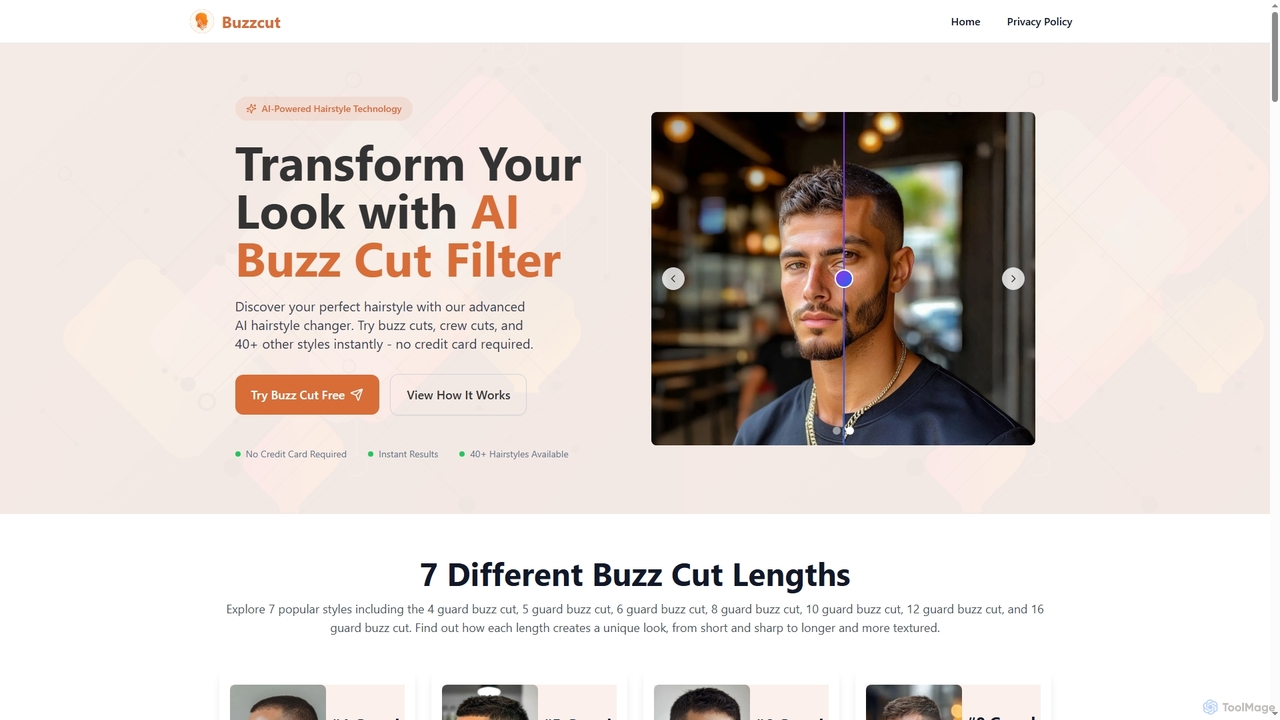
Buzz Cut is an AI-powered online tool that allows users to virtually try on various buzz cut styles …
Buzz Cut is an AI-powered online tool that allows users to virtually try on various buzz cut styles and over 40 other short hairstyles. Upload your photo to instantly preview different guard lengths and styles, helping you make confident decisions about your next haircut without any cost or registration.
About Virtual Try On
Virtual Try On tools are AI-powered applications that allow users to digitally wear or place products on themselves or in their environment. These tools utilize computer vision and augmented reality (AR) to accurately overlay 2D or 3D models of items like clothing, makeup, or furniture onto a user's live camera feed or uploaded photo. This technology bridges the gap between online browsing and physical shopping, enabling customers to visualize products realistically before purchasing. The primary value lies in increasing buyer confidence, reducing return rates, and creating a more engaging e-commerce experience.
Core Features
- Real-time AR Overlay: Superimposes digital products onto a live camera view, tracking user movements for a dynamic experience.
- Photo-Based Try-On: Allows users to upload a static image and apply virtual products to it.
- Accurate Sizing & Fit Recommendation: Analyzes user body measurements or shape to suggest the most appropriate product size.
- 3D Product Visualization: Renders products in high-fidelity 3D, allowing users to view them from any angle.
- Style and Color Variations: Enables instant switching between different product options, colors, and textures.
Use Cases
Virtual Try On tools are predominantly used in the e-commerce and retail sectors. Fashion brands use them to let customers try on apparel and accessories. Cosmetics companies offer virtual makeup testing for lipstick and eyeshadow. Eyewear retailers simplify frame selection, and furniture stores allow customers to place virtual items in their homes using AR.
How to Choose
When selecting a Virtual Try On tool, consider the realism and accuracy of the visualization, as this directly impacts user trust. Evaluate its integration capabilities with your existing e-commerce platform (e.g., Shopify, Magento). Ensure the tool supports your specific product categories and provides a fast, intuitive user experience across both desktop and mobile devices.
Virtual Try OnUse Cases
Enhancing Online Apparel Shopping
An e-commerce fashion retailer integrates a virtual try-on feature on their product pages. A customer interested in a dress can activate their webcam or upload a photo. The AI tool maps the dress onto their body, adjusting for posture and body shape. This allows the customer to see how the garment drapes and fits without physically trying it on, significantly reducing 'fit uncertainty'. As a result, the retailer sees a higher conversion rate and a notable decrease in product returns related to sizing issues.
Virtual Makeup and Cosmetics Testing
A global cosmetics brand launches a new line of lipsticks. Through their mobile app, customers can use the virtual try-on feature to test all shades in real-time using their phone's front-facing camera. The AR technology accurately applies the lipstick color, texture (matte, gloss), and finish to the user's lips, tracking their facial movements. Users can instantly switch between shades and take photos to share, leading to higher engagement, increased sales for the new line, and valuable data on shade popularity.
Simplifying Online Eyewear Selection
An online eyewear retailer uses an AR try-on tool to help customers find the perfect frames. Users access the feature on the website, which activates their camera. The tool accurately measures pupillary distance and face width to scale frames correctly. Customers can browse hundreds of styles, seeing them on their face from multiple angles as if looking in a mirror. This interactive process removes the guesswork of buying glasses online, improves customer satisfaction, and helps the business compete with traditional brick-and-mortar stores.
AR Furniture Placement in a Room
A home decor brand offers an AR feature in its app. A user planning to buy a new sofa can select a model and point their phone's camera at their living room. The app overlays a true-to-scale 3D model of the sofa into the physical space. The user can walk around it, check if it fits the available space, and see how its color and style match the existing decor. This immersive visualization helps prevent costly purchasing mistakes and accelerates the decision-making process for large-ticket items.
Realistic Try-On for Watches and Jewelry
A luxury watch brand provides a virtual try-on on its website. By granting camera access, a customer can see a highly realistic 3D model of a watch appear on their wrist. The technology tracks the wrist's movement, showing how the watch looks from different angles and how light reflects off its metallic and crystal surfaces. This premium experience allows potential buyers to appreciate the product's scale and aesthetics, which is crucial for high-value online purchases, and helps convey the brand's commitment to innovation.
Customizing and Trying On Sneakers
A footwear brand allows users to customize sneakers on its website, choosing colors, materials, and adding personal text. After designing their unique shoe, the user can activate the virtual try-on feature. By pointing their phone camera at their feet, they can see an AR version of their custom-designed sneaker, allowing them to check the final look in a real-world context. This combination of personalization and virtual try-on creates a highly engaging user journey that boosts conversion and strengthens brand loyalty.