LiveKit
LiveKit is an all-in-one, open-source platform for building, deploying, and scaling real-time voice and video AI agents. It …
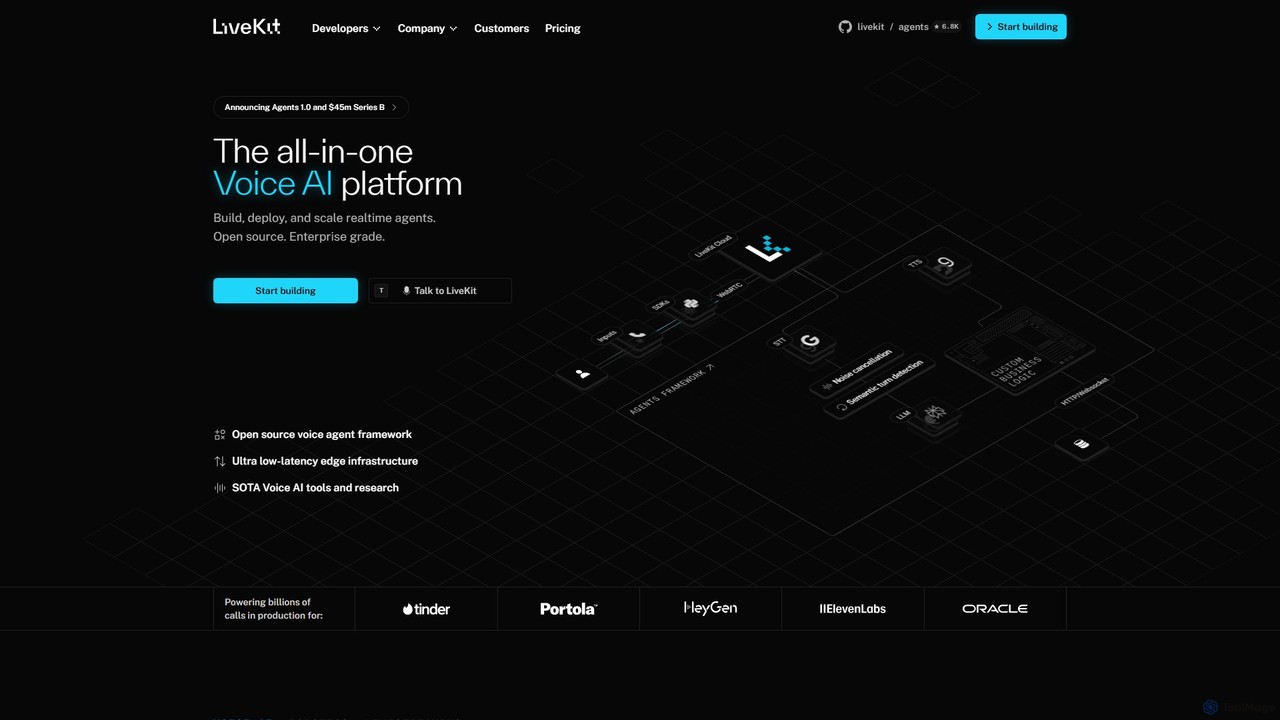
LiveKit is an all-in-one, open-source platform for building, deploying, and scaling real-time voice and video AI agents. It provides ultra-low latency infrastructure, powerful APIs, and state-of-the-art AI tools to enable developers to create conversational AI, robotics, and live streaming applications with enterprise-grade reliability and scalability.
About Voice Agent
Voice Agents are AI-powered systems designed to interact with users through spoken language, automating conversations and performing tasks. These tools leverage advanced Speech-to-Text (STT), Natural Language Understanding (NLU), and Text-to-Speech (TTS) technologies to comprehend user intent and generate human-like responses. They provide hands-free, intuitive interfaces for customer service, information retrieval, and device control, significantly enhancing user experience and operational efficiency.
Core Features
- Speech Recognition (STT): Converts spoken words into text for processing, supporting various accents and languages.
- Natural Language Understanding (NLU): Interprets user intent, extracts key information, and understands context from spoken queries.
- Dialogue Management: Maintains conversation flow, remembers past interactions, and guides users through complex processes.
- Text-to-Speech (TTS) & Voice Synthesis: Generates natural-sounding spoken responses with customizable voices and emotional nuances.
- Integration Capabilities: Connects with CRM systems, databases, and other enterprise applications to access and provide relevant information.
Applicable Scenarios
Voice Agents are widely adopted in sectors requiring automated, conversational interfaces. They are crucial for businesses aiming to scale customer support, provide instant information, or enable hands-free interaction with technology. Typical users include customer service departments, smart home device manufacturers, and enterprises seeking to streamline internal processes.
How to Choose
When selecting a Voice Agent, prioritize accuracy in speech recognition and natural language understanding, as these are fundamental for effective interaction. Evaluate the naturalness and customizability of the Text-to-Speech voice, as well as its ability to integrate seamlessly with existing business systems. Consider scalability, supported languages, and the ease of customizing dialogue flows to meet specific operational needs.

Voice AgentUse Cases
Automated Customer Service & Support
Customer service departments utilize Voice Agents to handle a high volume of routine inquiries, such as checking order status, providing account information, or answering FAQs. This frees human agents to focus on complex issues, reducing wait times and ensuring 24/7 support availability for customers.
Virtual Personal Assistants for Productivity
Individuals and professionals use Voice Agents integrated into smart devices or applications to manage schedules, set reminders, make calls, or control smart home devices hands-free. This enhances personal productivity by allowing users to multitask and interact with technology more naturally.
Interactive Voice Response (IVR) System Enhancement
Businesses deploy Voice Agents to transform traditional, rigid IVR systems into more conversational and intuitive interfaces. Users can speak naturally to navigate menus, resolve issues, or be routed to the correct department, significantly improving the caller experience and reducing frustration.
Sales Lead Qualification & Engagement
Sales teams employ Voice Agents to engage potential leads, gather initial information, qualify interest, and even schedule follow-up calls. These agents can handle initial outreach at scale, ensuring no lead is missed and providing valuable data to human sales representatives.
Accessibility and Hands-Free Device Control
Voice Agents provide critical accessibility features for users with disabilities, enabling them to control computers, smartphones, or smart home devices purely through voice commands. This empowers individuals to interact with technology independently and efficiently.
Voice-Guided Training & Onboarding
Companies use Voice Agents to deliver interactive, voice-guided training modules or onboarding processes for new employees or customers. The agent can explain procedures, answer questions in real-time, and guide users step-by-step, making learning more engaging and accessible.