Best of the Year 1 results Voice & Audio AI Tools

Popular AI tools in the Voice & Audio field include LiveKit, etc., helping you quickly improve efficiency.

LiveKit

LiveKit

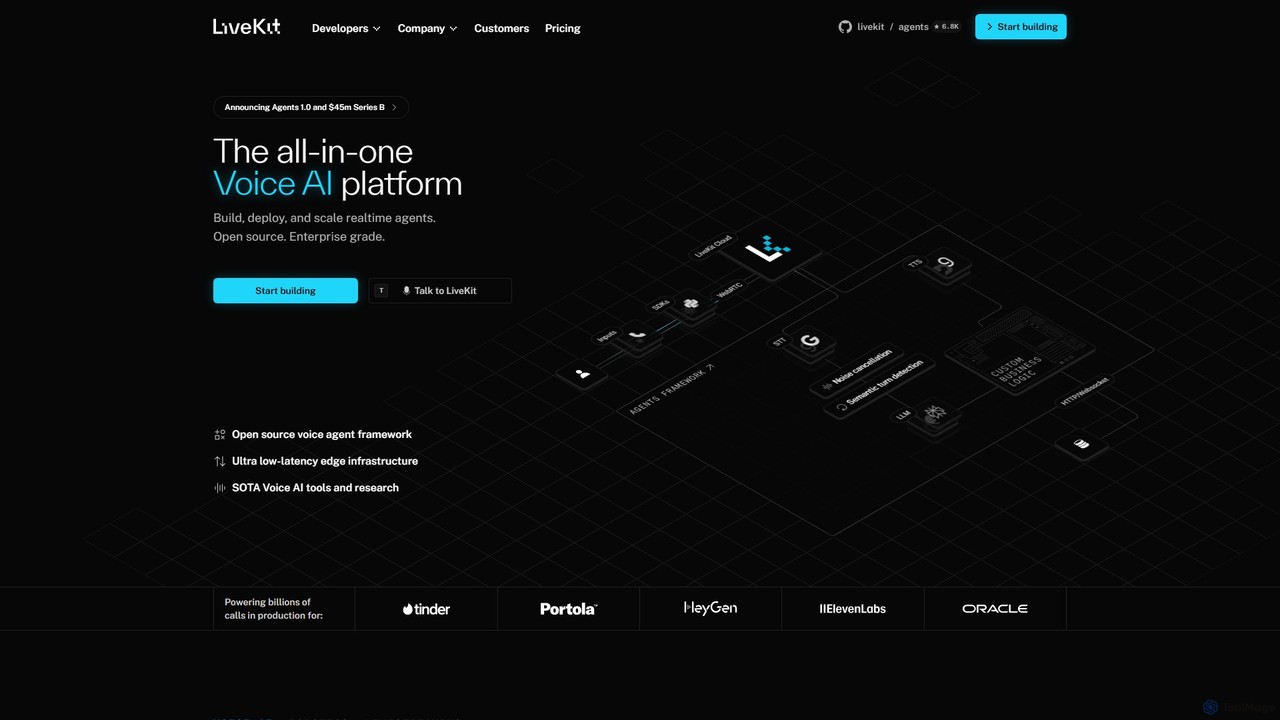
LiveKit is an all-in-one, open-source platform for building, deploying, and scaling real-time voice and video AI agents. It …

483.3K

About Voice & Audio

Voice & Audio AI tools are AI-powered applications designed to process, analyze, generate, and modify human speech and other audio data. These tools leverage advanced machine learning and deep learning models to understand spoken language, convert text into natural-sounding speech, enhance audio quality, and even create new sounds or music. They offer transformative capabilities for content creation, accessibility, customer service, and various other industries by automating complex audio tasks and enabling innovative auditory experiences.

Core Features

  • Speech-to-Text (STT): Accurately transcribes spoken language into written text, supporting multiple languages and accents.
  • Text-to-Speech (TTS): Converts written text into highly natural and expressive spoken audio, often with customizable voices.
  • Voice Cloning & Synthesis: Creates synthetic voices that can mimic specific human voices or generate entirely new ones from text.
  • Audio Enhancement & Restoration: Removes background noise, echoes, and other imperfections, while improving clarity and mastering audio.
  • Music & Sound Generation: Generates original musical compositions, sound effects, or ambient audio based on prompts or parameters.

Use Cases

These tools are widely adopted by content creators for automating podcast transcriptions and generating voiceovers, by businesses for enhancing customer service through intelligent voice assistants and call analysis, and by developers for integrating advanced voice capabilities into applications. They also play a crucial role in creating accessible content for individuals with visual or reading impairments.

How to Choose

When selecting a Voice & Audio AI tool, consider its core functionality (STT, TTS, enhancement, generation), the accuracy and naturalness of its output, supported languages and customization options. Evaluate its integration capabilities with your existing workflows, real-time processing needs, and pricing model. User-friendliness and the availability of specific voice styles or sound libraries are also important factors.

Voice & AudioUse Cases

1

Enhancing Podcast Audio Quality

Podcasters and audio producers utilize AI audio enhancement tools to automatically remove background noise, equalize audio levels, and master tracks. This ensures professional sound quality without extensive manual editing, saving hours in post-production and significantly improving the listener experience. The AI can detect and suppress common audio issues, allowing creators to focus on content.

2

Generating Accessible Audio Descriptions for Videos

Media producers and accessibility advocates leverage AI text-to-speech (TTS) to create natural-sounding audio descriptions for visual content, making videos accessible to visually impaired audiences. This automates the often time-consuming process of recording human narration, allowing for rapid generation of descriptions for a wider range of content and expanding inclusivity.

3

Automating Call Center Transcription and Analysis

Customer service centers deploy AI speech-to-text (STT) tools to transcribe customer calls in real-time, allowing agents to focus on the conversation rather than note-taking. The transcribed data is then analyzed by AI for sentiment, keywords, and compliance, improving service quality, identifying training needs, and streamlining operational efficiency by providing actionable insights.

4

Creating Dynamic Voiceovers for Game Characters

Game developers leverage AI voice cloning and text-to-speech (TTS) to generate diverse character voices and dialogue variations quickly. This enables rapid prototyping of game narratives, efficient localization into multiple languages, and dynamic in-game narration that adapts to player choices, all without the need to hire multiple voice actors for every line, significantly reducing production costs and time.

5

Providing Interactive Pronunciation Feedback for Language Learning

Language learning platforms integrate AI voice recognition to analyze users' spoken words, offering instant, personalized feedback on pronunciation, intonation, and fluency. This allows learners to practice speaking independently and receive objective assessments, accelerating their progress in mastering new languages by identifying and correcting specific speech patterns without requiring a human tutor.

6

Generating Unique Sound Effects and Musical Stems

Sound designers, music producers, and filmmakers utilize AI audio generation tools to create custom sound effects for films or games, or to generate unique musical elements and variations. This expands creative possibilities beyond traditional libraries, accelerates the sound design workflow, and offers novel auditory experiences by producing bespoke audio content tailored to specific project requirements.

Voice & AudioFrequently Asked Questions