LiveKit
LiveKit is an all-in-one, open-source platform for building, deploying, and scaling real-time voice and video AI agents. It …
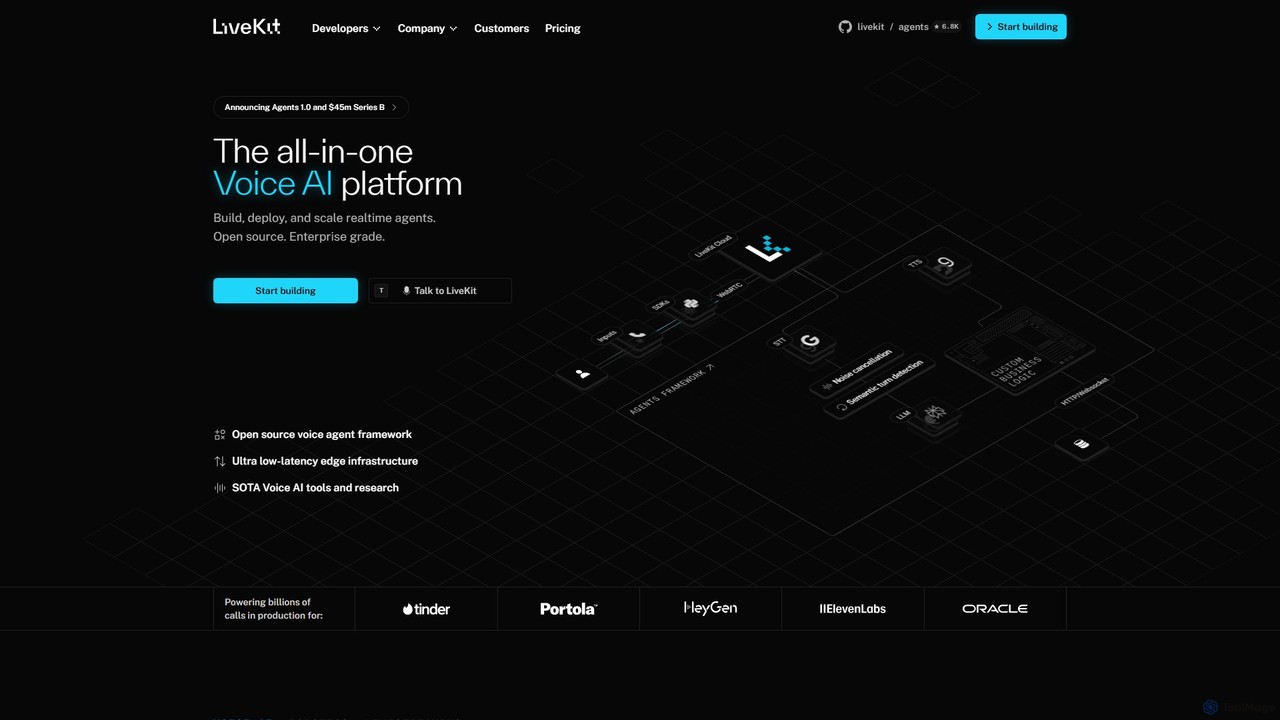
LiveKit is an all-in-one, open-source platform for building, deploying, and scaling real-time voice and video AI agents. It provides ultra-low latency infrastructure, powerful APIs, and state-of-the-art AI tools to enable developers to create conversational AI, robotics, and live streaming applications with enterprise-grade reliability and scalability.
About Real Time Communication
Real Time Communication (RTC) tools are APIs and SDKs that enable developers to embed live video, voice, and data streaming directly into applications. These platforms provide the core infrastructure for instant, interactive experiences, often enhanced by AI for superior quality and functionality. By handling complex network traversal, media encoding, and global scaling, they allow businesses to build custom communication features without developing the underlying technology from scratch. This is a key component of the AI Infrastructure, focusing specifically on the interactive communication layer.
Core Features
- AI-Powered Audio/Video Enhancement: Features like background noise suppression, echo cancellation, and virtual backgrounds to improve call quality.
- Real-Time Transcription and Translation: Automatically converts spoken words into text and translates them into multiple languages live during a session.
- Interactive Data Channels: Allows for the transmission of non-media data like live polls, whiteboards, or synchronized annotations alongside video streams.
- Scalable Global Infrastructure: Provides low-latency connections and high concurrency support through globally distributed data centers.
- Comprehensive SDKs and APIs: Offers well-documented software development kits for web, mobile, and desktop platforms to speed up integration.
Use Cases
These tools are essential for developers and product teams in sectors like telehealth for virtual consultations, EdTech for interactive online classrooms, and social media for live streaming events. They are also widely used in collaborative software to power features like in-app video calls and in customer support platforms to enable live video assistance.
How to Choose
When selecting a Real Time Communication tool, evaluate its latency and reliability across different geographic regions. Consider the richness of its AI features, such as transcription accuracy and noise cancellation effectiveness. Also, assess the quality of its SDK documentation, platform compatibility (Web, iOS, Android), and the transparency of its pricing model, which is often based on usage minutes or participant numbers.

Real Time CommunicationUse Cases
Building an AI-Powered Telehealth Platform
A healthcare technology startup is developing a telehealth application to connect doctors with patients remotely. They use a Real Time Communication API to build a secure, HIPAA-compliant video consultation feature. The API's AI capabilities are leveraged to provide real-time transcription of the consultation, which is automatically saved to the patient's electronic health record, reducing administrative work for the doctor. Additionally, AI-powered noise cancellation ensures that conversations are clear, even if the patient is in a noisy environment, improving diagnostic accuracy.
Enhancing an Interactive Online Education Platform
An EdTech company aims to increase student engagement in its virtual classroom software. By integrating an RTC SDK, they add high-quality video breakout rooms and an interactive whiteboard. The SDK's data channel feature is used to synchronize whiteboard drawings and annotations across all participants in real-time. They also implement an AI-powered engagement analysis feature, which uses the RTC platform's data to provide teachers with insights into student participation levels, such as speaking time and attentiveness, without invading privacy.
Powering a Global Live Shopping Event
An e-commerce brand wants to host a live stream shopping event for a global audience. They use an RTC platform to broadcast a high-definition, low-latency video stream to thousands of viewers simultaneously. The platform's AI-powered real-time translation feature generates live captions in multiple languages, making the event accessible to international customers. A data channel is used to send interactive elements like polls and limited-time purchase buttons that appear synchronized with the host's presentation, driving higher conversion rates.
Integrating Intelligent In-Game Voice Chat
A game development studio is building a new multiplayer online game and needs a robust voice chat solution. They choose an RTC SDK specifically designed for gaming due to its ultra-low latency and minimal performance impact. The SDK's built-in AI features, such as advanced noise suppression and echo cancellation, are critical for ensuring clear communication during intense gameplay. This allows players to strategize effectively without being distracted by background noise, significantly improving the overall gaming experience.
Creating a Collaborative Remote Work Platform
A software company is building a platform for remote teams that combines project management with communication. They use an RTC API to embed video meetings directly within the application's workspace. This allows team members to start an instant video call from a project board without switching apps. The API's screen sharing feature is customized to allow multiple users to share their screens simultaneously in a tiled view, facilitating collaborative design reviews and code pairing sessions, making remote collaboration feel more like being in the same room.
Deploying Intelligent Video Support for Customers
A financial services company wants to offer a more personal support experience. They integrate an RTC API into their customer portal to enable secure, one-on-one video calls with support agents. During the call, an AI feature provides the agent with real-time sentiment analysis of the customer's voice, helping them gauge frustration or satisfaction and adjust their approach accordingly. This combination of face-to-face interaction and AI-driven insights leads to faster problem resolution and significantly higher customer satisfaction scores.