SnowdayAICalculator
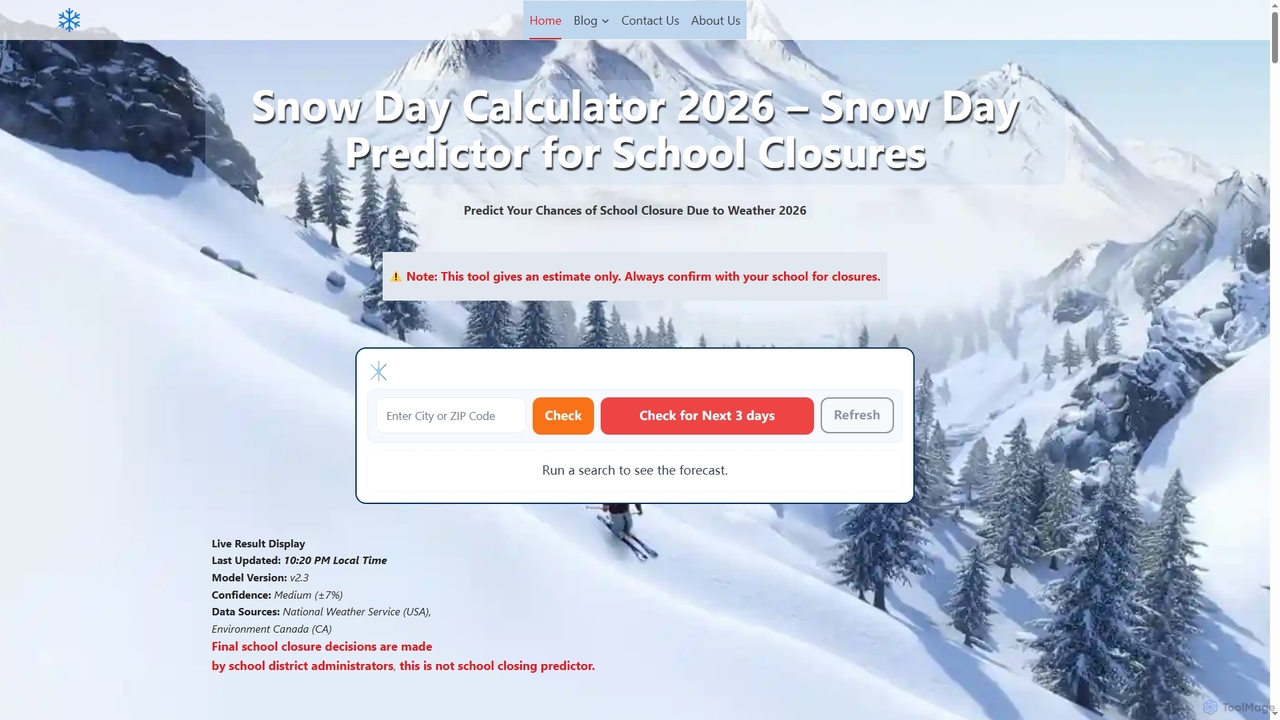
SnowdayAICalculator is an AI-powered online tool that predicts the probability of school closures due to winter weather. By …
SnowdayAICalculator is an AI-powered online tool that predicts the probability of school closures due to winter weather. By analyzing real-time weather data, historical closure patterns, and local school policies, it provides a percentage-based estimate for snow days, helping students, parents, and teachers plan ahead. It supports locations in the US, Canada, and worldwide.

Samudra Sahayak
An AI-powered smart fishing assistant for Indian fishermen. It provides AI-predicted potential fishing zones, real-time weather alerts, GPS …
An AI-powered smart fishing assistant for Indian fishermen. It provides AI-predicted potential fishing zones, real-time weather alerts, GPS navigation, emergency SOS, and a catch logging system to enhance safety, efficiency, and profitability at sea.
About Weather
Weather AI tools are advanced platforms that leverage intelligence and machine learning to analyze vast amounts of meteorological data, providing highly accurate and granular weather forecasts and climate insights. These sophisticated tools integrate real-time data from satellites, radar, and ground sensors with historical patterns to predict atmospheric conditions with unprecedented precision and reliability. They empower various sectors, from agriculture and energy to logistics and urban planning, to make data-driven decisions, optimize operations, and proactively mitigate risks associated with weather variability and climate change impacts.
Core Features
- Hyperlocal Forecasting: Delivers precise weather predictions for very specific geographic areas, often down to street or field level, crucial for localized operations.
- Extreme Event Prediction: Identifies and forecasts severe weather phenomena like hurricanes, floods, droughts, and heatwaves with earlier warnings, enhancing preparedness.
- Climate Impact Modeling: Simulates long-term climate trends and their potential effects on ecosystems, infrastructure, and economies, aiding strategic planning.
- Real-time Data Integration: Continuously processes and integrates diverse meteorological data sources, including IoT sensors, for up-to-the-minute, dynamic insights.
- Personalized Alerts: Provides customized weather notifications and advisories based on user-defined locations, thresholds, and specific operational needs.
Use Cases
Weather AI tools are crucial for industries requiring precise environmental data. Farmers utilize these tools for optimizing irrigation, pest control, and planting schedules, leading to improved yields and resource efficiency. Renewable energy companies predict solar and wind output with greater accuracy to manage grid stability. Logistics firms employ these tools for dynamic route optimization, avoiding adverse weather conditions to ensure timely, safe, and cost-effective deliveries.
How to Choose
When selecting Weather AI tools, prioritize the accuracy and granularity of forecasts, ensuring they meet specific location and temporal needs. Evaluate the diversity and reliability of data sources, alongside the tool's ability to seamlessly integrate with existing systems via robust APIs. Consider customization options for alerts and reports, and assess the clarity and intuitiveness of data visualization to support informed, rapid decision-making.
WeatherUse Cases
Optimizing Agricultural Crop Management
Farmers and agricultural businesses leverage AI weather tools to receive hyper-local forecasts, enabling precise decisions on irrigation, planting, and harvesting. By predicting rainfall, temperature fluctuations, and pest-friendly conditions, they can optimize resource use, minimize crop loss from adverse weather, and improve overall yield quality, leading to significant cost savings and increased productivity.
Enhancing Renewable Energy Grid Stability
Energy companies, particularly those managing solar and wind farms, use AI weather forecasting to predict energy generation output with high accuracy. This allows them to optimize grid load balancing, schedule maintenance efficiently, and make informed trading decisions in energy markets. Accurate predictions help prevent energy waste, reduce reliance on fossil fuel backups, and ensure a stable power supply.
Improving Logistics and Supply Chain Resilience
Logistics and transportation managers utilize AI weather tools for dynamic route planning and risk assessment. By anticipating severe weather events like heavy snow, fog, or storms, they can reroute shipments, adjust delivery schedules, and avoid hazardous conditions. This minimizes delays, reduces fuel consumption, enhances driver safety, and ensures the timely delivery of goods across complex supply chains.
Supporting Disaster Preparedness and Response
Emergency services and government agencies deploy AI weather tools for early warning and impact assessment of natural disasters. These tools provide advanced notice of floods, hurricanes, wildfires, and extreme heatwaves, allowing for timely evacuations, resource allocation, and public safety advisories. This proactive approach significantly reduces casualties, property damage, and aids in more effective post-disaster recovery efforts.
Personalized Outdoor Activity Planning
Individuals and outdoor enthusiasts use AI weather apps to receive highly personalized and real-time weather updates for specific locations and activities. Whether planning a hike, a cycling trip, or a beach day, these tools provide granular details on temperature, precipitation, wind, and UV index. This helps users make informed decisions, ensuring safety and maximizing enjoyment by avoiding unexpected weather changes.
Assessing Climate Risk for Urban Planning
Urban planners, real estate developers, and infrastructure engineers employ AI weather and climate modeling tools to assess long-term environmental risks. By analyzing historical data and future climate projections, they can design resilient infrastructure, identify areas prone to flooding or extreme heat, and implement sustainable development strategies. This ensures new constructions are future-proofed against climate change impacts.