TacoTranslate
TacoTranslate is an AI-powered internationalization (i18n) tool designed for React and Next.js developers. It automates the entire localization …
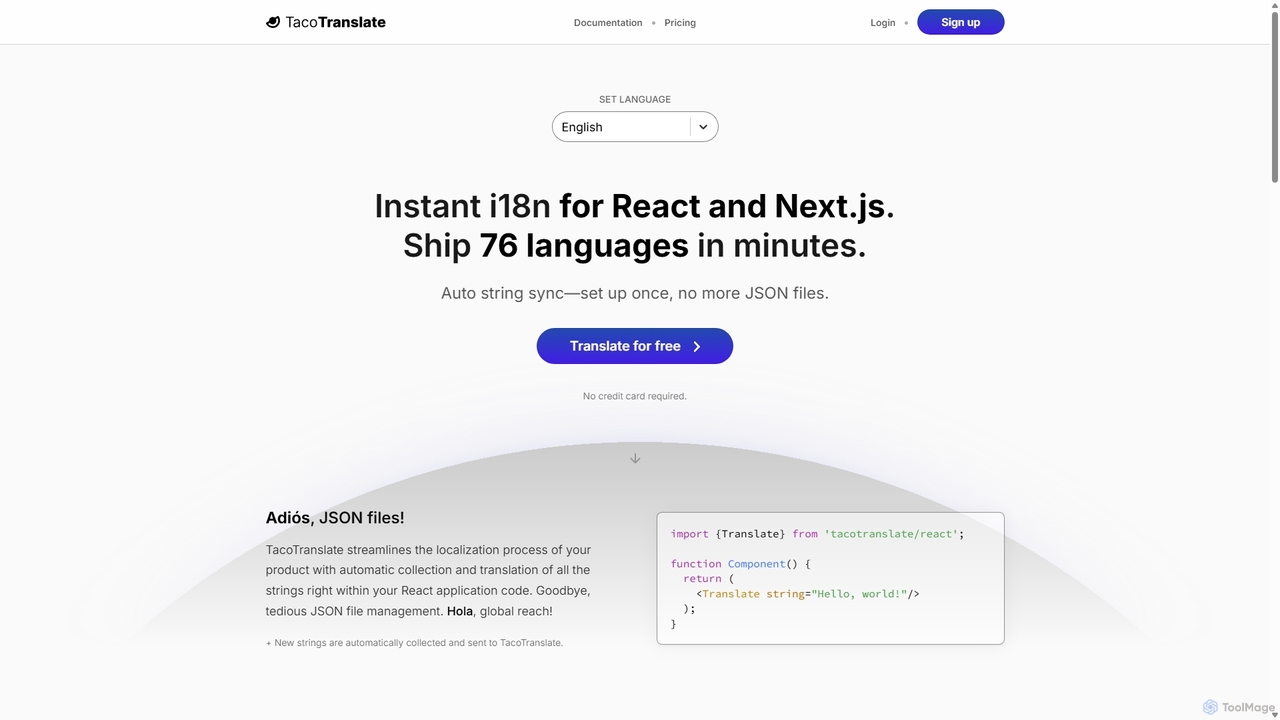
TacoTranslate is an AI-powered internationalization (i18n) tool designed for React and Next.js developers. It automates the entire localization process, from string collection to translation, eliminating the need for manual JSON file management. Ship your application in over 76 languages within minutes, enabling rapid global expansion with a developer-friendly workflow.
About React
React is a declarative, component-based JavaScript library for building user interfaces, primarily for single-page applications. It leverages a virtual DOM to efficiently update and render UI components, enhancing application performance. Developers use React to create interactive, scalable, and maintainable frontend experiences. Its robust ecosystem and strong community support make it a popular choice for modern web development.
Core Features
- Component-Based Architecture: Enables building complex UIs from small, isolated, and reusable pieces of code.
- Virtual DOM: Improves performance by minimizing direct manipulation of the browser's DOM, updating only necessary parts.
- JSX: A syntax extension for JavaScript that allows writing HTML-like code directly within JavaScript, making UI development intuitive.
- Unidirectional Data Flow: Simplifies debugging and ensures predictable application state management.
- React Hooks: Allows using state and other React features in functional components without writing class components.
Applicable Scenarios
React is widely adopted for developing dynamic single-page applications (SPAs), complex enterprise dashboards, and interactive data visualizations. It's also the foundation for cross-platform mobile development with React Native, extending its utility beyond web browsers. Startups and large corporations alike utilize React for its efficiency and scalability in building user-centric applications.
How to Choose
When considering React, evaluate your project's need for a highly interactive and scalable UI, the team's familiarity with JavaScript and component-based paradigms, and the availability of a rich ecosystem for state management, routing, and testing. Assess the long-term maintainability and performance requirements, as React excels in applications requiring frequent UI updates and a modular structure.
ReactUse Cases
Build Dynamic Single-Page Applications (SPAs)
Frontend developers utilize React to create highly interactive and responsive single-page applications like social media feeds, online dashboards, or project management tools. By breaking down the UI into reusable components, developers can efficiently manage complex interfaces, ensuring smooth transitions and a seamless user experience without full page reloads. This approach significantly enhances user engagement and application performance.
Develop Cross-Platform Mobile Applications with React Native
Mobile developers leverage React's principles through React Native to build native mobile applications for iOS and Android from a single codebase. This allows businesses to reach a wider audience with less development time and cost compared to maintaining separate native codebases. Teams can reuse much of their web development knowledge, accelerating the delivery of consistent user experiences across web and mobile platforms.
Create Interactive Dashboards and Data Visualizations
Data analysts and business intelligence professionals use React to build highly interactive dashboards that display complex data in an understandable format. React's component-based nature allows for modular charts, graphs, and tables that can be easily updated in real-time. This enables users to filter, sort, and interact with data visualizations dynamically, providing deeper insights and facilitating quicker decision-making.
Design Reusable UI Component Libraries
Design systems teams and large organizations use React to build comprehensive UI component libraries. These libraries consist of standardized, pre-built React components (buttons, forms, navigation bars) that can be reused across multiple projects. This ensures design consistency, accelerates development cycles for new features, and reduces maintenance overhead, allowing developers to focus on core application logic rather than recreating basic UI elements.
Enhance Existing Web Applications with Interactive Elements
Web developers can integrate React into existing web applications (even those not originally built with React) to modernize specific sections or add new interactive features. For instance, a legacy e-commerce site might use React to power a dynamic product filter or a complex checkout process. This allows for incremental adoption, improving user experience in critical areas without a complete rewrite of the entire application, saving time and resources.
Rapid Prototyping and MVP Development
Startups and product teams frequently choose React for rapid prototyping and Minimum Viable Product (MVP) development. Its component-based structure and extensive ecosystem allow developers to quickly assemble functional user interfaces, test ideas, and gather early user feedback. This agility helps validate product concepts faster, iterate on designs efficiently, and bring new web products to market with reduced initial investment and time-to-market.