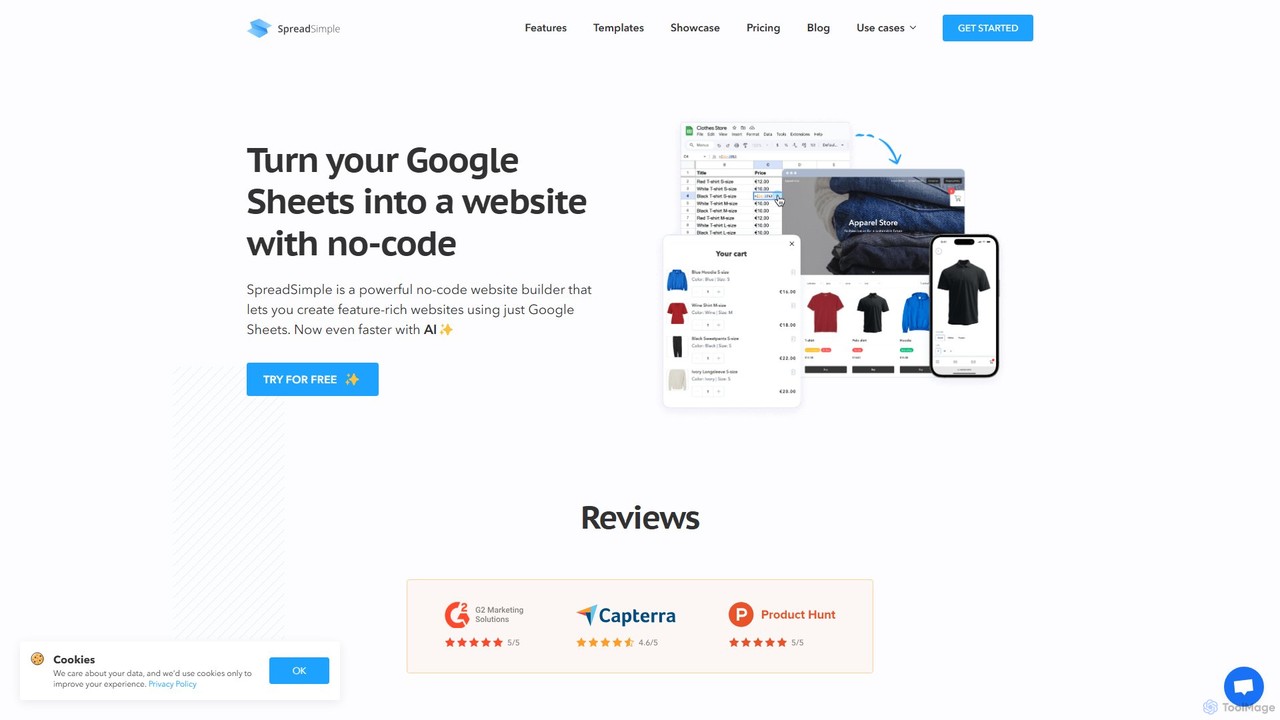
No Code Builders are visual development platforms that enable users to create fully functional applications and websites without writing a single line of code. These tools operate on principles of visual modeling, utilizing drag-and-drop interfaces, pre-built components, and logic workflows to assemble software. This approach dramatically lowers the technical barrier, empowering entrepreneurs, marketers, and business professionals to build, test, and launch digital products with unprecedented speed. Unlike traditional development, No Code Builders accelerate prototyping and iteration, significantly reducing the time and cost associated with bringing an idea to life.
Core Features
- Visual Drag-and-Drop Editor: Build user interfaces and layouts by arranging pre-made elements on a visual canvas.
- Workflow and Logic Automation: Define application behavior and business processes by visually connecting triggers and actions.
- Integrated Database Management: Create, manage, and connect application data through a user-friendly, often spreadsheet-like, interface.
- Third-Party API Integration: Easily connect to other services and data sources through pre-built connectors and visual API configuration.
- One-Click Deployment: Publish web applications, progressive web apps (PWAs), or internal tools directly to the web with minimal configuration.
Use Cases
No Code Builders are exceptionally well-suited for creating Minimum Viable Products (MVPs) to validate business ideas quickly. They are also widely used by operations teams to build custom internal tools, such as project management dashboards, inventory trackers, or approval workflows, without relying on IT resources. Additionally, agencies and freelancers use them to develop client portals and simple e-commerce sites.
How to Choose
When selecting a No Code Builder, first consider the primary application type you intend to build—web, mobile, or internal tool—as platforms often specialize. Evaluate the platform's scalability limits regarding database size, user traffic, and performance. Assess its integration ecosystem to ensure it connects with your existing software stack. Finally, review the pricing model and policies on data ownership and export capabilities to avoid future vendor lock-in.