
Website Development Best in category 1 results Lead Generation AI Tool

Popular AI tools in the Lead Generation field of Website Development include Solara, etc., helping you quickly improve efficiency.

Solara

Solara

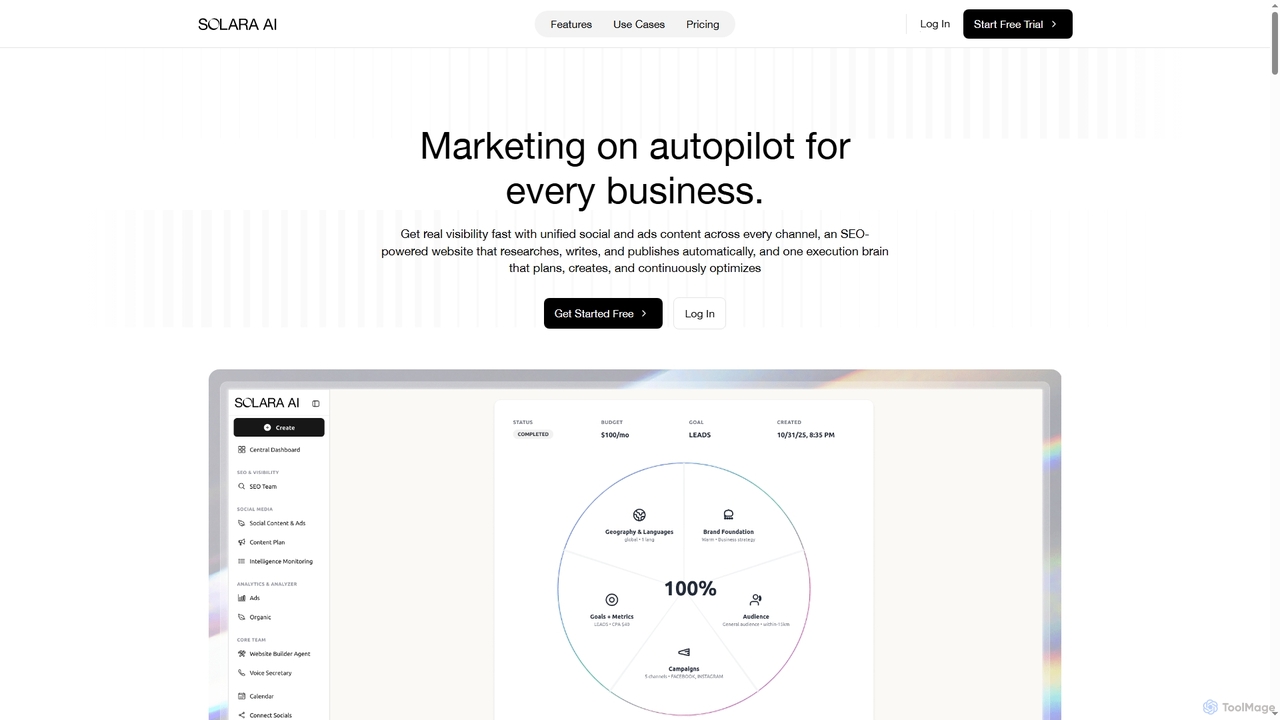
Solara is the first AI Marketing Agency, offering an all-in-one platform to automate website creation, SEO, content generation, …

5.1K

About Lead Generation

Lead Generation tools are AI-powered platforms designed to identify, attract, and qualify potential customers for businesses. While often integrated into broader Website Development strategies to maximize online presence, these tools specifically leverage advanced algorithms, data analytics, and automation to streamline the process of finding new sales opportunities. By automating repetitive tasks and providing data-driven insights, they help companies build robust sales pipelines and accelerate growth from their digital assets.

Core Features

  • Prospect Identification: Automatically discover potential leads from various online sources like social media, professional networks, and public databases.
  • Contact Data Enrichment: Augment existing lead profiles with additional contact information, company details, and behavioral data.
  • Automated Outreach: Personalize and schedule email campaigns, social media messages, or chatbot interactions to engage prospects.
  • Lead Scoring & Qualification: Use AI to analyze lead behavior and characteristics, assigning scores to prioritize the most promising prospects.
  • CRM Integration: Seamlessly connect with customer relationship management systems to ensure a smooth handover of qualified leads to sales teams.

Use Cases

These tools are invaluable for sales teams, marketing professionals, and business development managers seeking to expand their customer base efficiently. They are particularly useful for B2B companies, SaaS providers, and agencies aiming to scale their outreach efforts.

How to Choose

When selecting a Lead Generation tool, consider its data sources and accuracy, the level of automation offered, integration capabilities with your existing CRM and marketing platforms, and its lead scoring sophistication. Scalability and compliance with data privacy regulations are also crucial factors.

Lead GenerationUse Cases

1

Identifying High-Value B2B Prospects

Sales teams use AI lead generation tools to scan vast databases, social media, and company websites, identifying decision-makers in target industries who show high intent signals. This allows them to focus efforts on prospects most likely to convert, significantly shortening the sales cycle and improving resource allocation.

2

Automating B2B Prospecting

Sales teams use AI lead generation tools to automatically identify decision-makers and key contacts within target companies. By setting specific criteria like industry, company size, and job title, the tools can scrape public data, enrich profiles, and deliver a curated list of qualified leads, significantly reducing manual research time and expanding the sales pipeline.

3

Automating Personalized Email Outreach

Marketing professionals leverage AI to craft and send highly personalized email sequences to newly identified leads. The AI analyzes prospect data to tailor messaging, subject lines, and call-to-actions, increasing open rates and engagement compared to generic mass emails, leading to more effective initial contact.

4

Personalized Email Outreach at Scale

Marketing teams leverage these tools to craft and send highly personalized email campaigns to thousands of prospects. AI analyzes lead data to suggest optimal messaging, subject lines, and send times, ensuring higher open and response rates compared to generic mass emails, thereby nurturing leads more effectively.

5

Qualifying Leads with AI Chatbots

Website visitors interact with AI-powered chatbots that ask qualifying questions based on predefined criteria. These chatbots can gather essential information, answer common queries, and route high-potential leads directly to sales representatives, ensuring sales teams engage with pre-qualified prospects and save valuable time.

6

Website Visitor Identification

Businesses deploy lead generation software on their websites to identify anonymous visitors, often revealing company names and contact details. This allows sales teams to proactively follow up with warm leads who have already shown interest, converting passive browsing into active sales opportunities.

7

Enriching CRM Data for Better Targeting

Businesses integrate AI lead generation platforms with their CRM systems to automatically enrich existing lead records. The AI pulls additional data points like company size, industry, technology stack, and contact details, providing sales and marketing teams with a more complete picture for highly targeted campaigns and improved customer understanding.

8

Social Media Lead Discovery

Social media managers and marketers utilize AI to monitor social platforms for conversations, keywords, and user behaviors indicating purchase intent or interest in specific products/services. The tools can then identify these users as potential leads, enabling targeted engagement and direct outreach.

9

Predictive Lead Scoring for Sales Prioritization

Sales managers employ AI tools to automatically score incoming leads based on historical conversion data, engagement levels, and demographic information. This allows sales representatives to prioritize their follow-up efforts on leads with the highest probability of closing, optimizing resource allocation and improving overall sales efficiency.

10

Content-Based Lead Capture Optimization

Content creators and marketers use AI tools to optimize lead magnets (e.g., e-books, webinars) and landing pages for maximum conversion. AI analyzes user interaction data to suggest improvements in form design, call-to-action placement, and content relevance, ensuring more visitors convert into leads.

11

Monitoring Competitor Activity for New Opportunities

Marketing and business development teams use AI to track competitor websites, product launches, and customer reviews. The AI identifies potential gaps in the market or dissatisfied customers of competitors, presenting new lead generation opportunities for their own offerings and enabling proactive market positioning.

12

Event Attendee Follow-up Automation

After industry events or webinars, sales teams use lead generation tools to automate personalized follow-up sequences. The tools can segment attendees based on their engagement during the event, then trigger tailored emails or messages, ensuring no potential lead is missed and accelerating the post-event sales cycle.

Lead GenerationFrequently Asked Questions