AEOptimer
AEOptimer is a SaaS platform that automates website content optimization for enhanced visibility in both traditional search engines …
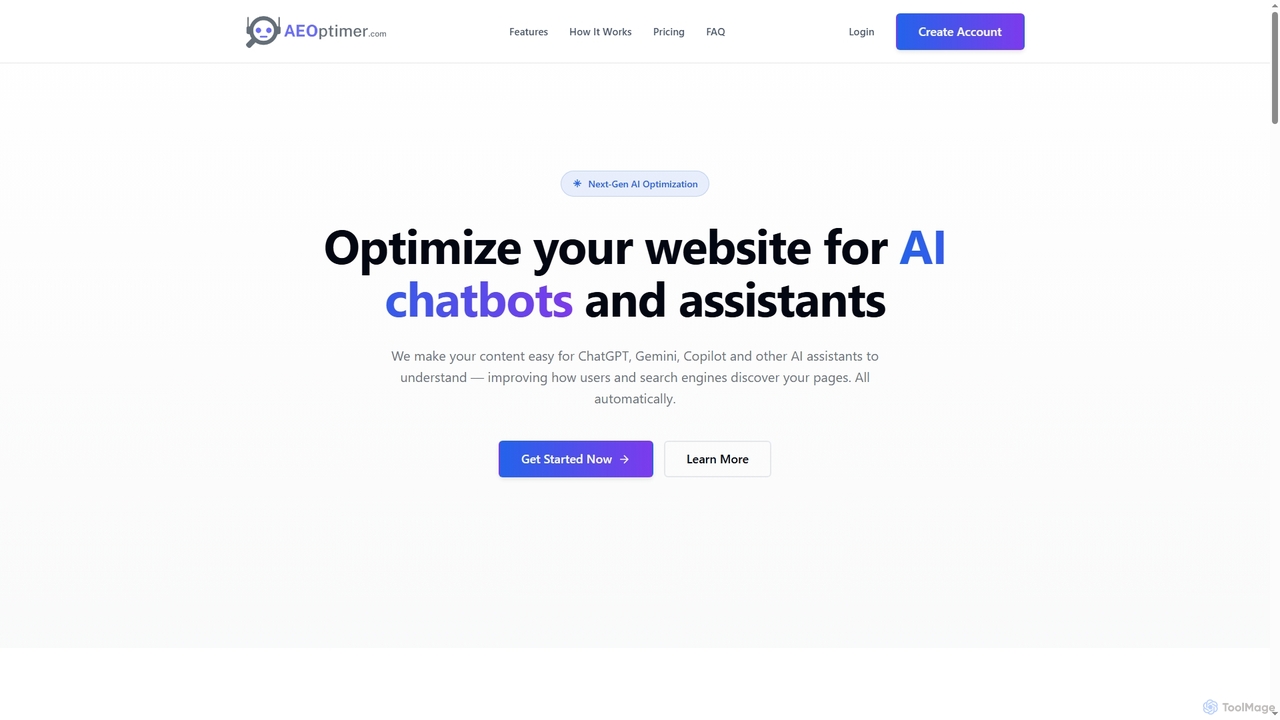
AEOptimer is a SaaS platform that automates website content optimization for enhanced visibility in both traditional search engines and modern AI assistants like ChatGPT, Gemini, and Copilot. It adds AI-friendly enhancements and structured data without requiring any code changes, ensuring your site remains discoverable and relevant in the evolving digital landscape.
About Content Optimization
Content Optimization tools are AI-powered platforms designed to analyze and enhance written content for better performance. These tools utilize natural language processing (NLP) and machine learning to evaluate text against key metrics like SEO effectiveness, readability, tone of voice, and audience engagement. As a specialized area within Website Management, their primary goal is to refine on-page elements, ensuring every piece of content achieves maximum impact, attracts the target audience, and ranks higher in search results. They transform content creation from an art into a data-driven science.
Core Features
- SEO Suggestions: Provides real-time recommendations for target keywords, LSI keywords, internal linking, and meta tag optimization based on SERP analysis.
- Readability Analysis: Scores content based on complexity, sentence length, and vocabulary, suggesting improvements to make it easier to understand.
- Tone & Style Checking: Ensures the content aligns with a predefined brand voice, adjusting for formality, confidence, and other tonal attributes.
- Content Brief Generation: Automatically creates structured outlines and guidelines for writers by analyzing top-performing competitor content.
- Plagiarism Detection: Scans the text to ensure originality and avoid duplicate content issues that can harm SEO rankings.
Applicable Scenarios
These tools are essential for content marketers, SEO specialists, copywriters, and digital agencies. They are used daily to refine blog posts before publication, optimize landing page copy for higher conversions, and ensure product descriptions on e-commerce sites are both persuasive and search-friendly. Enterprises also use them to maintain brand consistency across large, distributed content teams.
Selection Criteria
When choosing a Content Optimization tool, consider its integration capabilities with your CMS (like WordPress) or writing platforms (like Google Docs). Evaluate the depth of its SEO analysis—does it offer simple keyword suggestions or comprehensive competitor and topic analysis? Also, assess its collaboration features for team workflows and ensure it supports all the languages in which you publish content.

Content OptimizationUse Cases
Boosting Blog Post SEO Rankings
An SEO specialist drafts a blog post targeting a competitive keyword. Before publishing, they paste the text into a content optimization tool. The AI analyzes the content against the top 10 search results, providing a real-time optimization score. It suggests increasing the density of certain LSI keywords, adding specific questions to an FAQ section, and improving the meta description's call-to-action. After implementing these data-driven changes, the post is published and achieves a first-page ranking within weeks, driving a significant increase in organic traffic.
Ensuring Brand Voice Consistency Across Teams
A global corporation's marketing manager needs to ensure all content, from blog posts to press releases, adheres to their new 'innovative and approachable' brand voice. They configure the style guide within their content optimization tool, setting rules for tone, vocabulary (e.g., avoid corporate jargon), and sentence length. Now, when any of the 50+ content creators worldwide submits a draft, the tool automatically flags deviations from the guide. This system reduces editing time by 40% and ensures a consistent brand message across all channels.
Improving Landing Page Conversion Rates
A CRO (Conversion Rate Optimization) specialist is tasked with improving a landing page's performance. They use a content optimization tool with A/B testing suggestions. The AI analyzes the headline, body copy, and call-to-action (CTA) button text. It suggests three alternative headlines that are more benefit-driven and two CTA variations that create a greater sense of urgency. The specialist runs an A/B test with the AI's top suggestion. The new version shows a 15% increase in lead generation form submissions within the first month.
Creating Data-Driven Content Briefs for Writers
A content manager needs a new article on 'The Future of Renewable Energy'. Instead of manual research, they input the topic into a content optimization tool. The AI analyzes the top 20 ranking articles and generates a comprehensive brief in minutes. The brief includes the ideal word count, a suggested H1/H2/H3 structure, a list of essential keywords and entities to include, and a set of user-intent questions to answer. This brief is sent to a freelance writer, who can now produce a highly relevant, SEO-optimized article in 50% of the time it would normally take.
Optimizing E-commerce Product Descriptions
An e-commerce manager notices that a category of high-end headphones has a low add-to-cart rate. They use a content optimization tool to analyze the existing product descriptions. The AI identifies that the tone is too technical and lacks emotional appeal. It suggests rewriting the descriptions to focus on the user experience—like 'immersive sound for your daily commute'—instead of just listing specs. It also recommends adding specific keywords that users search for, such as 'noise-cancelling for office'. After updating the descriptions, the add-to-cart rate for the category increases by 20%.
Refining Technical Writing for Clarity
A software company's technical writer is creating a new user manual. The initial draft is accurate but filled with complex jargon and long sentences. They use a content optimization tool's readability checker. The tool assigns a low readability score and highlights specific sentences that are difficult to parse. It suggests breaking up long sentences, replacing jargon like 'asynchronous data transmission' with simpler terms like 'sending data in the background', and using an active voice. The revised manual is much easier for non-technical users to understand, leading to a 30% reduction in related customer support tickets.