Website Management Best in category 1 results Status Page AI Tool

Popular AI tools in the Status Page field of Website Management include Phare, etc., helping you quickly improve efficiency.

Phare

Phare

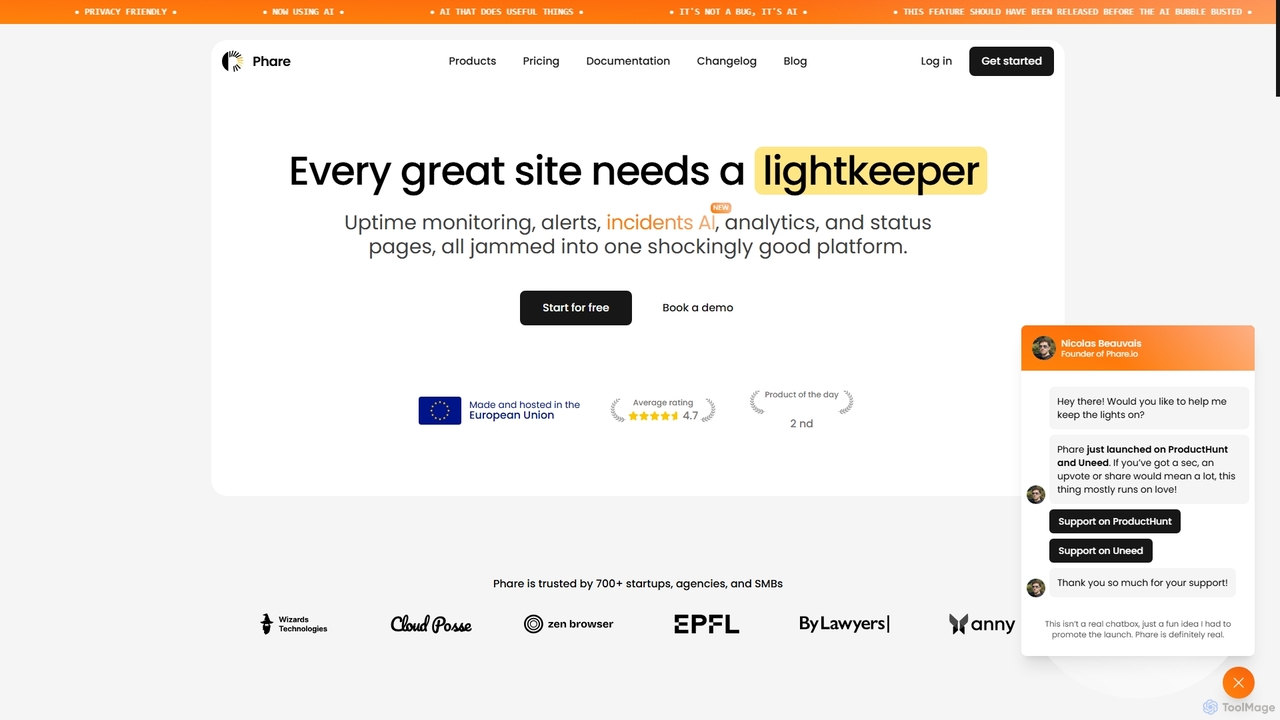
Phare is a comprehensive platform for website uptime monitoring, incident management, and custom status pages. It offers real-time …

9.4K

About Status Page

Status Page tools are specialized platforms for creating and managing real-time public pages that display the operational status of online services. These tools automatically track uptime and performance, allowing teams to communicate incidents, degradations, and scheduled maintenance transparently. By providing a single source of truth, they enhance user trust and significantly reduce the burden on support teams during outages. Many platforms integrate with monitoring systems to automate status updates for components like APIs, websites, and databases.

Core Features

  • Incident Communication: Create, update, and resolve incidents with detailed timelines and post-mortems.
  • Component Status Display: Visually represent the status (e.g., Operational, Degraded Performance, Major Outage) of individual services.
  • Subscriber Notifications: Send real-time updates to users via channels like email, SMS, Slack, and webhooks.
  • Scheduled Maintenance Management: Proactively inform users about planned downtime to minimize disruption.
  • Uptime & Performance Metrics: Display historical uptime data and key performance indicators (KPIs) like response time to demonstrate reliability.

Use Cases

Status Page tools are essential for any business with a critical online presence, particularly SaaS companies, API providers, e-commerce platforms, and financial services. They are primarily used by DevOps, Site Reliability Engineering (SRE), and IT operations teams to manage incident communication, while customer support teams use them to direct users for updates.

How to Choose

When selecting a Status Page tool, consider its integration capabilities with your existing monitoring systems (e.g., Datadog, PagerDuty) for automation. Evaluate the range of notification channels offered and the level of customization available to match your brand. Also, consider whether you need support for private status pages for internal or specific client use, and compare pricing models, which are often based on the number of components, subscribers, or team members.

Status PageUse Cases

1

Communicating a Major Service Outage

An SRE team at a SaaS company receives an alert that their primary API is unresponsive. They immediately use their Status Page tool to create a new incident, setting the status to 'Major Outage'. This action automatically sends an email and Slack notification to all subscribers. As they investigate, the team posts updates every 15 minutes, detailing their progress. This proactive communication prevents a flood of support tickets, manages customer expectations, and demonstrates transparency, ultimately preserving customer trust during a critical event.

2

Announcing Scheduled System Maintenance

An e-commerce platform needs to perform a database upgrade that requires 30 minutes of downtime. Two weeks in advance, the IT operations team schedules the maintenance on their Status Page. This automatically notifies all subscribers and displays a banner on the page. Reminders are sent out one day and one hour before the maintenance window. This proactive approach ensures customers and internal teams are aware of the planned disruption, reducing confusion and allowing them to plan accordingly, which minimizes the impact on business operations.

3

Building Trust with Enterprise Clients

A B2B software provider serves large enterprise clients who have strict SLAs. They use a Status Page tool to create private, password-protected status pages for each major client. These pages only show the status of services and infrastructure relevant to that specific client. When a performance degradation issue occurs that only affects one client, the support team can post updates to their private page without alarming other customers. This targeted communication provides a premium, transparent experience and helps in upholding service level agreements.

4

Displaying Historical Uptime for Sales Enablement

A cloud hosting provider's sales team frequently encounters questions about service reliability from potential customers. They leverage their public Status Page as a key sales asset. The page prominently displays a 99.99% uptime record for the past 12 months, backed by historical data for each service component. During sales calls, representatives share a link to the status page, using it as an objective, third-party-verified proof point of their platform's stability. This transparency helps overcome objections and builds confidence early in the sales cycle.

5

Automating Internal Incident Updates

A large tech company integrates its monitoring system (e.g., Datadog) with its Status Page tool via an API. When a critical performance threshold is breached on their production database, an alert automatically creates a draft incident on their internal-facing status page. The on-call engineer is notified, verifies the issue, and publishes the incident with one click. This instantly updates a dedicated Slack channel for all engineering and product managers, ensuring key internal stakeholders are informed immediately without manual intervention, streamlining the incident response process.

6

Managing Third-Party Service Dependencies

A fintech application relies heavily on a third-party payment gateway (e.g., Stripe) and cloud infrastructure (e.g., AWS). They list these external services as 'Third-Party Components' on their public status page. When AWS experiences a regional outage, the company's services are affected. Their team immediately updates the status of the AWS component on their page to 'Major Outage' and posts an incident explaining how this impacts their own application. This clarifies to users that the root cause is external, managing expectations and protecting the company's reputation for reliability.

Status PageFrequently Asked Questions