PrayerAI
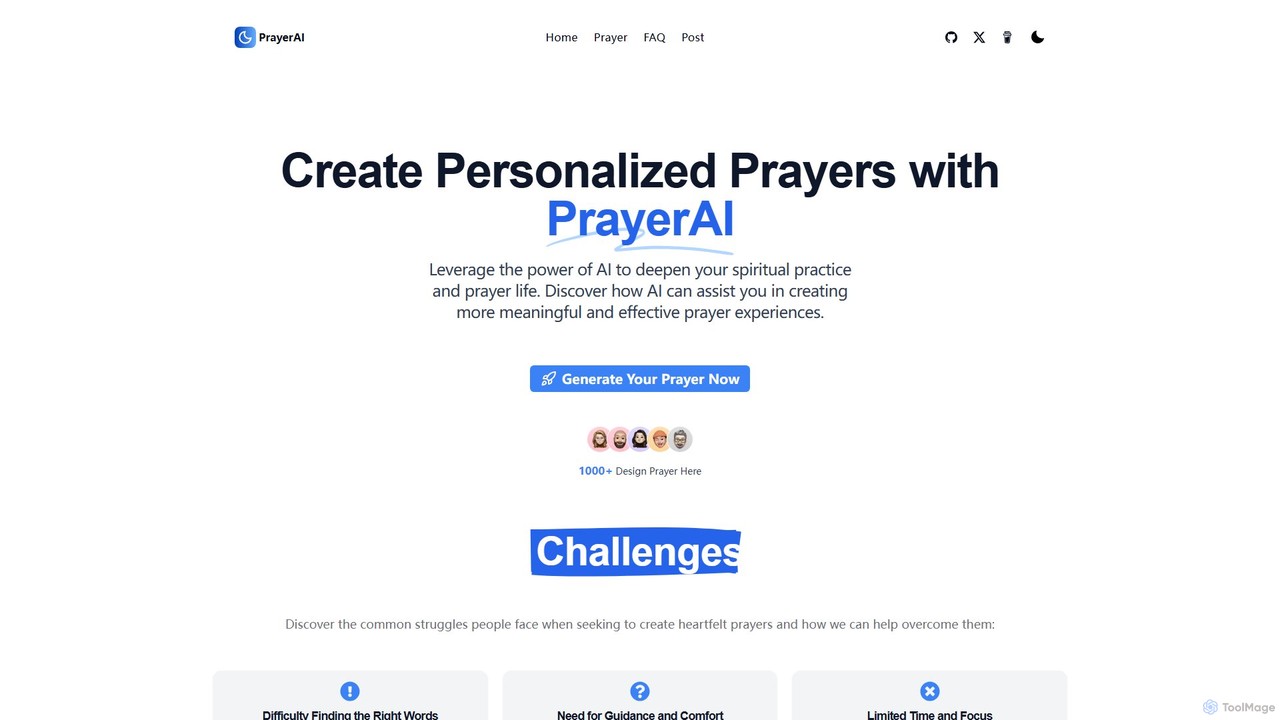
PrayerAI is an AI-powered platform designed to help users create personalized, heartfelt prayers. It assists those who struggle …
PrayerAI is an AI-powered platform designed to help users create personalized, heartfelt prayers. It assists those who struggle to find the right words by generating custom prayers for various needs like healing, peace, and guidance. The tool is free, user-friendly, and aims to deepen one's spiritual practice and connection to faith.
About Mindfulness
AI Mindfulness tools are applications that use artificial intelligence to deliver personalized guided meditations, breathing exercises, and emotional awareness training. These tools often leverage machine learning to adapt sessions to a user's real-time mood, stated goals, or even biometric data, offering a dynamic experience unlike static recordings. Their primary value lies in making mindfulness practices more accessible, engaging, and effective for managing stress, improving focus, and fostering emotional balance. As a specialized category within Wellbeing, they focus specifically on training the mind for present-moment awareness.
Core Features
- Personalized Guidance: The AI tailors meditation scripts, session length, and focus areas based on user feedback and progress history.
- Biofeedback Integration: Utilizes smartphone cameras or wearables to monitor heart rate or breathing patterns, providing real-time feedback to improve technique.
- Interactive Breathing Exercises: Offers visual and auditory cues that synchronize with and guide the user's breathing rhythm.
- Mood Tracking and Analysis: Analyzes journal entries and mood logs to identify emotional patterns and suggest relevant mindfulness exercises.
Use Cases
These tools are widely used by individuals seeking to manage daily stress, anxiety, and improve sleep quality. In corporate wellness programs, they are deployed to help employees prevent burnout and enhance focus. Mental health professionals may also recommend them as a supplementary tool for clients to practice emotional regulation techniques between therapy sessions.
How to Choose
When selecting an AI Mindfulness tool, consider the variety of techniques offered (e.g., body scan, loving-kindness). Evaluate the level of personalization and whether it integrates with any wearable devices you use. Critically review the data privacy policy to understand how your mood and biometric data are handled. Finally, look for tools that base their methods on established psychological or contemplative research.

MindfulnessUse Cases
Daily Stress Reduction for Professionals
A project manager facing tight deadlines uses an AI mindfulness app during a short break. They select a 5-minute 'Stress Relief' session. The AI provides a guided breathing exercise with calming visuals. By analyzing the microphone input for breath sounds, the app offers gentle prompts to slow their exhale, maximizing the relaxation response. This quick intervention helps lower their heart rate and clear their mind, allowing them to return to work with renewed focus and reduced tension.
Improving Sleep Quality with Guided Meditation
An individual struggling with restless nights uses an AI mindfulness tool before bed. They input their current state as 'mind racing'. The AI recommends a 20-minute guided body scan meditation specifically designed for sleep. As the session progresses, the user can provide feedback if their mind wanders. The AI algorithm notes this and subtly adjusts the narrator's pacing and script in future sessions to be more engaging for that user, helping them build a more effective pre-sleep routine over time.
Managing Acute Anxiety with an AI Coach
A student feeling a surge of anxiety before an exam opens an AI mindfulness app. They use a conversational feature, typing 'I'm feeling very anxious'. The AI coach responds empathetically and guides them through a 3-minute grounding technique, asking them to name things they can see, hear, and feel. This interactive, on-demand support helps interrupt the anxiety spiral by redirecting their focus to the present moment, providing immediate relief without needing to search through a library of recordings.
Building a Consistent Meditation Habit
A beginner wants to start a daily meditation practice but struggles with motivation. They use an AI mindfulness tool that offers a structured '30-Day Introduction' program. The AI sends personalized reminders and tracks their progress, celebrating milestones like a 7-day streak. After each session, it asks for feedback on difficulty. If the user consistently finds 10-minute sessions too long, the AI suggests starting with 5-minute sessions to build momentum, adapting the program to prevent discouragement and foster long-term consistency.
Corporate Wellness for Burnout Prevention
An HR department implements an AI mindfulness platform for its employees. The platform offers short, guided exercises accessible via desktop or mobile. The AI provides anonymized, aggregated data to HR, showing trends like 'stress levels are highest on Thursday afternoons'. Based on this insight, the company can implement targeted interventions, like encouraging a 'no-meetings' block at that time. Employees benefit from a confidential tool to manage stress, while the company gains actionable data to improve overall workplace wellbeing.
Enhancing Emotional Awareness with AI Journaling
A user wanting to better understand their emotions uses an AI-powered journaling feature. After they write an entry about their day, the AI uses natural language processing to identify key emotional themes like 'frustration' or 'gratitude'. It then prompts the user with gentle questions like, 'It sounds like the project delay was frustrating. What did that feel like in your body?'. This interaction helps the user connect cognitive thoughts with physical sensations, deepening their emotional intelligence and self-awareness over time.