maslo
Maslo was a pioneering AI platform dedicated to creating empathetic and emotionally aware AI companions. Although the project …
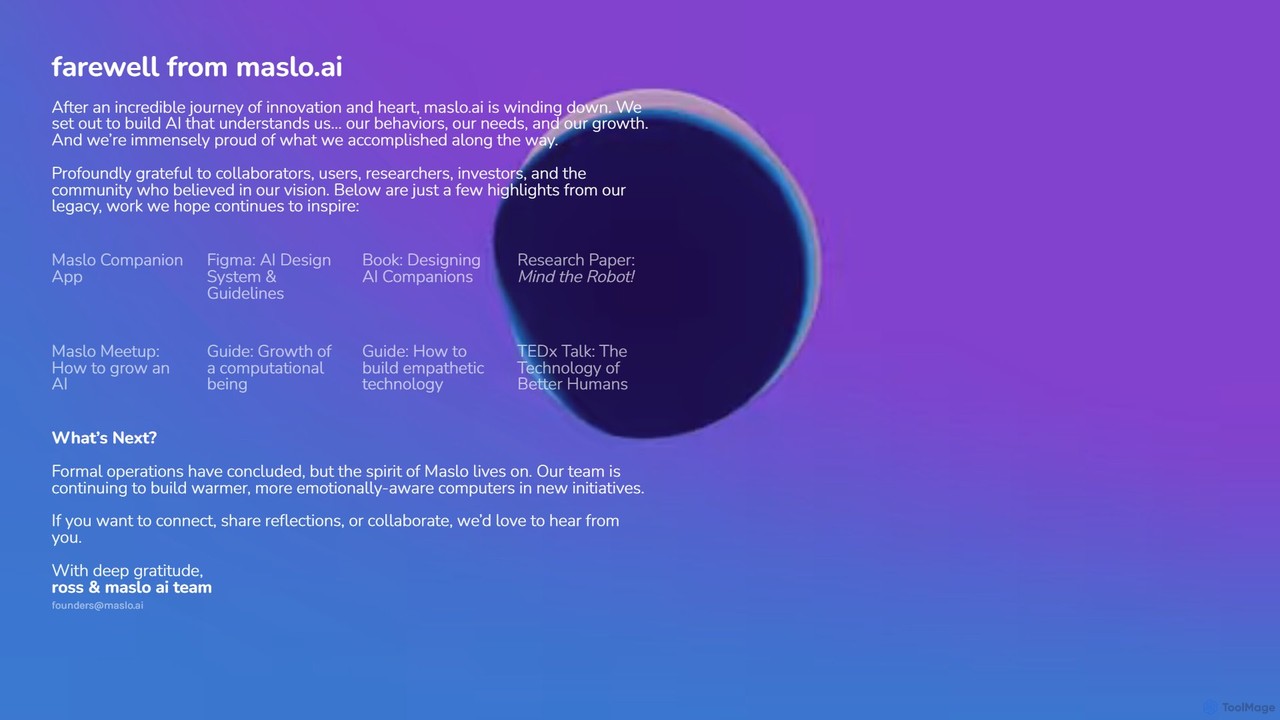
Maslo was a pioneering AI platform dedicated to creating empathetic and emotionally aware AI companions. Although the project has concluded, its legacy continues to influence the development of human-centric AI through its research, design systems, and vision for technology that understands human behavior and needs.
About Mental Health
Mental Health AI tools are AI-powered applications designed to support emotional well-being, provide therapeutic guidance, and facilitate access to mental health resources. These tools leverage advanced algorithms, natural language processing, and machine learning to offer personalized interventions, mood tracking, and coping strategies. They aim to make mental health support more accessible, proactive, and tailored to individual needs, complementing traditional care.
Core Features
- Personalized Mood Tracking: AI analyzes user input to identify mood patterns and potential triggers over time.
- Guided Mindfulness & Meditation: Offers AI-curated audio sessions and exercises for stress reduction and focus.
- Cognitive Behavioral Therapy (CBT) Exercises: Provides interactive modules and prompts based on CBT principles to challenge negative thought patterns.
- Emotional Support Chatbots: AI-driven conversational agents offer empathetic listening and suggest coping mechanisms.
- Crisis Resource Integration: Connects users to emergency helplines and professional support when needed.
Applicable Scenarios
Individuals seeking daily emotional support, stress management techniques, or tools to manage anxiety and depression can benefit. They are also valuable for those looking to improve sleep quality, build resilience, or practice mindfulness regularly. These tools serve as a convenient, private, and often affordable first step or ongoing support for mental well-being.
How to Choose
When selecting a Mental Health AI tool, consider its clinical backing and evidence-based methodologies, such as CBT or mindfulness. Evaluate data privacy policies, the level of personalization offered, and the user interface's intuitiveness. Also, check for integration with professional support or crisis resources, and assess the subscription model against your budget and needs.

Mental HealthUse Cases
Personalized Stress Management
An individual experiencing daily work-related stress uses an AI mental health app to track their mood and stress levels. The AI analyzes their input, identifies common triggers, and suggests personalized breathing exercises, short meditation breaks, or journaling prompts to help manage acute stress responses and build long-term resilience.
Improving Sleep Quality
Someone struggling with insomnia utilizes an AI tool that offers guided sleep meditations, calming soundscapes, and bedtime routine reminders. The AI learns their sleep patterns and preferences, providing tailored recommendations to improve sleep hygiene and reduce anxiety associated with falling asleep, leading to more restful nights.
Practicing CBT Techniques
A user dealing with anxiety employs an AI mental health app that incorporates Cognitive Behavioral Therapy (CBT) exercises. Through interactive modules, the AI guides them in identifying distorted thought patterns, challenging negative beliefs, and developing healthier coping strategies, empowering them to manage anxiety symptoms effectively.
Daily Mood Tracking & Insight
A person wants to better understand their emotional fluctuations. They use an AI tool to log their mood daily, along with notes on activities, social interactions, and sleep. The AI then generates weekly reports, highlighting patterns, potential triggers, and correlations, offering valuable insights into their emotional landscape.
Building Emotional Resilience
An individual aims to enhance their emotional resilience after a challenging period. They engage with an AI mental health platform that provides guided journaling, positive affirmation exercises, and skill-building modules focused on emotional regulation. The AI adapts content based on their progress, fostering a stronger emotional foundation.
Accessing Immediate Support
A user feels overwhelmed and needs immediate emotional support. They turn to an AI chatbot within a mental health app. The chatbot provides empathetic listening, validates their feelings, and offers immediate, actionable coping strategies or directs them to integrated crisis hotlines and professional resources if the situation warrants it.