
ToolMage
Sign in

Best 1 Habit Building AI tools for Wellbeing

Popular Habit Building AI tools in Wellbeing include hootz, helping you work more efficiently.

hootz
Freemium

hootz

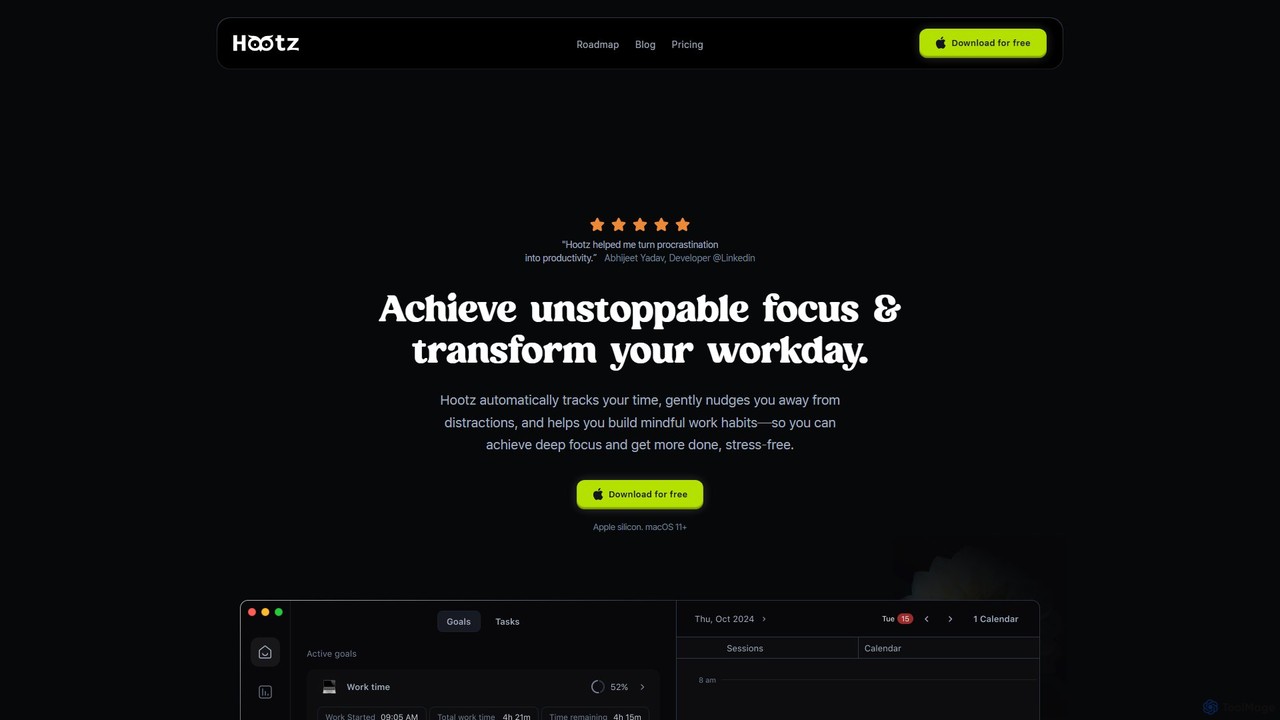
hootz is an AI-powered productivity companion for macOS designed to help users achieve deep focus. It automatically tracks time, blocks distractions, provides real-time nudges to stay on task, and integrates mindful practices to transform your workday and build better habits.

Focus
Visits 5.6KFavorites 135Likes 122

About Habit Building

Habit Building AI tools are intelligent applications designed to help individuals cultivate positive routines and eliminate detrimental ones. Leveraging machine learning and behavioral science, these tools offer personalized strategies, smart reminders, and progress analytics to make habit formation more effective and sustainable. They play a crucial role within the broader context of wellbeing by fostering consistent actions that lead to improved mental, physical, and emotional health.

Core Features

  • Personalized Habit Plans: AI analyzes user goals and patterns to suggest tailored habit routines and actionable steps.
  • Smart Reminders & Nudges: Context-aware notifications and motivational messages delivered at optimal times to keep users on track.
  • Progress Tracking & Analytics: Visual dashboards and data-driven insights to monitor consistency, identify challenges, and celebrate milestones.
  • Behavioral Coaching & Feedback: AI-driven tips and guidance based on psychological principles to reinforce positive actions and overcome obstacles.
  • Goal Integration: Connects daily habits to larger personal development or professional objectives, showing their cumulative impact.

Applicable Scenarios

These tools are invaluable for anyone seeking structured support in personal development. Individuals aiming to improve physical health, such as establishing a regular exercise or meditation routine, find them highly effective. Professionals can leverage them to build consistent productivity habits like focused work blocks or daily learning, while students can use them to develop effective study schedules and overcome procrastination.

How to Choose

When selecting an AI habit building tool, consider its level of personalization – how deeply the AI adapts to your unique needs and progress. Evaluate its integration capabilities with other health or productivity apps you use. Look for engaging gamification or motivational elements that sustain long-term interest. Finally, assess its data privacy policies, ensuring your personal habit data is handled securely and transparently.

Habit Building use cases

1

Cultivating a Daily Meditation Practice

An individual aiming for better mental clarity uses an AI habit builder to establish a consistent 10-minute daily meditation routine. The tool sends gentle, personalized reminders based on their schedule, tracks their meditation streak, and provides encouraging feedback, helping them maintain consistency and build mindfulness over time.

2

Establishing a Consistent Exercise Regimen

A user wants to exercise three times a week but struggles with motivation. The AI habit tool helps them schedule workouts, provides motivational nudges before sessions, and visualizes their progress with streaks and completion rates. If a session is missed, the AI suggests adaptive strategies to get back on track, fostering long-term adherence.

3

Improving Learning & Skill Acquisition

A professional seeks to dedicate 30 minutes daily to learning a new language or skill. The AI habit builder sets up this learning habit, integrates with their chosen learning apps, and provides accountability. It tracks their daily commitment, celebrates learning streaks, and offers insights into their consistency, making skill acquisition more systematic.

4

Breaking Procrastination Habits for Students

A student identifies procrastination as a major barrier to academic success. The AI tool helps them set micro-habits for starting tasks, provides focus timers, and analyzes triggers for procrastination. It offers personalized strategies, such as breaking down large assignments or using the "Pomodoro Technique," to help them overcome inertia and build productive study habits.

5

Developing Healthy Eating & Hydration Patterns

Someone wants to reduce unhealthy snacking and increase daily water intake. The AI habit builder tracks these specific behaviors, sends timely hydration reminders, and offers positive reinforcement for healthy food choices. It helps users visualize their progress towards dietary goals, making conscious eating and drinking a consistent habit.

6

Building a Productive Morning Routine

An entrepreneur aims to optimize their morning for maximum productivity, including waking up early, planning the day, and light exercise. The AI tool helps structure this multi-step routine, ensuring each component is consistently followed. It provides prompts for each step and tracks completion, helping to solidify a powerful start to the day.

Habit Building FAQ

What are AI Habit Building tools?

AI Habit Building tools are software applications that leverage artificial intelligence to assist users in forming and maintaining positive habits, or breaking negative ones. They go beyond simple reminders by offering personalized guidance, data-driven insights into user behavior, and adaptive strategies based on machine learning to enhance the effectiveness and sustainability of habit formation.

How do AI Habit Building tools differ from traditional habit trackers?

Traditional habit trackers primarily offer manual logging and basic reminders. AI Habit Building tools, however, integrate intelligence. They use AI to analyze user data, understand behavioral patterns, and provide personalized recommendations, motivational nudges, and adaptive plans. This proactive, intelligent support makes them more effective in guiding users through the complexities of behavior change compared to passive tracking apps.

What are the key benefits of using AI for habit formation?

The primary benefits include enhanced personalization, increased accountability, and data-driven insights. AI tools can adapt to individual progress and challenges, offering tailored strategies. They provide smart, context-aware reminders and motivational feedback, boosting consistency. Furthermore, by analyzing patterns, they help users understand their triggers and progress, making habit formation more efficient and sustainable.

Who can benefit most from using AI Habit Building tools?

Anyone struggling with consistency in personal development, health, or productivity can benefit. This includes individuals aiming to establish new routines like daily exercise or meditation, professionals seeking to improve focus and learning habits, and students looking to overcome procrastination. People who thrive with structured guidance, personalized feedback, and data-driven motivation will find these tools particularly valuable.

What should I look for when choosing an AI Habit Building tool?

When selecting a tool, prioritize strong personalization features that adapt to your unique needs. Look for robust progress tracking and analytical dashboards that provide clear insights. Consider the quality of its behavioral coaching and motivational elements. Ensure it has a user-friendly interface and, importantly, review its data privacy policy to understand how your personal habit data is protected.